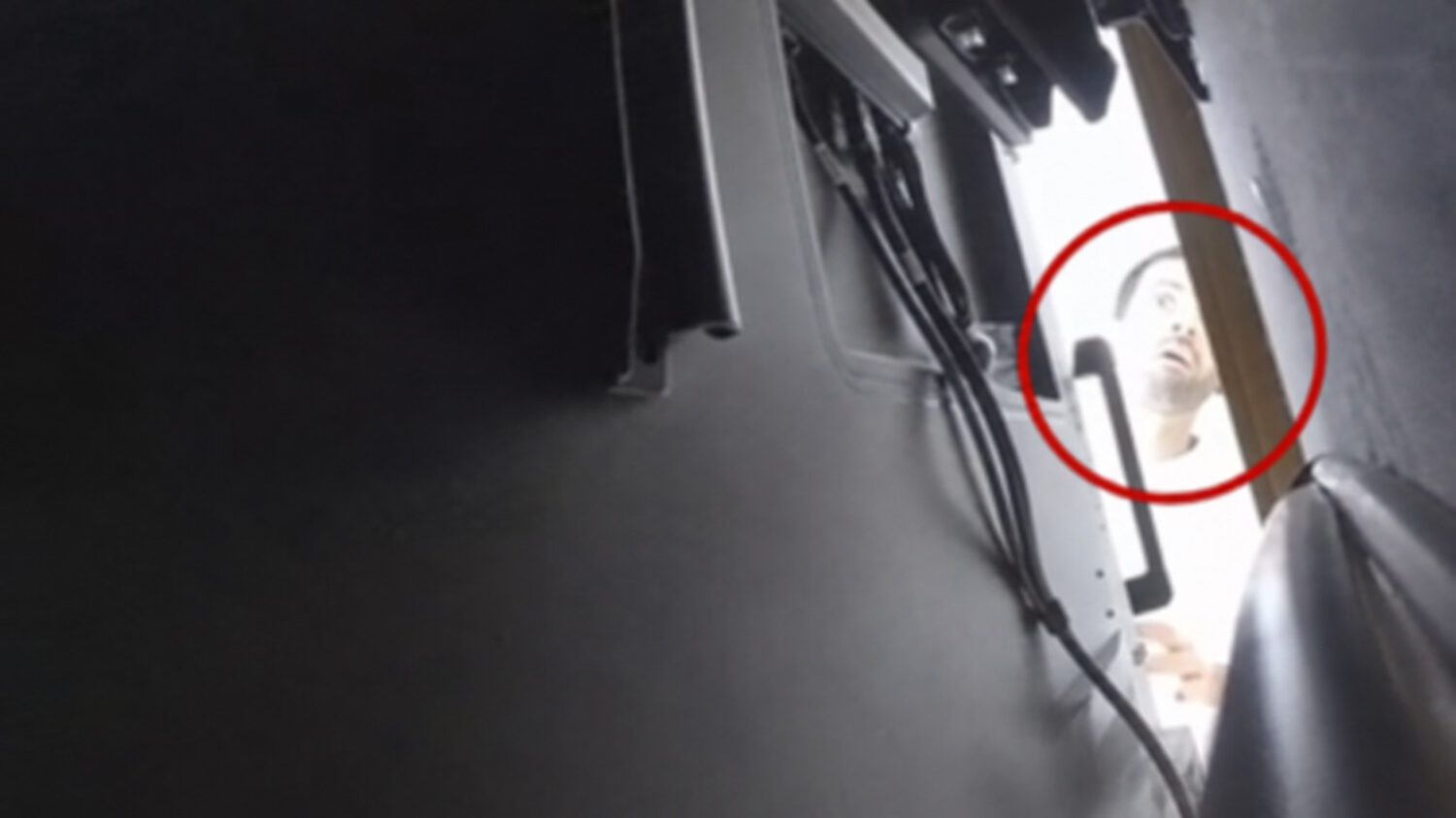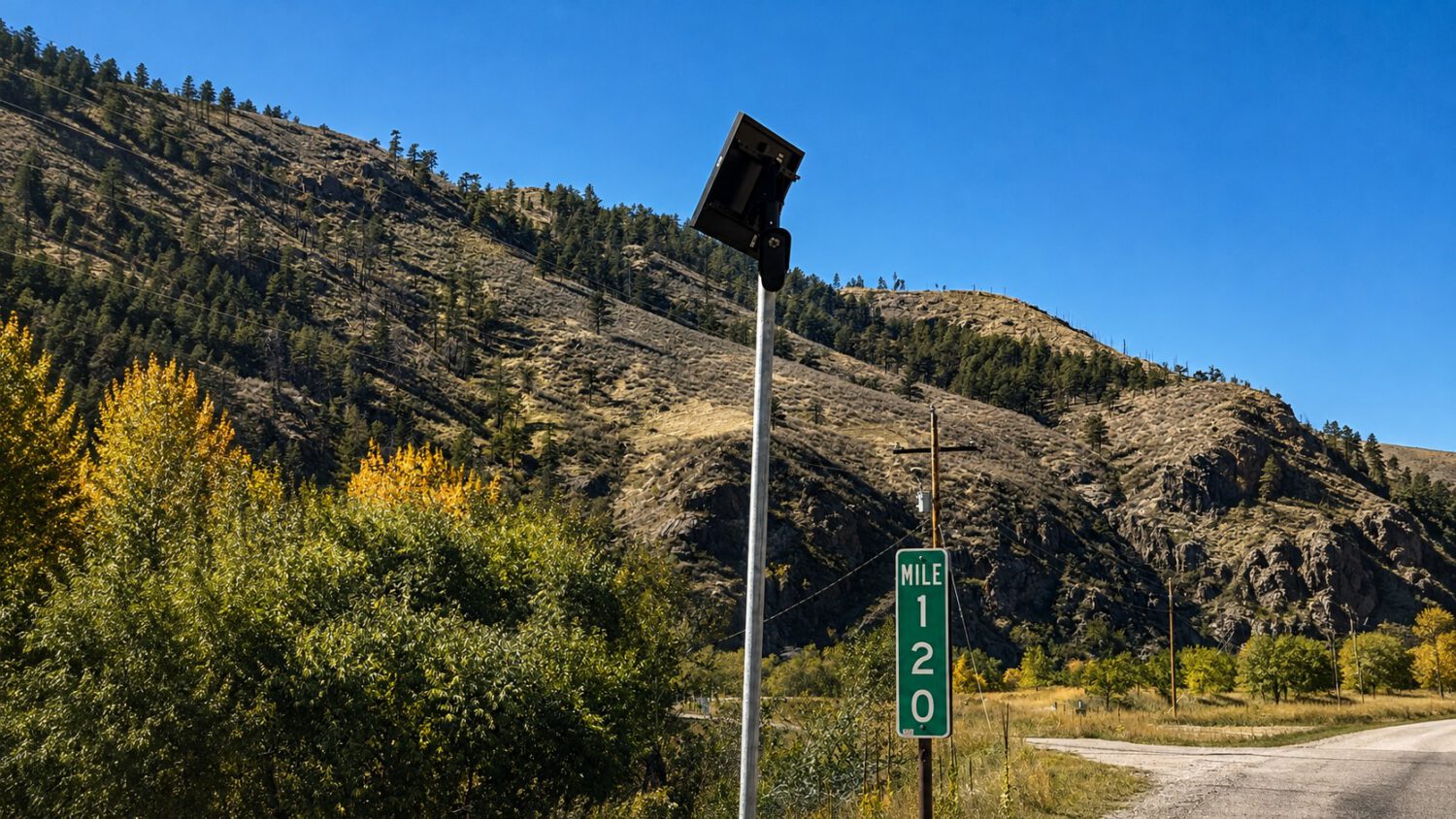
Flock Safety‘s pitch to law enforcement is straightforward: cameras read license plates, records feed a searchable historical database, and credentialed officers at participating agencies can query where a vehicle has been. Your car drives past a Flock camera in one county, and that sighting becomes a data point accessible to departments across the country. That reach is the product.
The audit trail Flock describes as permanent is now the plaintiff’s primary evidence in a proposed class action filed in the U.S. District Court for the Northern District of Georgia.
What the Records Show
Audit records described in the complaint document five searches of one man’s car during the same period he was litigating against the sheriff’s office.
Tyler Murkerson’s trouble with Coweta County started at a gas station on Feb. 6, 2023. According to the complaint, deputies stopped him, forced him to the ground, and deployed a Taser. They then arrested him over a seatbelt violation that his attorneys say did not apply on private property.
The charges were dismissed on June 26, 2023. Murkerson sued Sheriff Lenn Wood and two arresting deputies in September 2024.
Then, per audit records described in the lawsuit, five searches of his 2024 Toyota Camry ran across a 197-day window from May through November 2025. Each search reportedly reached more than 6,000 agency camera networks nationwide. Two searches were attributed to accounts identified in the complaint as “r.fau” and “w.fau,” linked to named defendants Randall and William Faulkner. The stated justifications for those two queries: “info” and “37.”
“We believe this case is the first to allege actual retaliatory animus intended to punish someone for advocating for his own constitutional rights by using Flock cameras to illegally surveil him, invade his privacy, and harass him in clear violation of the law.” Christopher B. Hall, co-founder and partner at Hall & Lampros, which represents Murkerson.
The firm’s characterization that this is the first such lawsuit has not been independently verified.
Coweta County’s own internal audit separately flagged employee accounts, and three employees resigned before that audit and any formal investigation were complete. The sheriff’s office referred the matter to the Georgia Bureau of Investigation, which was reported as active at the time of filing. Available reporting does not confirm whether those employees are connected to the searches described in Murkerson’s complaint.
The Free-Text Problem Flock Should Have Solved Sooner
Allowing officers to type anything into a reason field is not an accountability system; it is a formality.
Typing “info” into a reason field to justify querying a person’s vehicle movements across a national camera grid is roughly equivalent to writing “stuff” in the memo line of a wire transfer. It clears the form without documenting anything meaningful. Parallel cases of authorities secretly tracking users underscore why logging alone cannot serve as a substitute for genuine accountability controls.
Georgia law, according to the complaint, limits plate-data access to investigations initiated by a law-enforcement agency. Murkerson’s complaint argues that entries like “info” and “37” do not document an investigation, a case number, an incident, or a call for service.
Flock’s stated position is that searches are logged and tied to individual user accounts, and that officers who misuse the system should be investigated. The company has since announced mandatory case codes, misuse-detection tools, and a reduction in default data retention from 30 days to seven days. The complaint’s pointed response: those controls could have existed before Murkerson’s plate was ever queried.
What Courts Are Starting to Ask
A recent Oklahoma ruling suggests that historical license-plate searches may carry constitutional weight courts have not yet fully defined.
A federal judge in Oklahoma recently suppressed evidence after finding that a warrantless search of roughly a month of historical license-plate records violated the Fourth Amendment under the specific facts of that case. That ruling does not declare every Flock search unconstitutional and carries no controlling weight outside its jurisdiction. It does signal that courts are beginning to treat large-scale historical vehicle tracking as something more consequential than a simple public-record lookup.
The Georgia case adds a question the Oklahoma ruling never had to answer: whether using surveillance infrastructure to monitor someone mid-litigation against the very agency running the searches constitutes retaliation. Class-action status has not been approved. No defendant has been found liable.
Logging searches is not the same as preventing abuse. Mandatory case codes, independent audits, and defined retention limits are not radical demands. They are the minimum standard for any tool that can map a private citizen’s movements across an entire country. The allegations here do not expose a flaw in Flock’s cameras. They expose a flaw in the assumption that logging alone is accountability.