


Brita has spent decades becoming almost synonymous with filtered water. Much like “Google it” became shorthand for searching the internet, saying you have a Brita usually tells someone exactly what you mean: there’s a pitcher of filtered water sitting somewhere in your refrigerator.
Ninja is trying to make that experience feel a little outdated.
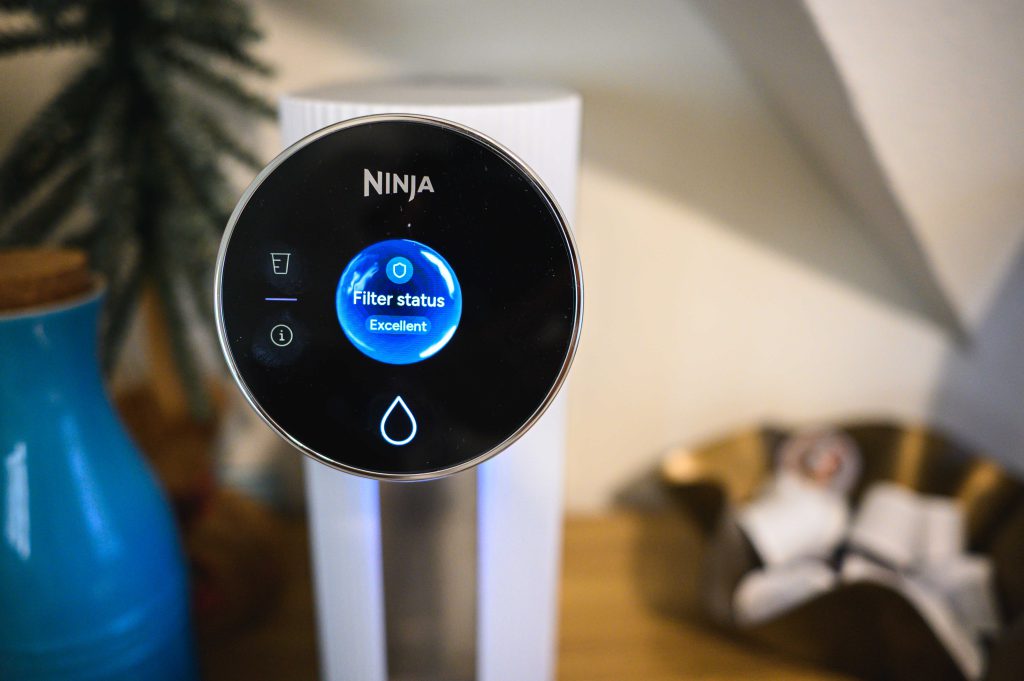
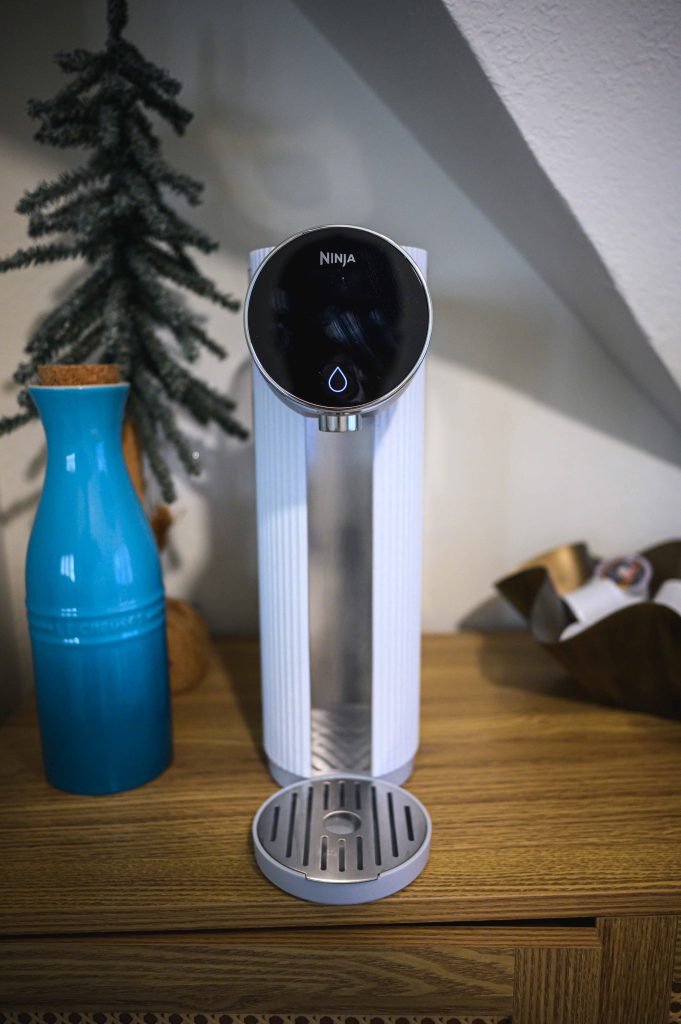
The Ninja HydraSense is a $250 countertop water filtration system that replaces the slow gravity-fed approach of a traditional pitcher with pressure-powered filtration. Ninja says that allows it to filter water up to six times faster than a standard Brita filter, while reducing more than 80 contaminants. It also adds automatic dispensing, a large 96-ounce reservoir and a filter designed to last up to six months.
That’s considerably more technology than you’ll find in a $30 or $40 water pitcher. The question is whether any of it meaningfully improves something as simple as getting yourself a glass of water.
After spending some time with the HydraSense, I think it does—but probably not for the reasons I originally expected.
The filtration is impressive, even if it’s difficult to test yourself
Ninja makes some big claims about what HydraSense removes from tap water. The company says the system can reduce up to 99% of certain contaminants, including microplastics and PFAS, and advertises 10 times more contaminant removal than the leading pitcher brand.
Those numbers sound great, but they’re also difficult for the average person to verify at home. I’m certainly not equipped to independently analyze my water before and after running it through the HydraSense.
What gives those claims more credibility is the system’s independent certification to NSF/ANSI filtration standards. Ultimately, that’s what I’m relying on here rather than pretending my own taste test can tell me whether the machine successfully removed microscopic contaminants.
Ninja also designed the filtration system to retain naturally occurring minerals and electrolytes. That’s nice to know, but ultimately what I care about is whether the water tastes good.
And honestly, I didn’t notice some huge difference in taste.
My tap water is already going through a water softener, and I’m used to drinking filtered water from my refrigerator, so I may already be starting with pretty decent water. But I certainly didn’t notice anything weird or unpleasant about the HydraSense water.
For me, the bigger difference wasn’t taste. It was how quickly and conveniently I could get filtered water.
The speed is something you immediately notice
The biggest day-to-day difference between HydraSense and a traditional pitcher is how quickly you can actually get filtered water.
A Brita relies on gravity. HydraSense uses what Ninja calls Precision Pressure Technology to force water through its filter. Ninja claims the result is filtration up to six times faster than a standard Brita filter.
Unlike some of the filtration claims, this is a benefit you don’t need a laboratory to appreciate.
Anyone who has owned a filtered pitcher knows the routine: someone pours the last glass, refills the pitcher and suddenly you’re waiting for the water to slowly work its way through the filter.
HydraSense essentially eliminates that waiting period. As long as there’s water in the reservoir, filtered water is available almost immediately.
That’s one of the biggest improvements over a conventional pitcher.
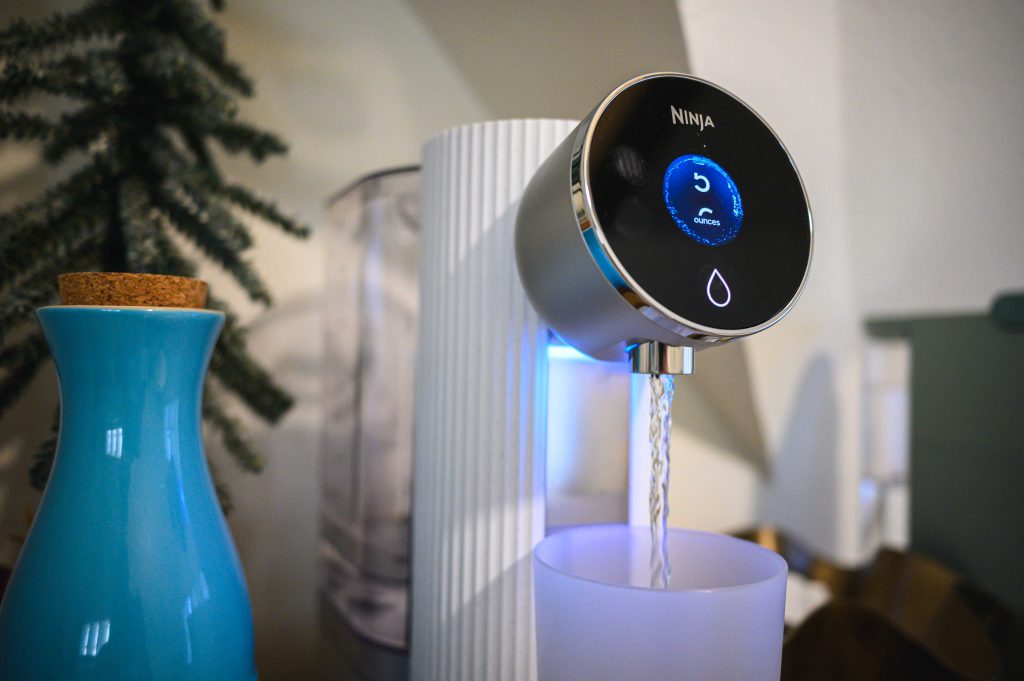
Ninja didn’t overcomplicate the dispenser
The HydraSense could have easily fallen into the trap of adding technology simply because Ninja could. Thankfully, the interface remains pretty straightforward.
The touchscreen is clean, responsive and easy to understand. You can select preset amounts, create up to three custom serving sizes or let the machine dispense continuously until you tell it to stop.
I expected to use the presets more than I actually did.
Between coffee mugs, glasses, water bottles and whatever else I’m filling, I rarely need exactly the same amount of water every time. I’ve found myself manually dispensing water more often than relying on a saved preset.
There’s also a Slow Pour mode designed for things like ice trays and smaller or shallower containers where the normal flow might be a little too aggressive.
It’s actually a nice feature to have. Personally, I didn’t find myself using it much because I already have an ice maker, so filling ice trays isn’t really part of my routine. But if it is for you, I can see where it would be useful.
What surprised me more was how often I started choosing the HydraSense over my refrigerator simply because it was quicker and easier.
My fridge already dispenses filtered water, but that means standing there with my bottle pressed against the dispenser until it’s full.
With the HydraSense, I can put the bottle underneath, tell it how much water I want, hit the button and walk away.
It’s a small difference, but once I got used to it, I found myself naturally gravitating toward the HydraSense even though the refrigerator was sitting right there.
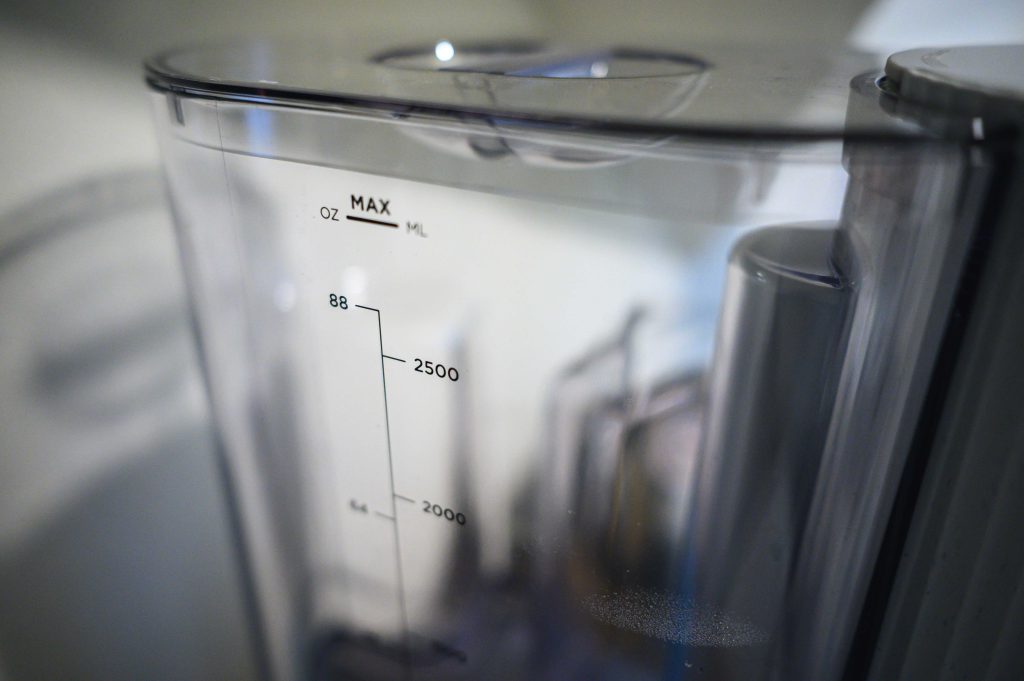
96 ounces is both a benefit and a drawback
The removable reservoir holds 96 ounces, which is large enough that I don’t feel like I’m constantly making trips to the sink.
There’s an obvious consequence to that capacity, though: water is heavy.
A completely full reservoir weighs roughly six pounds from the water alone. That’s not outrageous, but you notice it when you’re carrying the tank back from the sink.
So where you put this thing matters.
If it’s relatively close to your sink, filling it is incredibly easy. If you’re carrying 96 ounces of water across your house every time it runs dry, you’re trading some of that convenience back.
But that also leads into what I think might be the most interesting thing about the HydraSense.
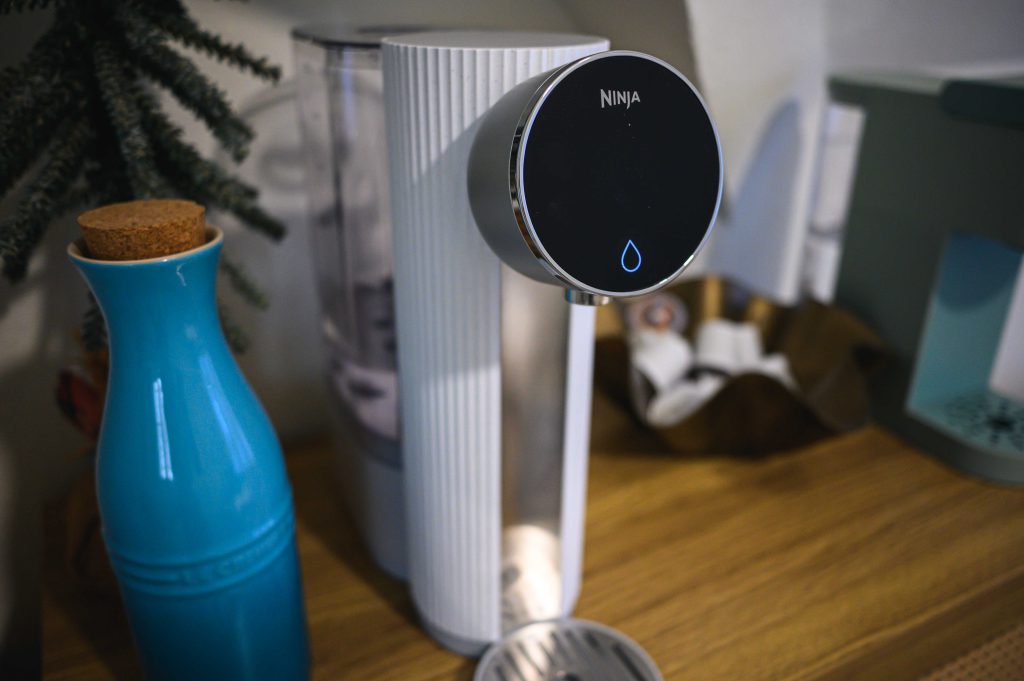
It doesn’t actually need to be in your kitchen
There are no water lines to connect and no permanent installation required.
HydraSense basically needs two things: tap water and an electrical outlet.
Initially, I viewed the product as an expensive alternative to a Brita. Brita occupies refrigerator space; HydraSense occupies counter space.
And that’s certainly part of the decision.
If you’ve got a huge fridge and very little counter space, maybe a Brita makes more sense. If refrigerator space is at a premium and you’ve got room on the counter, maybe HydraSense starts looking more appealing.
But after living with it, I realized it doesn’t really have to be an either-or kitchen decision at all.
There’s nothing requiring this thing to stay in the kitchen.
You could put it in an office. A home gym. A guest room. Upstairs. A bedroom.
As long as you’ve got an outlet and you’re willing to refill the reservoir occasionally, you can essentially create a filtered-water station wherever you want one.
That flexibility turned out to matter a lot more to me than I expected.
The lack of refrigerated water bothered me less over time
There is one pretty obvious advantage my refrigerator still has over the HydraSense: cold water.
HydraSense doesn’t actively refrigerate its water.
Ninja gives you a couple of options. You can remove the reservoir and put it in the refrigerator, or you can throw some ice into the tank and run the recirculation cycle to cool everything down.
Putting the reservoir in the refrigerator feels a little counterproductive to me. If part of the appeal is getting a giant water pitcher out of your fridge, putting the HydraSense tank in there brings you right back to where you started.
The ice solution actually worked better for me.
I pretty quickly got into the habit of randomly tossing some ice into the reservoir whenever I was filling it. It’s easy enough, and it definitely helps cool the water down.
But something interesting happened once I moved the HydraSense upstairs: I stopped caring about the temperature nearly as much.
I’m not really using it as my primary source of ice-cold drinking water anymore. If that’s what I want, I’ve still got my refrigerator downstairs.
Upstairs, I’m using the HydraSense because I want water right there.
And I think that’s an important distinction.
If you’re buying this specifically to replace a pitcher of cold water in your refrigerator, the lack of active refrigeration is absolutely something to consider.
But if you’re using it as a way to put filtered water somewhere you normally wouldn’t have it, suddenly that compromise doesn’t feel nearly as important.
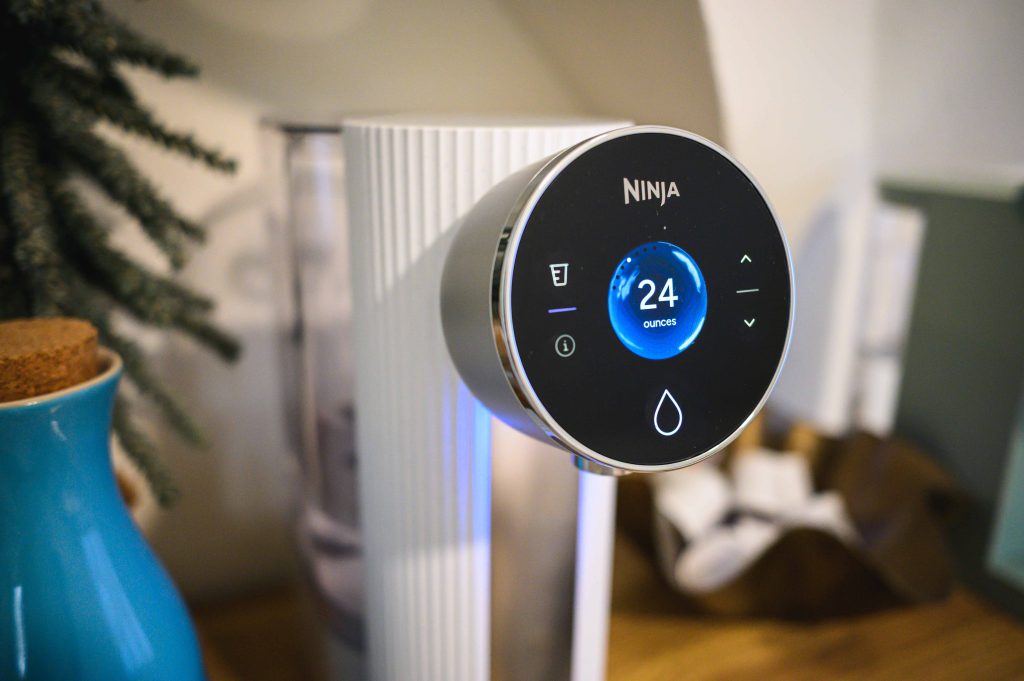
Somehow, mine ended up in the bedroom
And that’s the part of this review I absolutely didn’t see coming.
Honestly, when I first got the HydraSense, I didn’t think I needed it.
I’ve already got a fridge with a solid water filtration system. The water’s cold. It makes ice. It does exactly what I need it to do.
But I am a lazily efficient person at heart.
There are plenty of nights when we’re upstairs, I’m already cozy and comfortable, and the Mrs. asks me if I can grab her some water.
Normally that means heading all the way back downstairs to the kitchen.
Now I can just pop over to the HydraSense, hit a button, fill up a glass and I’m done.
And for me?
That’s a win.
It’s admittedly a very specific use case, but it completely changed the way I thought about this product.
The biggest advantage isn’t necessarily that HydraSense is a much fancier Brita.
It’s that it gives you filtered water somewhere you otherwise wouldn’t have it.
An office without a sink nearby. A home gym. A bedroom. An upstairs living area.
You’ve got a big enough reservoir that you can put this thing in some unconventional places and just have filtered water at your fingertips.
The filter should be pretty low maintenance
The filter itself is rated for up to 120 gallons, or roughly six months depending on how much water you’re actually putting through it.
I also like that the HydraSense keeps track of filter usage for you. I’m terrible at remembering exactly when I changed something like a water filter, so having the machine monitor its remaining life is genuinely useful.
Replacement filters obviously add to the long-term cost, and that’s something you have to factor in on top of the $250 purchase price.
But if you’re actually getting somewhere around six months out of each filter, you’re looking at roughly two filter changes per year rather than constantly thinking about it.
So, is a $250 water filter worth it?
I don’t think there’s a universal answer.
And honestly, I don’t think I can tell you whether you should spend $250 on something like this.
It’s way too dependent on your situation.
If you’ve got plenty of refrigerator space and you’re perfectly happy with a $30 Brita, I’m not going to tell you that you suddenly need a $250 appliance sitting on your counter.
If your refrigerator already dispenses great filtered water, you may not need this either.
I didn’t.
And that’s also what made my experience with it interesting.
Even with filtered water already available from my refrigerator, I sometimes found myself walking over to the HydraSense instead. It’s fast, I don’t have to stand there holding my bottle against the fridge, and I can hit a button and let it do its thing.
And once I moved it outside of the kitchen, it became even more useful.
Maybe you’ve got limited refrigerator space. Maybe your fridge doesn’t dispense filtered water. Maybe your family goes through a ton of water. Or maybe you simply want easy access to filtered water somewhere else in your house.
Those are all completely different situations, and I think that’s ultimately how you have to look at the HydraSense.
The contaminant reduction matters. The pressure-powered filtration is genuinely fast. The reservoir is big. The interface is simple. And automatic dispensing ended up being more convenient than I expected.
But none of those individual specifications ended up being my favorite thing about it.
For me, the feature that won me over was the freedom to put it almost anywhere.
Fill the tank. Plug it in. And you’ve essentially created a filtered-water dispenser wherever you want one.
For the right person—and more importantly, in the right place—that can be surprisingly useful.