




Most toasters die quiet deaths. The heating element goes, the plastic housing cracks, and you toss the whole thing for twenty bucks. Dualit built its reputation on refusing that cycle.
Every Classic 4-Slice comes off a bench in West Sussex with the assembler’s name stamped on the base plate. Every part inside it, from the ProHeat elements to the timer switch, can be ordered and swapped without buying a new toaster.
Where It Sits: Lineup and Competition
Inside Dualit’s own range, the NewGen Classic is the flagship. It replaced the older Vario, which used a rocker switch instead of the current selector dial. Dualit also sells a cheaper Lite line that looks similar on the counter but swaps in electronic controls and drops some of that same repairability.
At this price, a shopper isn’t really cross-shopping budget toasters. The real alternatives sit in the same $200 to $480 tier.
A Breville Die-Cast runs around $210 and gives you automatic pop-up plus digital controls. Smeg’s 4-slice models land in a similar $250 to $350 window depending on finish, trading Dualit’s mechanical simplicity for retro styling and a touchscreen-adjacent feel. At the top end, Wolf Gourmet’s Four Slice Toaster runs $479, with extra-wide slots, self-centering bread guides, and a five-year warranty, all fully automatic. The KitchenAid Artisan sits in between, similarly styled but bulkier on the counter.
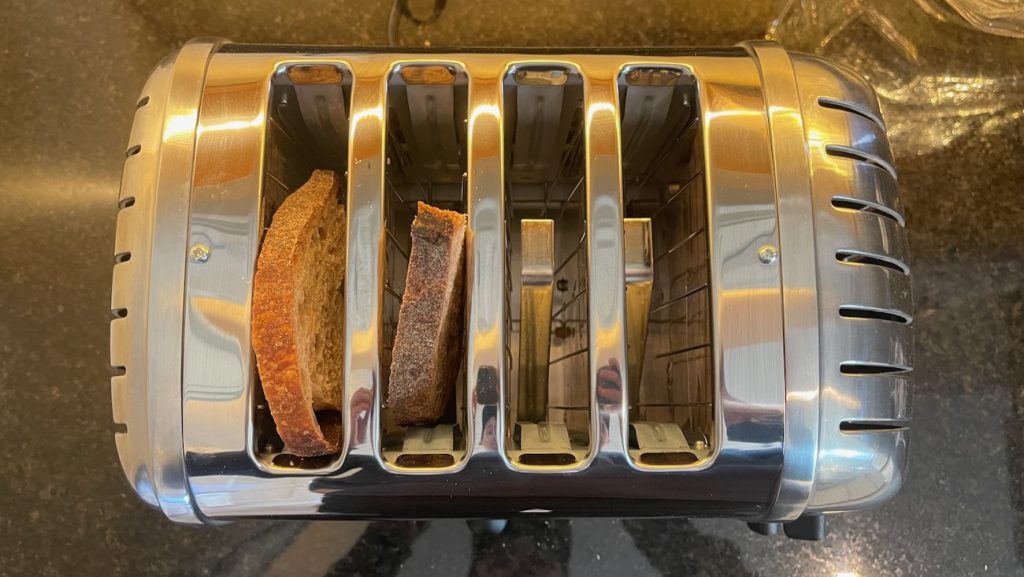
What separates the Dualit from all of them is the total absence of automation. Every other toaster in this price range pops up on its own and gives you some form of digital feedback. Dualit gives you a dial, a lever, and your own judgment.
T3’s long-term review called the Classic NewGen the best toaster money can buy after living with one for a couple of years. Their reviewer pointed to the same two things I keep coming back to: the ProHeat elements and the ability to check toast mid-cycle without resetting the timer.
Hands-On Findings
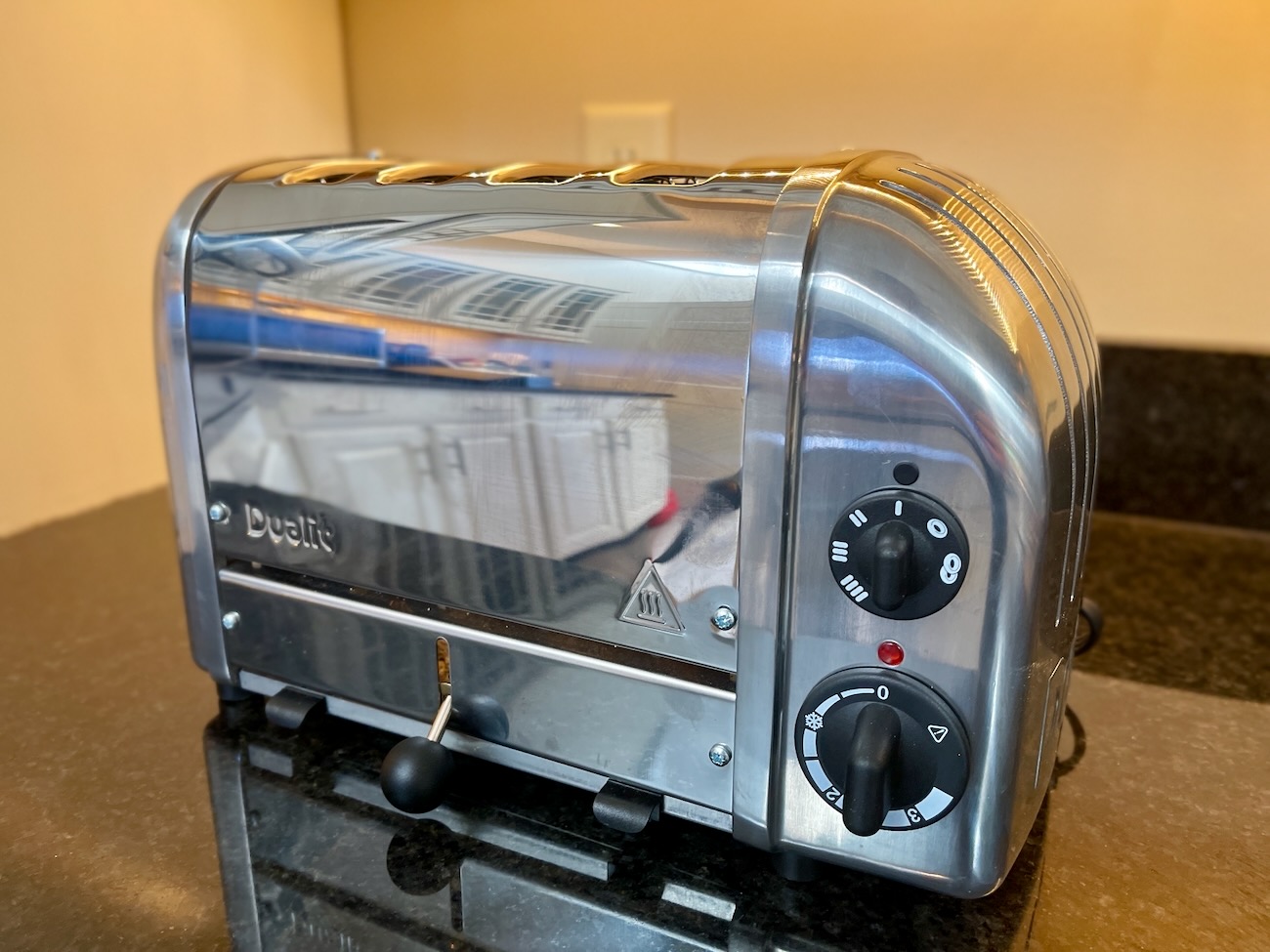
Using the NewGen feels like dialing a rotary phone after years of touch screens. You turn a dial to pick how many of the four slots to heat, set the mechanical timer, and lower the lever yourself. Nothing pops up.
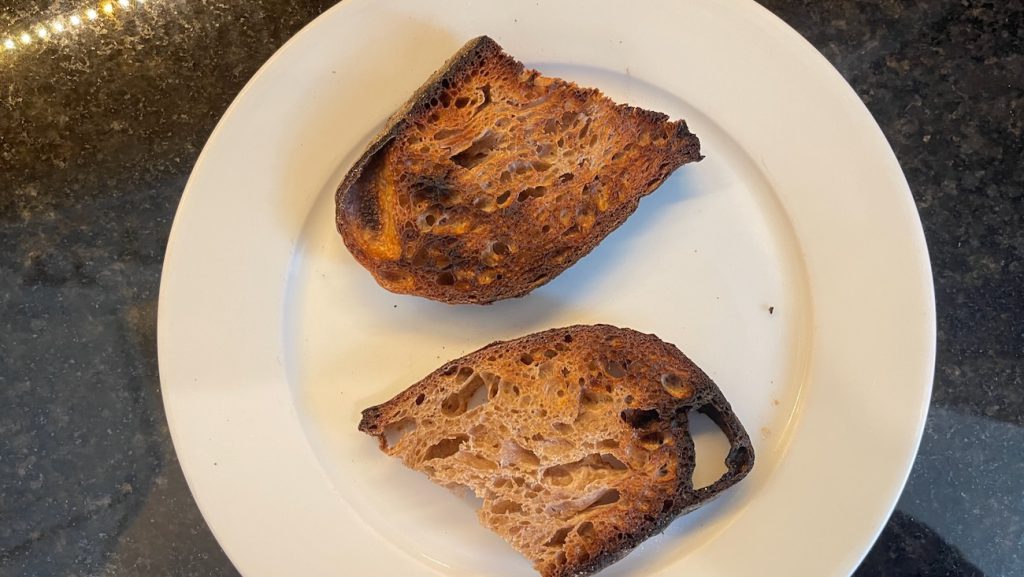
Most of my toasting lands around a 3 on the dial. The right number depends on the bread. Moisture content and density both push that setting around. A dense sourdough with more moisture needs more time than a lighter sandwich loaf, so I treat 3 as a starting point rather than a fixed number. I haven’t run the bagel setting yet, so I’m holding off on judging that function until I do.
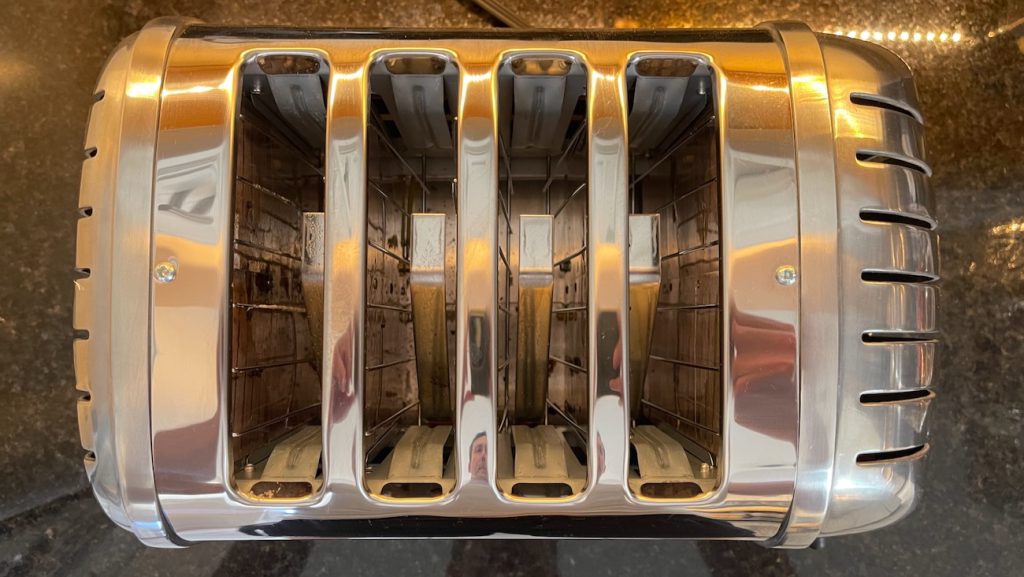
Coming from a Breville myself, slot depth is where the Dualit pulls ahead. Longer slices that used to poke out the top of my Breville drop all the way down here. Real Homes tested the same thing with chunky bread and found the 28mm slots handled it without sticking, which lines up with what I’m seeing.
A few customer notes worth passing along here.
- Several owners run the toaster empty for a minute or two on first use, since a slight smoking smell and popping sound from new elements is normal, not a defect.
- Others point out the first slot loads left to right, which trips up people coming from other brands.
- Long-term owners often recommend ordering a spare timer and heating element up front, since both are the most common wear parts once you’re past year 10.
I still have the sandwich cage accessory from an older Dualit model, and it works fine in the NewGen. The catch is slot width, since bread needs to be thin enough to clear the cage on the way down.
I tested this with a sandwich cut from a homemade loaf, slicing it thinner than I normally would specifically to make sure it cleared. I kept the filling light too, since overstuffing is the fastest way to jam the cage mid-drop. I skipped butter on the outside entirely, and the sandwich still came out evenly toasted with a good melt inside.
Cleaning is Straightforward
Slide the crumb tray out from underneath, and make sure the eject lever handle is up and out of the way first so it doesn’t catch. A few owners report the plastic pull-tabs on the crumb tray as an early wear point, breaking well before anything else on the toaster does.
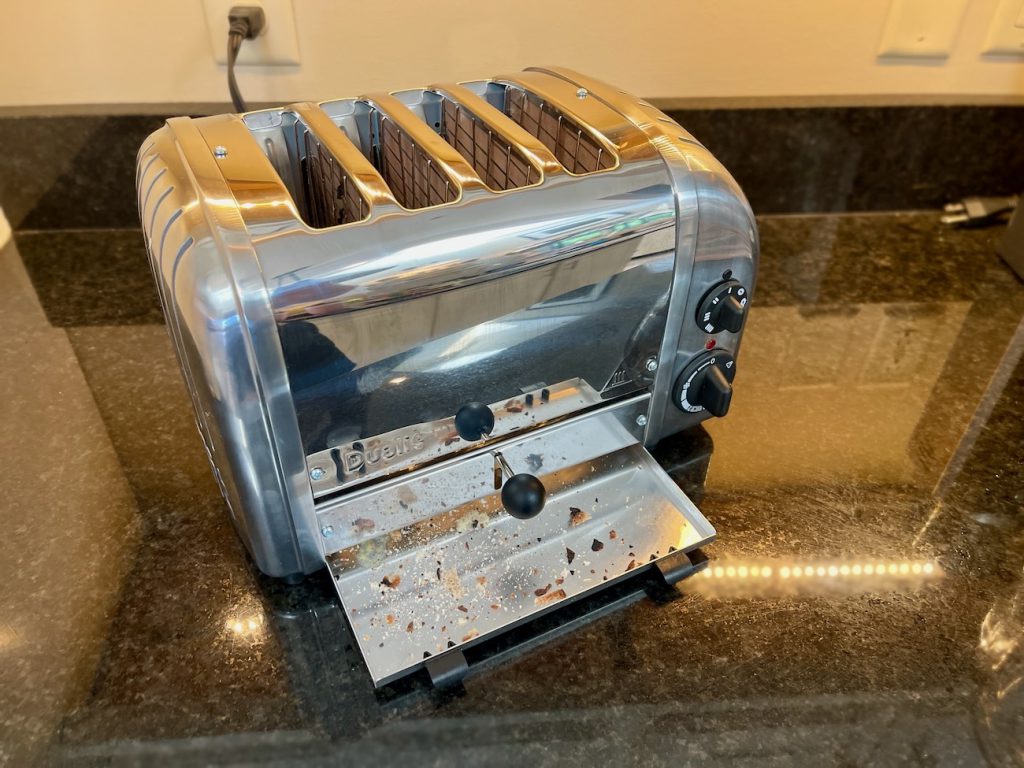
There’s no cancel button. Cranking the timer back to zero to stop a cycle early feels like you’re about to overtorque something. I’ve come to like the flip side of that same tradeoff, though. There’s no spring-loaded pop-up mechanism to fail either, which means one less part that can break on me down the road.
One quirk made me laugh more than anything. Dualit’s manual recommends unplugging the toaster when it’s not in use, which tracks with the UK’s broader obsession with electrical safety. Anyone who’s stayed in a British house and noticed there’s no power outlet in the bathroom knows exactly where that instinct comes from.
How I Tested
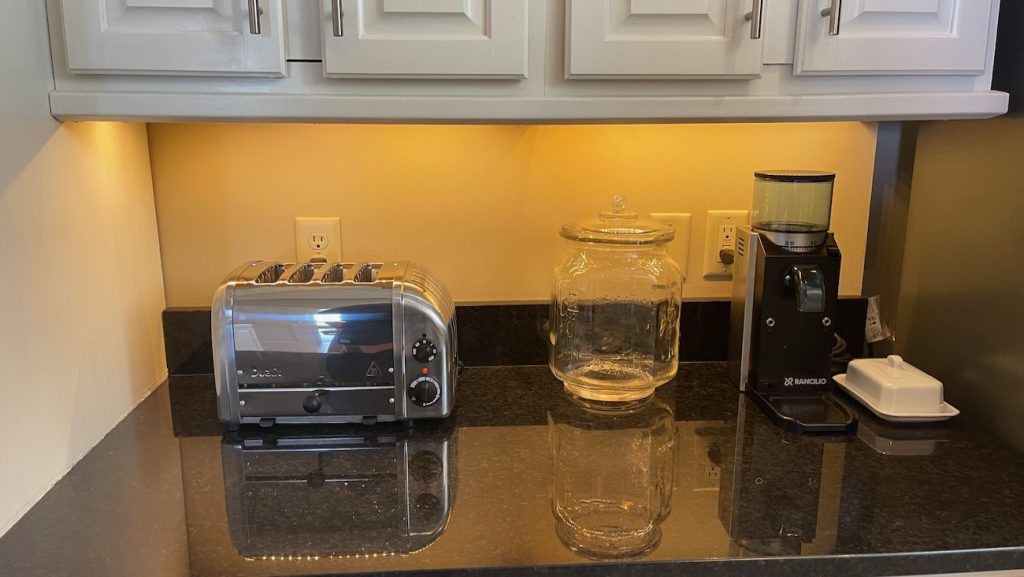
I ran the NewGen through daily breakfast sessions over several weeks, using a wide mix of bread. That included sourdough, sesame homemade loaves, and plain store-bought white flour hot dog and burger buns.
I toasted 1 slice, 2 slices, and batches of 3 to 4 slices to see how the slot selector and heat recovery held up across different loads. I also tested the sandwich cage accessory with a thinner-cut homemade loaf, kept the filling light, and skipped butter entirely.
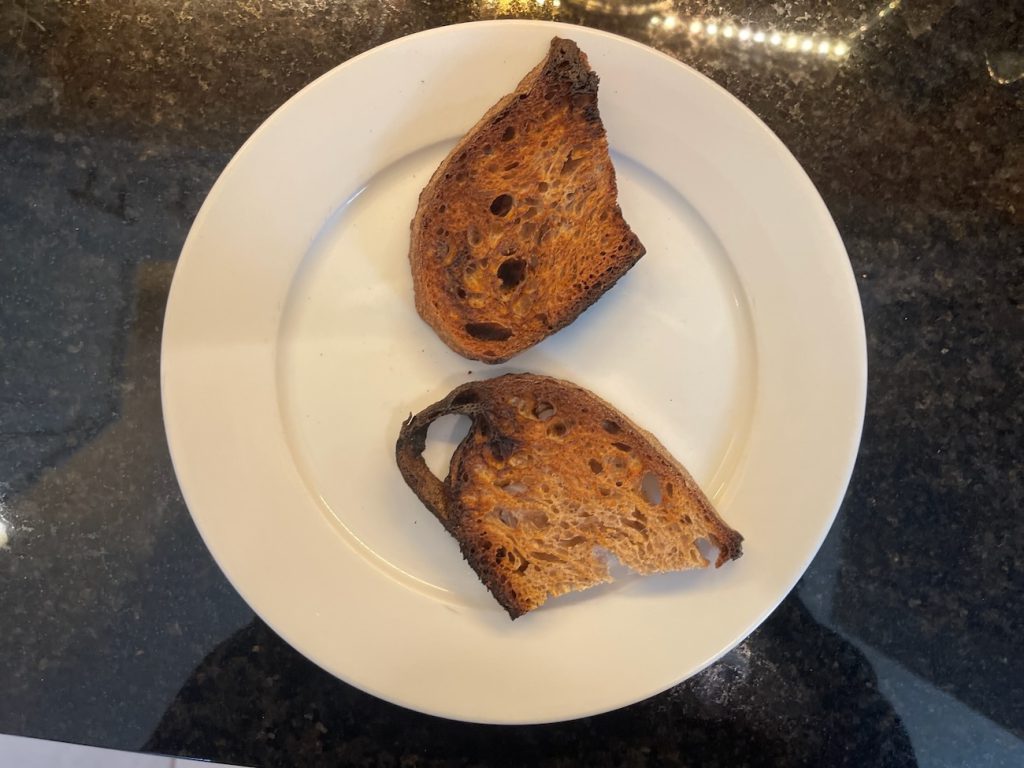
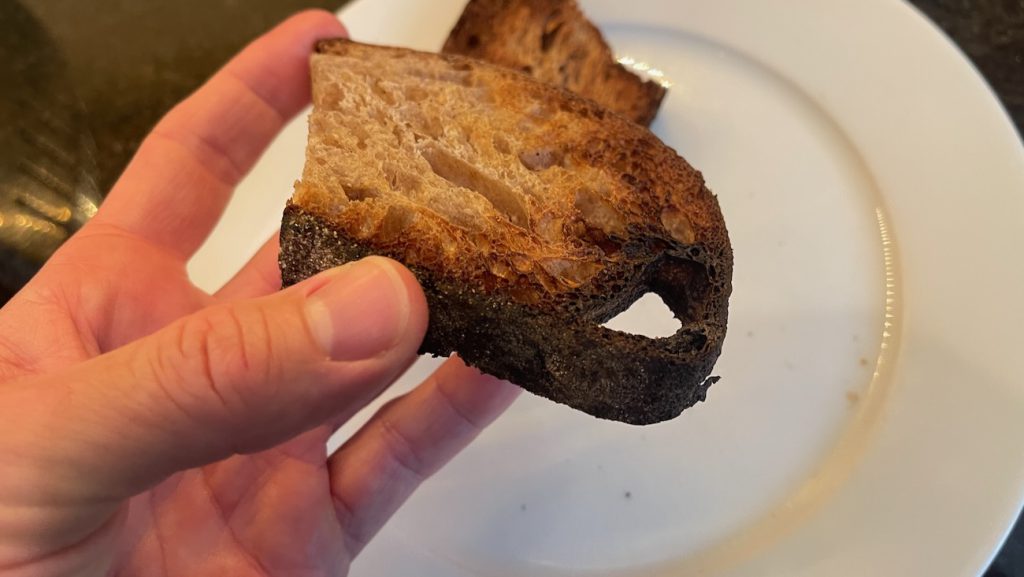
Overall, the bread toasted fairly evenly across all of these, and nothing put me off the toaster. That said, my testing photos show some real variation slice to slice, not just at the edges and crust.
A few pieces came out noticeably darker or lighter than others from the same batch, even at the same dial setting. It wasn’t enough to ruin any single piece of toast, but it’s there if you look closely at the photos, and it’s worth knowing about going in. Smaller pieces, like sesame slices toasted alone, were also harder to pull out by hand. I ended up using chopsticks to fish them out, which worked fine and isn’t outside the norm for a toaster with a manual lever instead of an auto-eject.
I cross-referenced my results against the expert reviews above and pulled longevity data from verified Amazon reviews spanning purchases from the 1990s through this year.