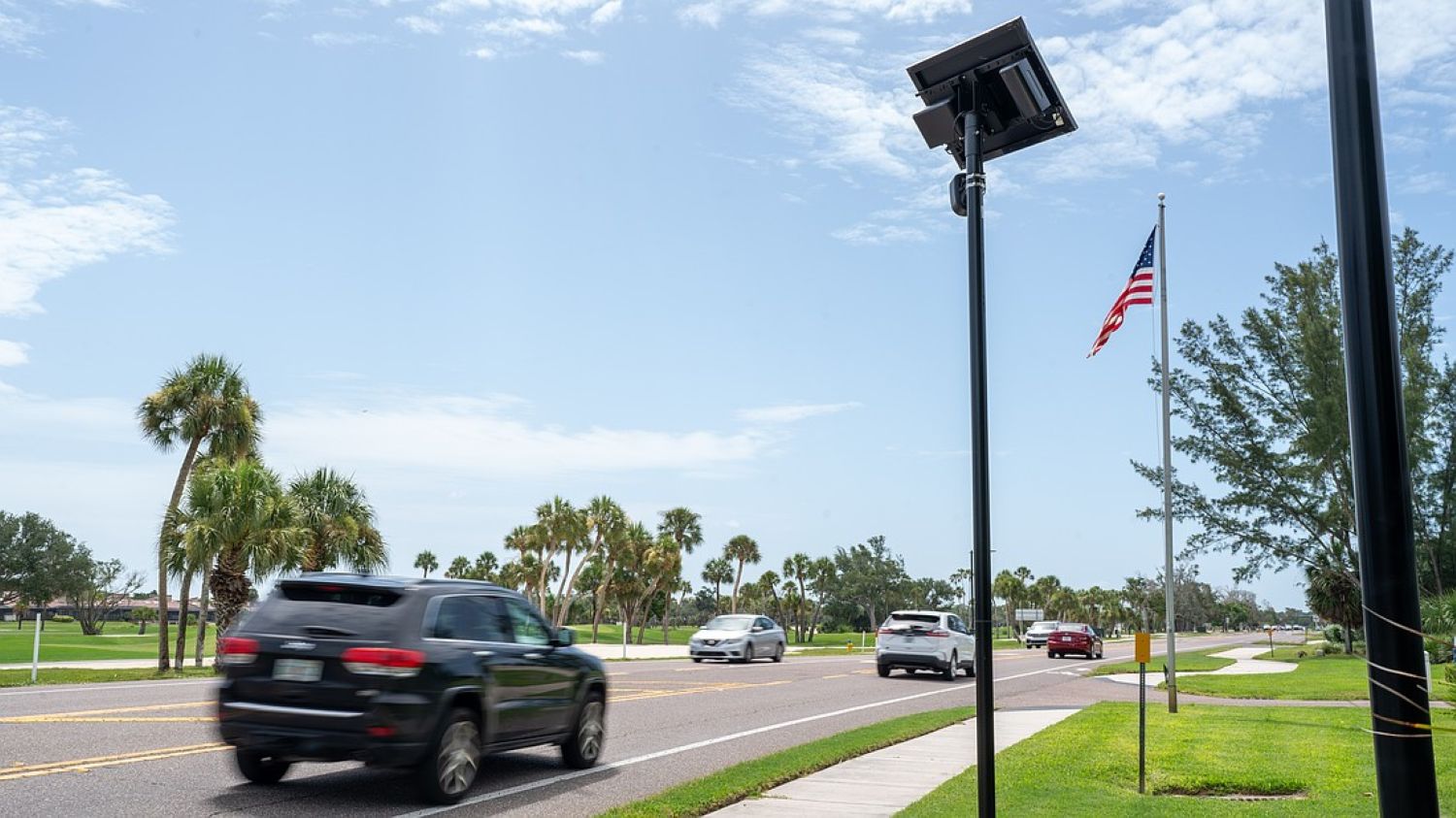
Alpharetta, Georgia paid Flock Safety $17,680 in 2020 for five cameras and access to its Wing software. By 2025, that annual bill had reached $381,000.
WIRED reviewed records from more than two dozen cities and found the same pattern repeating: the initial contract price is rarely the final one.
The Starter Bill Is Just the Beginning
Covington, Georgia’s documented spending arc shows how a modest camera deployment becomes a six-figure annual commitment.
Covington paid roughly $40,000 annually in 2020 and 2021 to maintain 20 cameras. Adding 15 Falcon cameras in 2022 pushed that year’s total to $81,250, and by 2024 the city paid $113,225.
The 2025 bill reached $159,000 after the city added a Drone as First Responder program. Through August 2026, payments for that period totaled $201,000, covering maintenance, one camera replacement at $800, and new software products.
Savannah, Georgia climbed from $33,000 in 2020 to $193,500 in 2025. Snellville, Georgia started with a $5,000 contract in 2021, closer to a pilot than a program, and reached $163,275 by 2025. Covington’s trajectory is not an outlier.
A July 2022 Flock public-sector price sheet reviewed by WIRED shows the underlying cost structure. Individual license-plate readers and surveillance cameras run $3,000 to $5,200 annually. Installation adds $150 to $2,750 per device. Gunshot detectors cost $8,500 to $35,000 per year depending on coverage range. Individual drones run $50,000 to $150,000 annually. Camera replacements are charged separately at $800 each, and Flock retains ownership of the hardware under its contract terms.
Lock-In by Design
Integrated networks, multiyear rate agreements, and rising per-unit prices combine to make vendor switching operationally difficult.
Alpharetta’s procurement documents noted that other vendors would not integrate with its existing Flock network, partly because the department had built its system on cameras already purchased by local homeowner associations. That prior private infrastructure became the documented rationale for remaining with Flock.
Alpharetta’s five-year agreement cost $254,250 in year one and $238,000 annually after that. WIRED calculated the deal saved $232,500 compared with five separate one-year agreements at then-current prices. The discount is real, but so is the commitment that comes with it.
A 2023 Flock email to Albany County’s sheriff’s office announced that Falcon camera prices had risen from $2,500 to $3,000 per unit, then offered a five-year contract to preserve existing rates. A price-lock agreement and a long-term commitment tend to arrive as a package.
Greenfield, California weighed consolidating five separate vendor relationships into a single Flock bundle priced at $136,940 annually, roughly $24,000 more per year than its existing spending. The city considered the proposal; it was not confirmed as an adopted contract. Matthew Guariglia of the Electronic Frontier Foundation told WIRED that once officers begin using a surveillance app, generating the political will to remove it becomes difficult.
What City Councils Should Be Asking
Dollar figures without context mislead; the procurement questions most cities skip are the ones that determine long-term cost and control.
Pasadena, Texas allocated $427,133 for Flock in its 2026 police budget, placing it among the department’s largest technology line items alongside $500,842 for body-camera software and $500,000 for Motorola maintenance. Covington’s Flock spending over the same period represented a small fraction of a $12,488,733 police budget. The same annual number carries different weight depending on where it sits in the ledger.
Killingworth, Connecticut paid $14,600 for four cameras before ending its Flock relationship, with the town’s first selectman citing privacy concerns and limited utility for its resident state trooper. Lorain County, Ohio announced plans to cancel its contract after Flock proposed a 17 percent rate increase on a two-year agreement covering 15 cameras, a figure the sheriff’s office confirmed after correcting an earlier higher estimate. Exit is possible, but it depends on local officials raising specific concerns before a contract renews.
Those concerns are concrete: What does the full five- or ten-year cost look like, including software add-ons and replacement hardware? Who covers vandalism, theft, or camera relocation? Can the city export its own data if it leaves the platform? What happens to stored vehicle-movement records when the contract ends?
Stronger total-cost-of-ownership analysis before the first camera goes up gives local officials far more leverage than any negotiation after the fifth renewal.