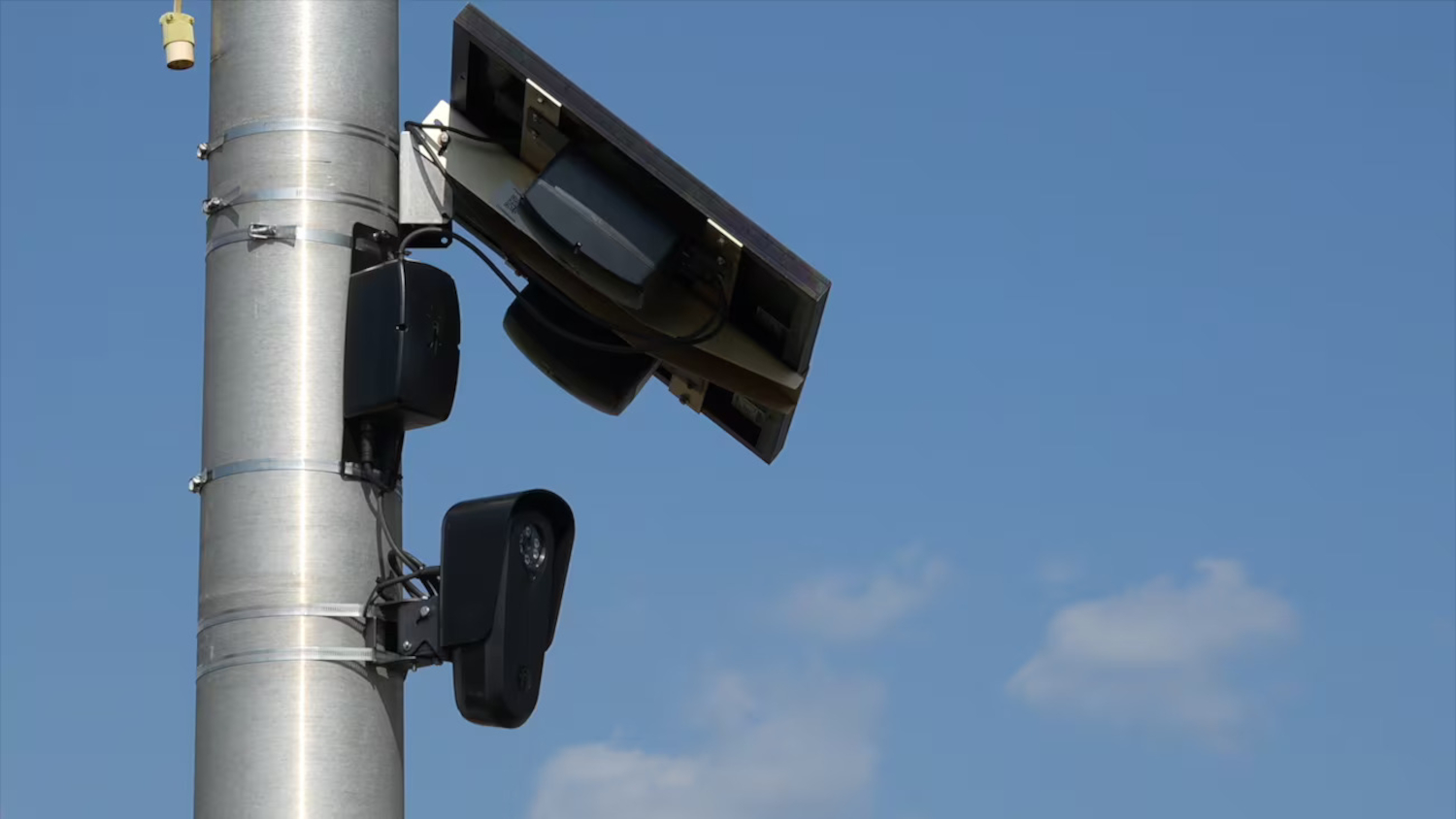
Three license plates were sitting permanently on a police surveillance whitelist with no expiration date and no associated names. No written explanation accompanied them in the available records.
That is what former U.S. Navy senior intelligence analyst Kyle Skeen pulled from public-records requests in Maryville, Tennessee. It raises a question Flock Safety has not cleanly answered: in a network of more than 120,000 cameras watching public roads, who decides which vehicles those cameras stop alerting on?
What the Safe List Actually Is (and Was)
The answer depends on whether you are asking about a private neighborhood system or a municipal police deployment, and Flock’s public documentation does not make that distinction obvious.
Flock Safety markets a feature called the Safe List, currently described in its public FAQ as a tool for private neighborhood customers such as HOAs and neighborhood associations. Residents can register their plates, identify themselves as locals, and in some cases have their vehicle footage automatically deleted from that private system.
That arrangement sounds reasonable for a gated community. It sounds considerably different when something similar appears inside a municipal police deployment.
Flock told InvestigateTV that it previously offered Safe List functionality to some law-enforcement customers but removed it because it was not widely used. The Maryville entries, the company said, were “suppressed hits,” a distinct mechanism designed to prevent recurring false alerts caused by similar-looking plate characters, not a Safe List in the current sense.
Maryville’s police chief offered the same framing, saying the three plates were flagged to correct repeated misread alerts rather than to give any vehicle preferential treatment.
That explanation may be entirely accurate. The problem is that no written criteria, no expiration dates, and no supervisor sign-off appear in the available records to confirm it.
It is a list of special plates, or assigned category, which people are suppressed from the system. It means, basically, when you drive around, the camera ignores your car.
Kyle Skeen, former U.S. Navy senior intelligence analyst, speaking to InvestigateTV about what he found in Maryville public records
Skeen’s characterization describes what suppression looked like from the outside, based on the records he reviewed. Whether those three vehicles were still captured and stored while alerts were silenced is a separate question the available records do not answer.
A Governance Problem That Goes Well Beyond One City
Maryville’s missing paper trail is striking, but the procurement failures InvestigateTV documented stretch across multiple states.
Maryville’s 16 Flock cameras were operational by 2020. The City Council did not vote on the installation until July 2024, when a state right-of-way permit brought the matter before elected officials.
Knox County, Tennessee, went further. County officials declared their Flock contract invalid and ordered the cameras removed. When the cameras stayed up anyway, county workers physically covered them.
Dallas approved a $5.7 million sole-source contract in 2025 to keep more than 600 Flock cameras running, using a sole-source justification despite the existence of competing ALPR vendors. Supporters cited the system’s role in homicide investigations. Critics questioned the limited public debate before the contract was signed.
More than 250 communities have canceled or declined to renew Flock contracts, according to an Institute for Justice catalog cited by InvestigateTV. That figure indicates that resistance to the technology is organized and widespread, not isolated. Concerns about surveillance whitelist practices have emerged in other contexts as well, underscoring how unaccountable systems can take root across different jurisdictions.
The Questions Flock and Cities Both Need to Answer
Clear written policies for plate suppression do not exist in the Maryville records reviewed, and that gap is the accountability problem.
Flock’s public documentation still describes opt-out controls for neighborhood customers using terminology similar to law-enforcement Safe List language. That is a communications problem Flock can address, and should.
The harder fix belongs to cities. Any plate-suppression mechanism, regardless of what it is called, needs written criteria for who qualifies, mandatory expiration dates, supervisor authorization, audit logs, and periodic public review. Broader patterns of secretly tracking users without disclosure or audit trails show why these safeguards matter. A network of this scale owes the public more than an after-the-fact explanation that the entries were a technical workaround.