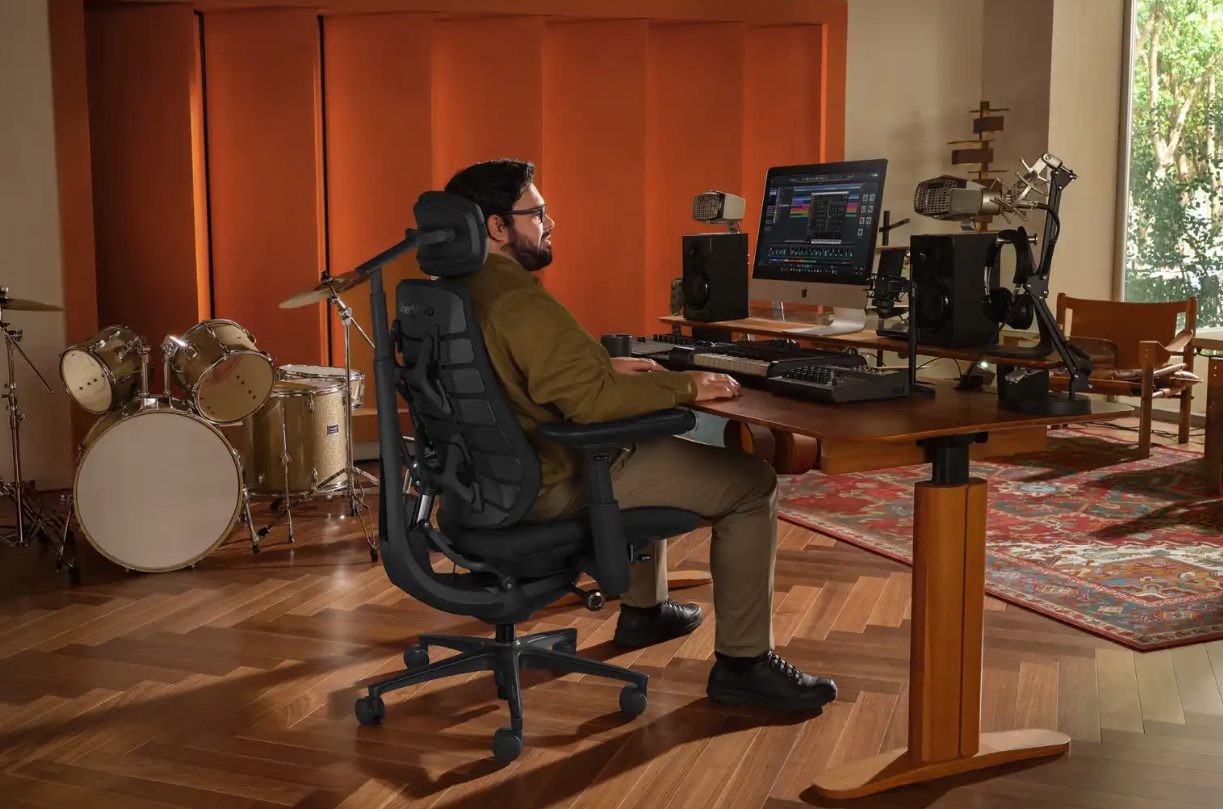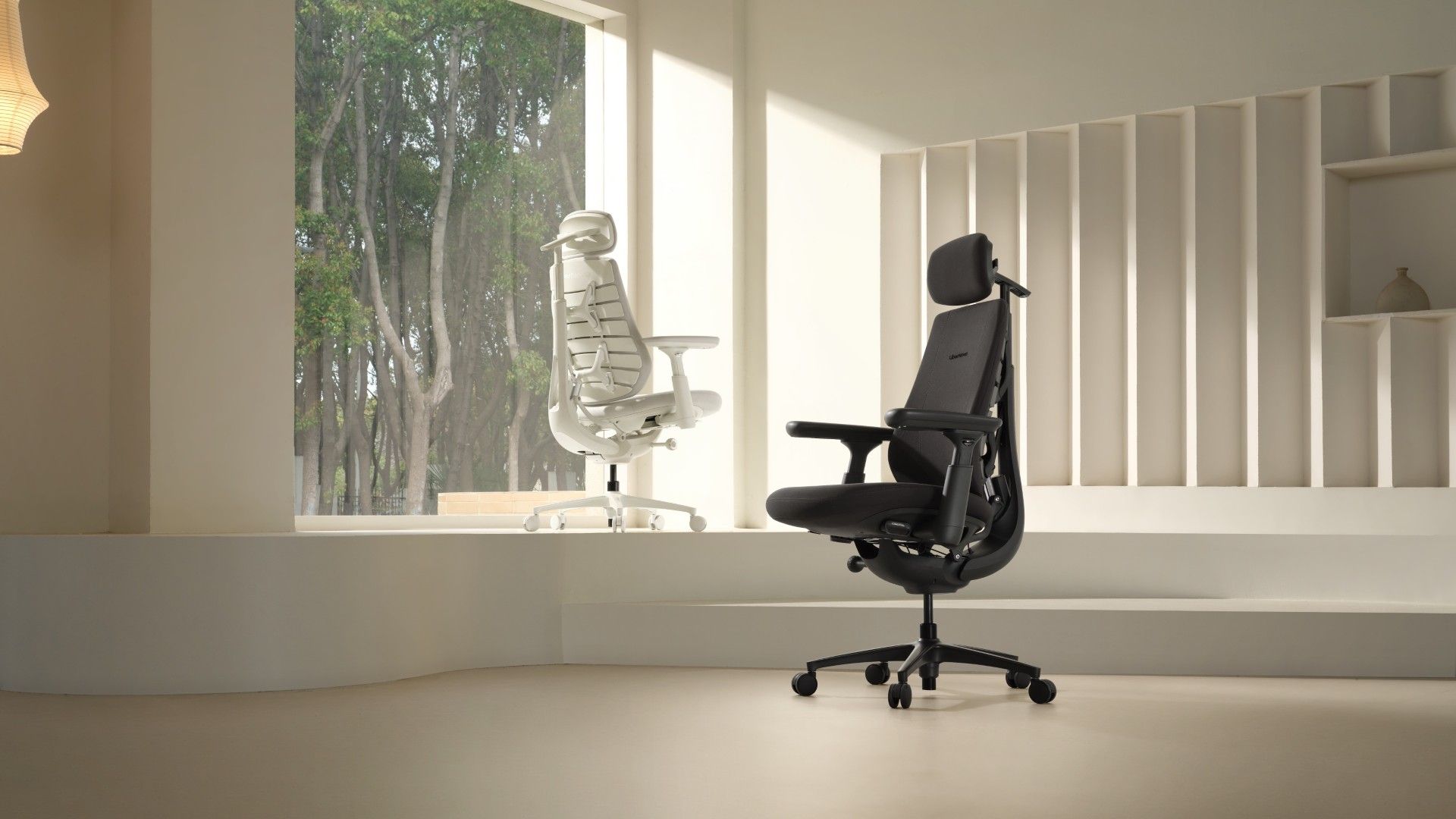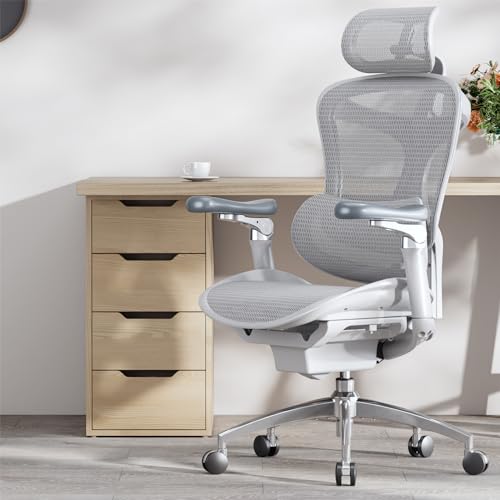


I have spent a month in the LiberNovo Maxis Airflow, and I keep thinking about the Omni.
That is not the outcome I expected. A year ago, in my Omni review, I called the Omni the most comfortable chair I had sat in that did not cost $1,800, and I said that after years in a Steelcase Gesture. The Maxis is newer, more expensive, and built noticeably better. It is also the chair I have to talk myself into every morning.
I am 6’2″ and about 180 pounds. That number matters more here than anything else in this review.
Where the Maxis sits in the lineup
LiberNovo now runs two families. The Omni line covers the Omni Gen, the Omni SE, and the Omni Pro. The Maxis line launched in June 2026 as the company’s first big and tall chair that was not an Omni scaled up 10 percent.
The Omni is rated for 5’2″ to 6’3″ and 300 pounds, with a choice of 45cm or 48cm seat depths. The Maxis is rated for 5’10” to 6’7″ and 399 pounds, with a fixed 52cm seat and no depth adjustment at all. LiberNovo’s reason for locking the depth is that a sliding pan would move you off the seat foam’s density zones, which you can read in the official specifications. Reasonable argument. Also a convenient one.
There are three Maxis builds. Manual starts at $1,119 with manual lumbar. Electric starts at $1,319 and adds a motorized lumbar plus the powered stretch. Airflow, which is what I have, starts at $1,701 and adds the seat fan. For reference, I tested the Omni at $848. The current Omni Gen sits at $1,019. LiberNovo discounts constantly, so check the live price before you buy anything here.
The build quality is not close, and I have the tape to prove it
Pick up both chairs and you know which one was engineered later.
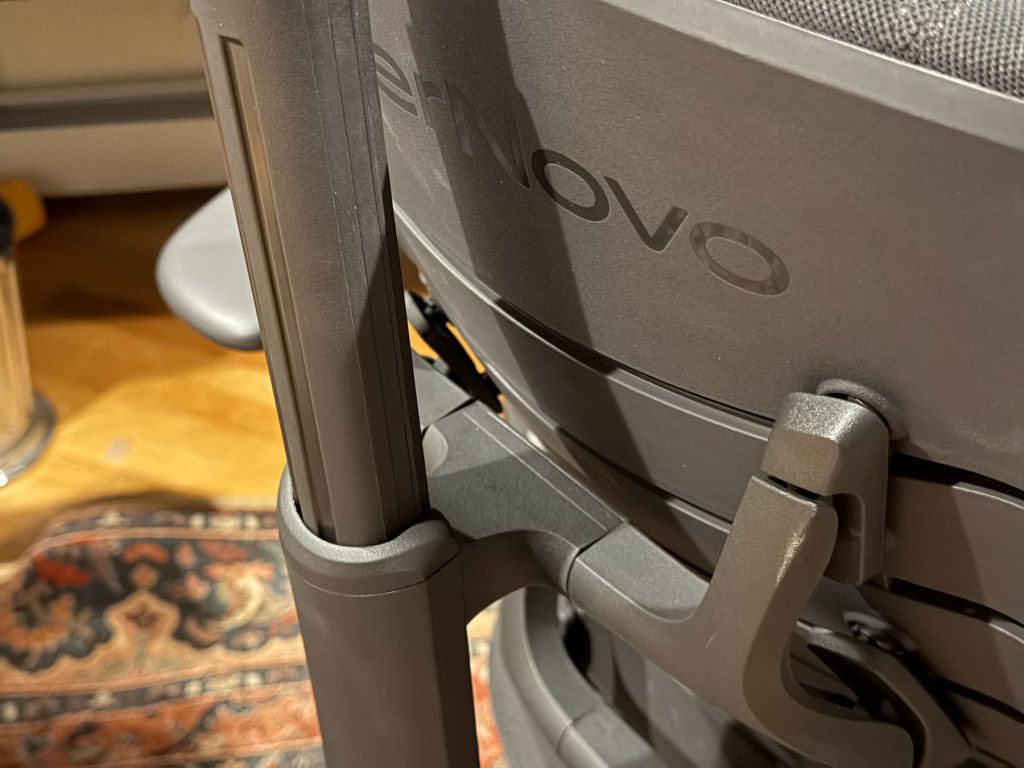
On my Omni, the piece connecting the backrest to the subframe is plastic. It broke. I now have heavy duty tape holding that joint together, and I am still sitting in the chair, which should tell you how much I like it. It also tells you exactly what LiberNovo learned. On the Maxis, that same connection is screwed together. No plastic clip doing structural work.
That difference runs through the whole chair. Nothing flexes when I shift my weight. After a month of daily use there is no creaking and nothing has loosened. LiberNovo backs the Maxis frame for 6 years against the Omni’s 5, and after what happened to mine, that extra year reads as earned rather than as marketing.
Let me be clear about the ceiling here, though. Neither of these chairs is built like a Herman Miller or a Steelcase. Those companies have decades of manufacturing behind them and parts you can order for a chair from 2009. LiberNovo is a few years into this. The Maxis is a large step up from the Omni. It is not a step into that company.
The materials are effectively the same between the two chairs. This is not about better fabric or better foam. It is about how the pieces were put together.
It is too big for me, and I feel it every day
Here is the problem. The Maxis does not hug me.
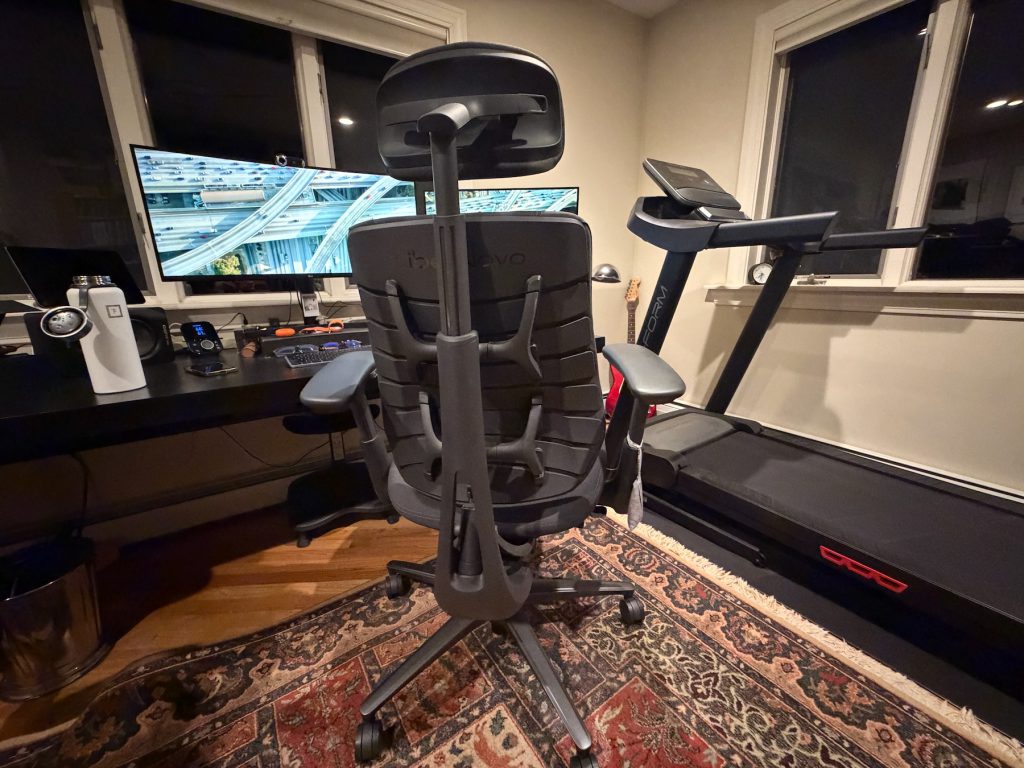
The Omni wraps around my back. The panels find my spine and hold it, and I stop noticing the chair within a minute of sitting down. The Maxis leaves gaps. I sit in it and feel like I am floating inside something built for a larger person, because I am. The backrest measures 16.9 inches across the shoulders and 20.5 inches at the waist, and my shoulders never reach the edges.
The seat is firmer too. Not punishing, but less giving than the Omni’s, and after a few hours in one position I am aware of it in a way I never was in the older chair. Other owners have landed in the same place. One three-week owner put the seat at 10 to 15 percent firmer than he would like and thinks LiberNovo overcorrected after Omni SE buyers complained about sagging cushions. That reads right to me.
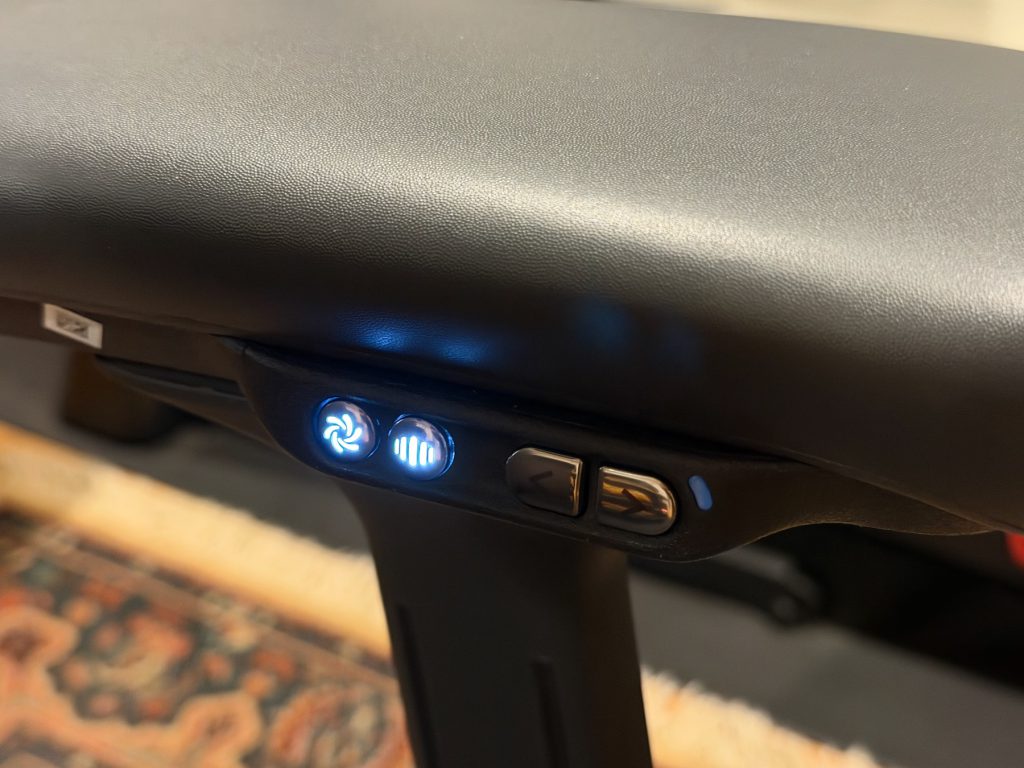
The fit problem carries into the tech. The motorized lumbar is genuinely clever engineering, and on the Omni I could feel it working. On the Maxis it does less for me, because my back is not making enough contact with the backrest for the motor to have anything to push against. Sleek Setups’ review landed near the same place from a different direction, finding that at stronger settings the motor pushes too high into the mid-back and saying he prefers the simpler manual version. If I were buying a Maxis with my own money, I would look hard at the $1,119 Manual and skip the motor entirely.
None of this is a defect. I am sitting in a chair designed for someone bigger than me and getting the result you would predict. But the fit chart says I qualify, and at the bottom of that range, qualifying and fitting are two different things.
Not everyone my size agrees, and that is worth knowing. One 6’2″, 195-pound owner said the Maxis was the first chair where he felt properly supported through the full length of his legs. Same height as me, about 15 pounds heavier, opposite conclusion. My read is that the line between fitting this chair and floating in it runs very close to where I sit, and your build matters more than your height. If you are near 6’2″, this is the chair to try inside the 30-day return window before you commit.
It is also heavier and more cumbersome. Moving it around the office is a two-hands, plant-your-feet job the Omni never was.
The cooling seat is the feature I was wrong about
I assumed the seat fan was a spec sheet flex I would try once and forget.
Then August happened. I was sitting in the chair on an unpleasantly hot day, trying to figure out how to cool down, and remembered the fan was right underneath me. Turned it on. It works. It pulls air up through the cushion, and the closest comparison I can give you is ventilated seats in a car. There are two speeds, and low was enough that day.
I would not pay the $382 jump from Electric to Airflow for it if my office had good air conditioning. If you run hot, or you work somewhere that gets stuffy in summer, it is a real feature.
What other owners are running into
The review pool on this chair skews heavily sponsored, so it is worth saying what shows up in threads where nobody got paid.
The positives are consistent among actual big and tall buyers. A 6’3″, 220-pound owner reported no seat bottoming out after several multi-hour days, which matters because sagging cushions were a genuine problem on the Omni SE. Assembly comes up as easy more often than not.
The complaints cluster in three places. Armrest pads slide out of position when you push off them to scoot back, something BTOD’s review flagged along with slower customer service as LiberNovo’s volume has grown. Electronics carry a 2-year warranty against the frame’s 6. And at least one overseas buyer had a lumbar motor fail inside two weeks and then could not get the chair serviced without real expense. That is the ownership risk with a young brand, and it is the same gap I ran into with my taped Omni. A Herman Miller part is a phone call. A LiberNovo part is a question mark.
How I tested
I used the Maxis Airflow as my daily work chair for just over a month, sitting in it for full working days at my desk. I am 6’2″ and roughly 180 pounds, which puts me at the bottom of LiberNovo’s recommended range for this chair and near the top of the range for the Omni I reviewed last year.
I ran the chair through all five recline positions, used the motorized lumbar and the stretch function regularly, and ran the seat fan on both speeds, including on the hot August afternoon that is the reason the feature is in this review at all. I moved the chair around the office more than once, which is how I know how heavy it is. My reference point throughout was my own Omni, which I have been sitting in since late 2025 and which is still in the house with tape on the back.