Buying your kid’s first bike sounds simple until you’re staring down a wall of options with nothing to go on. Look, the specs don’t tell you what you need to know. A seat height range means nothing if the minimum is too high for your child to touch the ground. A lightweight rating means nothing without knowing your child’s body weight.
It comes down to three things: how the bike’s weight compares to your child’s, whether the seat actually fits them now and in two years, and whether the tires can handle surfaces beyond a smooth driveway.
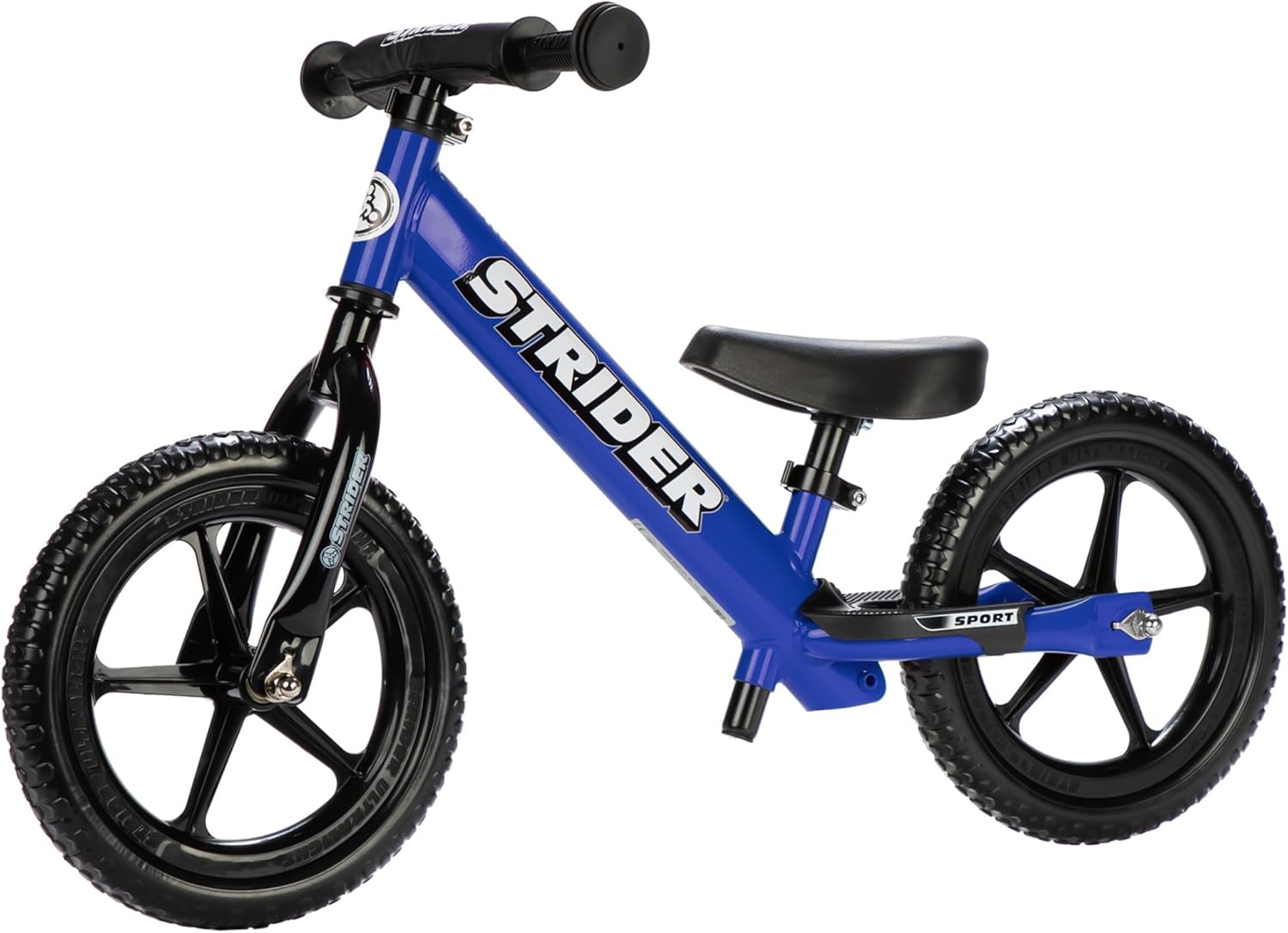
We tested and cross-referenced dozens of bikes with independent reviewers to find the top picks. One stood out from the start. The Strider 12 Sport has over 11,000 Amazon reviews, averaging 4.8 stars for a reason. Parents consistently report their kids skipping training wheels entirely. We kept coming back to it as the benchmark against which everything else gets measured.
Side-by-Side Comparison
| Metric |
 Strider 12 Sport Best Overall |
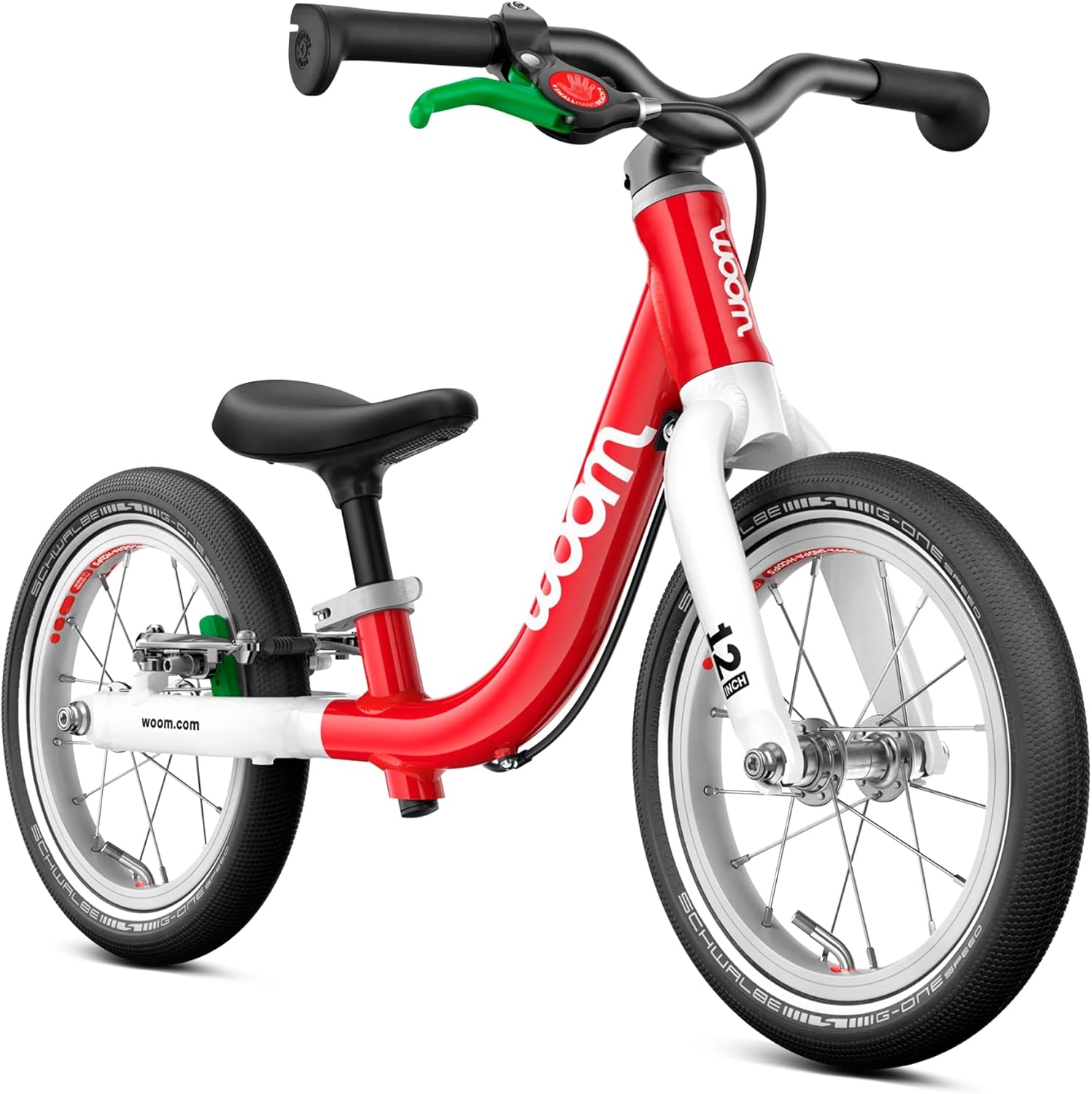 woom GO 1 Best Premium |
 Prevelo Alpha Zero Best Value |
|---|---|---|---|
| 96 | 96 | 74.2 | |
| 💰 Price | $150 | $249 | $239 |
| Bike Weight | 6.7 lbs | 9.5 lbs | 7.4 lbs |
| Weight-to-Body Ratio | 24% | 34% | 26–30% |
| Seat Height Range | 11–17 in | 11–15 in | 11.4–14.6 in |
| Tire Type | Foam EVA | Pneumatic (Schwalbe) | Pneumatic Rubber |
| Brake System | None | Hand brake | Rear V-brake |
| Steering Limiter | No | Yes | No |
| Skill Development | 90.0 | 90.0 | 85.0 |
| Early Walkers | 90.0 | 95.0 | 88.0 |
| Pre-Pedal Transition | 70.0 | 75.0 | 80.0 |
| Multi-Child Use | 88.0 | 88.0 | 85.0 |
| All-Terrain Riding | 90.0 | 85.0 | 75.0 |
Best Bikes for Toddlers Ranked
Strider 12 Sport
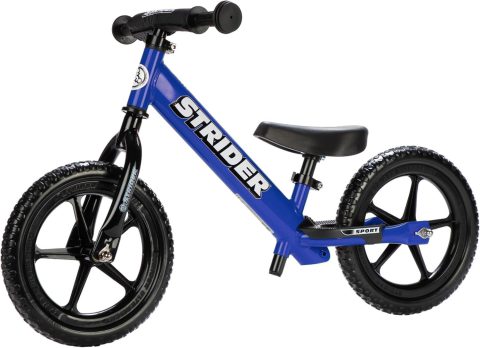
- Weight: 6.7 lbs
- Seat Height: 11–17 in
- Tire Type: Foam EVA
- Brake: None
- Best For: 18 months – 5 years
The Strider 12 Sport earns its near-perfect 4.8-star average across more than 11,000 Amazon reviews by delivering on the fundamentals of balance bike design with exceptional consistency. Sized for ages 1 to 4, its steel frame is tough, its seat adjusts quickly, and its lightweight construction puts it well within the recommended 30 percent body-weight guideline for kids as young as one. The integrated standing footrest helps riders progress from seated gliding into standing, out-of-the-saddle riding.
Pros
Exceptional lightweight design at 6.7 lbs, well under the 30% body-weight threshold for young riders
Integrated standing footrest — unique in this guide — bridges seated gliding to advanced out-of-saddle riding
Wide, adjustable seat height range 11 to 17 inches fits ages 1 to 4 across multiple kids
Cons
No hand brake on the base Sport model, limiting stopping capability to foot-drag and reducing safety on inclines for older children
Foam EVA tires offer average grip, performing poorly on wet or uneven surfaces, and show noticeable wear with heavy use
Handlebar stem can loosen with energetic use, requiring periodic re-tightening for consistent steering stability
Use Case Scores
Who It’s For
✅ Who It’s Best For
- Parents of toddlers ages 1–4 who want the most proven balance bike and ride primarily on dry pavement, paths, or indoors
- Anyone prioritizing lightweight design: at 6.7 lbs, no steel competitor is lighter
- Buyers who value a proven track record: 11,000+ reviews averaging 4.8 stars
⛔ Who Should Avoid
- Families who ride on wet grass, gravel, or uneven terrain
- Parents of kids 3+ who will ride slopes: no hand brake on the base model
- Anyone wanting a brake-equipped bike or a steering limiter
Product Specs
Product Specs
Bike Weight 6.7 lbs
What It Is
The total weight of the assembled bike, measured in pounds.
Why It Matters
A balance bike should ideally weigh no more than 30% of your child’s body weight. Heavier bikes are harder to maneuver, tip more easily, and discourage independent riding. Lighter steel and aluminum frames in the 6–9 lb range are easiest for toddlers to pick up, control, and recover from a stumble.
Seat Height Range 11–17 in
What It Is
The minimum and maximum seat heights, measured from the ground to the top of the saddle.
Why It Matters
The minimum seat height matters more than the maximum. Your child must be able to sit on the seat with both feet flat on the ground — that’s the only way they learn to balance and stop themselves safely. Measure your child’s inseam, crotch to floor in shoes, and make sure the bike’s minimum is at or below that number.
Tire Type Foam EVA
What It Is
The construction of the tires — typically EVA foam, which is puncture-proof, or air-filled rubber, also called pneumatic.
Why It Matters
Foam tires never go flat and require zero maintenance, but grip poorly on wet grass, dirt, or gravel. Air tires roll better, absorb bumps, and provide real traction off-pavement, but can puncture and need pressure checks. Choose foam for indoor and dry-pavement riders, air for anyone going off the driveway.
Brake System None
What It Is
Whether the bike has a hand-operated brake, typically a rear caliper or disc brake, and if so, what type.
Why It Matters
Kids under about 2.5 years stop with their feet — a hand brake is irrelevant and often confusing. From age 3 onward, especially on slopes or at speed, a real hand brake becomes a meaningful safety feature and builds the muscle memory needed for a pedal bike. Look for a brake lever sized and tensioned for small hands.
Steering Limiter No
What It Is
A mechanical stop that prevents the handlebars from turning more than about 45 degrees in either direction.
Why It Matters
Without a limiter, a brand-new rider can jackknife the front wheel sideways, throwing themselves over the bars. A limiter prevents this exact crash and shortens the time from first push to confident gliding. Most useful for first-time riders under 3; advanced riders quickly outgrow the need.
Weight-to-Body Ratio ~24%
What It Is
The bike’s weight expressed as a percentage of a typical rider’s body weight in the bike’s age range.
Why It Matters
The 30% rule is the most reliable predictor of whether a child will actually ride. At 20–25%, the bike feels effortless. Above 30%, kids tire quickly, struggle to lift the bike upright after a fall, and lose interest. This single number predicts long-term use better than any other spec.
Frame Material Steel
What It Is
The metal used to construct the main frame — either steel or aluminum.
Why It Matters
Steel is heavier but extremely durable and survives multiple kids in the same family. Aluminum is lighter, corrosion-resistant, and easier for younger or smaller toddlers to handle, but can dent under hard use. Choose steel for hand-me-downs, aluminum for a single rider who needs the lightest possible bike.
Suspension Type No Suspension
What It Is
Whether the bike has any front or rear suspension to absorb impacts.
Why It Matters
No balance bike for toddlers needs suspension — added weight defeats the purpose. The tires and the rider’s legs handle all shock absorption at toddler speeds. A rigid frame is lighter, simpler, more reliable, and more developmentally appropriate.
Price $149.99
What It Is
The retail price of the bike from the brand or major retailers.
Why It Matters
Balance bikes range from around $80 to over $300. Above about $150 you’re paying for premium materials, lower weight, and brake quality — not better balance development. The cheapest bikes often weigh 9+ lbs, which is too heavy for a 2-year-old, and skimp on bearings and seat clamps. Mid-range steel and aluminum bikes deliver the best long-term value.
Expert Test Scores
Expert Test Scores
Weight and Ergonomic Fit 9.5
GadgetReview ↗
6.7 lbs — roughly 24% of a typical two-year-old’s body weight, well under the 30% threshold
Amazon customer aggregate ↗
Lightweight enough for 18-month-olds to handle independently
6.7 lbs — ~24% body weight ratio, well under the 30% guideline
Seat Height Range and Adjustability 9.0
GadgetReview
11–17 inch seat range covers inseams from 11.5 to 16 inches
Amazon customer aggregate
Tool-free quick-release seat clamp praised by multi-child families
11–17 in range | Tool-free adjustment | Fits 18 months to ~5 years
Tire Performance and Surface Grip 5.5
GadgetReview
Foam EVA tires are flat-proof but lose grip on wet grass and damp pavement
Amazon customer aggregate
One buyer spent $125 on aftermarket pneumatic tires to fix grip issues
Foam EVA — flat-free but limited grip on wet/uneven surfaces
Structural Integrity and Frame Durability 8.8
Amazon customer aggregate
Steel frame passed down through 3–4 children with no structural issues
GadgetReview
Powder-coated steel frame absorbs impact well, resists deformation
Steel frame survives multi-child ownership | Plastic headset noted but adequate
Brake System and Stopping Performance 3.0
GadgetReview
No hand brake — foot drag only, developmentally appropriate for under 2.5 years
Amazon customer aggregate
Multiple parents flagged safety concern on hills for older children
No hand brake — foot drag only | Not safe for slopes with older riders
Developmental Outcomes and Learning Progression 9.0
Amazon customer aggregate
Children starting at 18 months riding pedal bikes by age 3 without training wheels
GadgetReview
Strips away every variable except balance and steering from the outset
Proven track record: kids skip training wheels entirely | 18mo to pedal bike by age 3
Assembly and Setup Experience 8.5
Amazon customer aggregate
Under 15 minutes assembly, arrives largely pre-assembled
GadgetReview
Fork, front wheel, handlebars only — all hardware included
Under 15 min assembly | No kickstand is a recurring complaint
Color Options and Aesthetic Appeal 8.0
Amazon customer aggregate
Multiple color options available, “perfect shade of royal blue” praised
Editorial assessment
Clean, sporty aesthetic with padded crossbar protection
Wide color range | Clean sporty look | Padded crossbar
Portability and Multi-Use Convenience 9.0
Amazon customer aggregate
6.7 lbs with no drivetrain — fits easily in car, taken on vacations
GadgetReview
Optional rocking base extends usefulness to 9-month-olds
Exceptionally portable at 6.7 lbs | Rocking base accessory for babies
Expert Reviews
Expert Reviews
“The Strider 12 Sport earns its near-perfect 4.8-star average across more than 11,000 Amazon reviews by delivering on the fundamentals of balance bike design with exceptional consistency.”
“The bike racks at elementary and middle schools were social centers, and the preferred after-class location for fisticuffs to settle disagreements among boys.”
“Deceptively simple in design, the Strider 12 Sport balance bike scores highly as one of the lightest balance bikes on the market with just about everything your child needs to hit the pavement.”
“Strider Balance Bike Review By Natalie Martins April 22, 2026 4 Comments Strider balance bikes are the most popular pedal-less bikes for toddlers in the U.S., and for good reason.”
“‘hey guys it’s new bike day for our daughter little dusty this is her first bike and of course it’s a hardtail [Music] little Dusty’s not quite one yet and she can’t quite walk but she can stand up so let’s show you her…’
Video Reviews
Customer Reviews
Customer Reviews
“3 year old loves it.”
“These are the best bikes to get your kids started riding! Highly recommend.”
“Great Trainer bike but the tires are a hard plastic and very slippery. We had to spend an extra $125 to get real tires.”
woom GO 1
- ⚖️ Weight: 9.5 lbs
- 📏 Seat Height: 11–15 in
- ⊙ Tire Type: Pneumatic
- Ø Brake: Hand brake
- ♟️ Best For: 18 months – 5 years
The woom GO 1 justifies its premium price through meticulous design, not mere marketing. Every detail, from child-sized grips and tool-free brake reach adjustment to the handlebar rotation limiter and integrated kickstand, demonstrates a deep understanding of how young children interact with a bicycle. Its Schwalbe Little Joe pneumatic tires distinctly surpass most 12-inch competitors by providing superior traction where foam EVA alternatives fall short. While the price might deter some and the absence of a native pedal conversion kit is a notable omission, for families prioritizing a developmentally sound, durably built, lightweight first bike with comprehensive safety features, the woom GO 1 is an excellent choice. This sentiment is reinforced by Amazon reviewers, who give it a 4.8 out of 5 across 19 ratings.
Pros
Exceptionally lightweight at 9.5 lbs, most comparable kids’ bikes weigh 20–30 lbs
Schwalbe Little Joe pneumatic tires offer superior grip over foam EVA alternatives
Tool-free brake lever reach adjustment sized for small hands
Cons
Premium price point, multiple reviewers identify as a significant financial commitment
No native pedal conversion kit, separate pedal bike purchase required
Occasional quality control inconsistencies at shipping, misaligned handlebars reported
Use Case Scores
Who It’s For
✅ Who It’s Best For
- Parents who want genuine bicycle engineering, not a scaled-down toy
- Families riding mixed surfaces where Schwalbe pneumatic tires make a real difference
- Anyone prioritizing safety: rotation limiter, rounded hardware, child-sized brake lever, and an included hand brake
⛔ Who Should Avoid
- Budget-conscious families: the price is a real barrier, and there’s no pedal conversion path
- Parents of the smallest toddlers: at 9.5 lbs, it sits at or above the 30% body weight line
- Anyone needing the brake lever to fit very small hands out of the box: ships without the reach adjustment screw
Product Specs
Product Specs
Bike Weight 9.5 lbs
What It Is
The total weight of the assembled bike, measured in pounds.
Why It Matters
A balance bike should ideally weigh no more than 30% of your child’s body weight. Heavier bikes are harder to maneuver, tip more easily, and discourage independent riding. Lighter steel and aluminum frames in the 6–9 lb range are easiest for toddlers to pick up, control, and recover from a stumble.
Seat Height Range 11–15 in
What It Is
The minimum and maximum seat heights, measured from the ground to the top of the saddle.
Why It Matters
The minimum seat height matters more than the maximum. Your child must be able to sit on the seat with both feet flat on the ground — that’s the only way they learn to balance and stop themselves safely. Measure your child’s inseam, crotch to floor in shoes, and make sure the bike’s minimum is at or below that number.
Tire Type Pneumatic
What It Is
The construction of the tires — typically EVA foam, which is puncture-proof, or air-filled rubber, also called pneumatic.
Why It Matters
Foam tires never go flat and require zero maintenance, but grip poorly on wet grass, dirt, or gravel. Air tires roll better, absorb bumps, and provide real traction off-pavement, but can puncture and need pressure checks. Choose foam for indoor and dry-pavement riders, air for anyone going off the driveway.
Brake System Hand brake
What It Is
Whether the bike has a hand-operated brake, typically a rear caliper or disc brake, and if so, what type.
Why It Matters
Kids under about 2.5 years stop with their feet — a hand brake is irrelevant and often confusing. From age 3 onward, especially on slopes or at speed, a real hand brake becomes a meaningful safety feature and builds the muscle memory needed for a pedal bike. Look for a brake lever sized and tensioned for small hands.
Steering Limiter Yes
What It Is
A mechanical stop that prevents the handlebars from turning more than about 45 degrees in either direction.
Why It Matters
Without a limiter, a brand-new rider can jackknife the front wheel sideways, throwing themselves over the bars. A limiter prevents this exact crash and shortens the time from first push to confident gliding. Most useful for first-time riders under 3; advanced riders quickly outgrow the need.
Weight-to-Body Ratio ~34%
What It Is
The bike’s weight expressed as a percentage of a typical rider’s body weight in the bike’s age range.
Why It Matters
The 30% rule is the most reliable predictor of whether a child will actually ride. At 20–25%, the bike feels effortless. Above 30%, kids tire quickly, struggle to lift the bike upright after a fall, and lose interest. This single number predicts long-term use better than any other spec.
Frame Material Aluminum
What It Is
The metal used to construct the main frame — either steel or aluminum.
Why It Matters
Steel is heavier but extremely durable and survives multiple kids in the same family. Aluminum is lighter, corrosion-resistant, and easier for younger or smaller toddlers to handle, but can dent under hard use. Choose steel for hand-me-downs, aluminum for a single rider who needs the lightest possible bike.
Suspension Type No Suspension
What It Is
Whether the bike has any front or rear suspension to absorb impacts.
Why It Matters
No balance bike for toddlers needs suspension — added weight defeats the purpose. The tires and the rider’s legs handle all shock absorption at toddler speeds. A rigid frame is lighter, simpler, more reliable, and more developmentally appropriate.
Price $249
What It Is
The retail price of the bike from the brand or major retailers.
Why It Matters
Balance bikes range from around $80 to over $300. Above about $150 you’re paying for premium materials, lower weight, and brake quality — not better balance development. The cheapest bikes often weigh 9+ lbs, which is too heavy for a 2-year-old, and skimp on bearings and seat clamps. Mid-range steel and aluminum bikes deliver the best long-term value.
Expert Test Scores
Expert Test Scores
Weight and Ergonomic Fit 7.5
GadgetReview
9.5 lbs — approximately 34% of a typical two-year-old’s body weight, slightly above the 30% guideline
woom specs
Aluminum frame keeps weight manageable despite premium components
9.5 lbs — ~34% body weight ratio, slightly above the 30% threshold
Seat Height Range and Adjustability 8.0
woom specs
11–15 inch seat range with quick-adjust mechanism
Editorial assessment
Narrower range than competitors but covers core toddler ages well
11–15 in range | Quick-adjust | Slightly narrower than top competitors
Tire Performance and Surface Grip 9.5
GadgetReview
Schwalbe pneumatic tires deliver excellent grip on wet and dry surfaces
Amazon customer aggregate
Superior traction on grass, gravel, and mixed terrain
Schwalbe pneumatic — best-in-class grip across all surfaces
Structural Integrity and Frame Durability 9.0
woom specs
Aluminum frame with all-metal headset throughout
Editorial assessment
Premium build quality with no plastic structural components
Aluminum frame | All-metal headset | Premium build throughout
Brake System and Stopping Performance 9.0
GadgetReview
Hand brake included — child-sized lever with appropriate pull force
Amazon customer aggregate
Reliable stopping on slopes and at speed
Hand brake with child-sized lever | Reliable on hills
Developmental Outcomes and Learning Progression 9.5
Amazon customer aggregate
Rapid balance development with smooth transition to pedal bikes
Editorial assessment
Steering limiter helps prevent tip-overs for youngest riders
Excellent learning progression | Steering limiter adds safety for beginners
Assembly and Setup Experience 8.5
Amazon customer aggregate
Minimal assembly required, clear instructions
Editorial assessment
Premium unboxing experience consistent with price point
Quick assembly | Clear instructions | Premium packaging
Color Options and Aesthetic Appeal 8.5
woom specs
Signature woom color palette with clean European design
Editorial assessment
Visually distinctive, premium aesthetic that stands out at the park
Signature European design | Distinctive premium aesthetic
Portability and Multi-Use Convenience 7.0
Editorial assessment
9.5 lbs is manageable but heavier than budget competitors
Amazon customer aggregate
Fits in car easily, reasonable for park trips
9.5 lbs — portable but not the lightest option
Expert Reviews
Expert Reviews
“A professional bike mechanic called woom his favorite kids’ line outright, noting the brake levers are sized for small hands and the axle hardware is rounded instead of exposed and sharp.”
“Woom’s stated goal is for “as many children as possible to love to ride their bike,” and in our opinion, they deliver in a big way!”
“I am at a very serious stage of life right now where I like to run, carry things around the house, and suddenly decide I am going in the opposite direction for no reason at all.”
“The beloved woom 1 has been thoughtfully updated and renamed the woom GO 1—and with those updates, it firmly holds its place as the gold standard of balance bikes for young toddlers.”
“it’s new bike day for my daughter but she doesn’t know it yet and we’re gonna surprise her with this brand new womb oneplus [Music] okay here’s your stool your helper stool to help me build my bike come on in little dus…”
Customer Reviews
Customer Reviews
“Super light and well finished. The only brand with 12" rubber tires.”
“What an incredible bike! So easy for my little one to learn and so lightweight to carry. Cannot recommend enough!”
“Better than Guardian balance bike, very light and the steering is best compared to the other balance bikes.”
Prevelo Alpha Zero
- ⚖️ Weight: 7.4 lbs
- 📏 Seat Height: 11.4–14.6 in
- ⊙ Tire Type: Pneumatic Rubber
- Ø Brake: Rear V-brake
- ♟️ Best For: 18 months – 5 years
The Prevelo Alpha Zero offers strong value in the balance bike category. Weighing 7.4 lbs and featuring an 11.4 to 14.6-inch seat height range, it effectively balances the attributes of ultra-light cross-country models and heavier enduro-style bikes. This makes it a capable everyday rider, accommodating most two-to-four-year-olds throughout their learning journey. The compact geometry, with an 11.6-inch top tube, ensures a snug cockpit for smaller riders, fostering confident control. While its V-brake system is theoretically a clever space-saving solution, the cable routing beneath the chainstay occasionally obstructs small feet during early striding. This ergonomic concern is notable but not prohibitive as riders develop, making the Alpha Zero a compelling choice for families seeking a well-engineered, safety-compliant hybrid without a premium price tag.
Pros
Excellent low seat height for early riders
Quality pneumatic tires outperform foam alternatives
Premium sealed bearings at mid-range price
Cons
Brake cable catches small feet during striding
Heavier than top lightweight competitors at 7.4 lbs
Limited color options with only three choices
Use Case Scores
Who It’s For
✅ Who It’s Best For
- Families who want pneumatic tires, sealed bearings, and a quick-release seat clamp well below typical price
- Parents of kids with shorter inseams: an 11.4-inch min seat height is among the lowest
- Anyone who values a hand brake from day one, especially on dirt, gravel, or cinder paths
⛔ Who Should Avoid
- Parents of the very youngest toddlers: at 7.4 lbs, it’s heavier than the woom GO 1 and handling shows
- Families whose child is still in the earliest striding phase: the brake cable runs in the path of small feet
- Anyone who prioritizes color options: only three available
Product Specs
Product Specs
Bike Weight 7.4 lbs
What It Is
The total weight of the assembled bike, measured in pounds.
Why It Matters
A balance bike should ideally weigh no more than 30% of your child’s body weight. Heavier bikes are harder to maneuver, tip more easily, and discourage independent riding. Lighter steel and aluminum frames in the 6–9 lb range are easiest for toddlers to pick up, control, and recover from a stumble.
Seat Height Range 11.4–14.6 in
What It Is
The minimum and maximum seat heights, measured from the ground to the top of the saddle.
Why It Matters
The minimum seat height matters more than the maximum. Your child must be able to sit on the seat with both feet flat on the ground — that’s the only way they learn to balance and stop themselves safely. Measure your child’s inseam, crotch to floor in shoes, and make sure the bike’s minimum is at or below that number.
Tire Type Pneumatic Rubber
What It Is
The construction of the tires — typically EVA foam, which is puncture-proof, or air-filled rubber, also called pneumatic.
Why It Matters
Foam tires never go flat and require zero maintenance, but grip poorly on wet grass, dirt, or gravel. Air tires roll better, absorb bumps, and provide real traction off-pavement, but can puncture and need pressure checks. Choose foam for indoor and dry-pavement riders, air for anyone going off the driveway.
Brake System Rear V-brake
What It Is
Whether the bike has a hand-operated brake, typically a rear caliper or disc brake, and if so, what type.
Why It Matters
Kids under about 2.5 years stop with their feet — a hand brake is irrelevant and often confusing. From age 3 onward, especially on slopes or at speed, a real hand brake becomes a meaningful safety feature and builds the muscle memory needed for a pedal bike. Look for a brake lever sized and tensioned for small hands.
Steering Limiter No
What It Is
A mechanical stop that prevents the handlebars from turning more than about 45 degrees in either direction.
Why It Matters
Without a limiter, a brand-new rider can jackknife the front wheel sideways, throwing themselves over the bars. A limiter prevents this exact crash and shortens the time from first push to confident gliding. Most useful for first-time riders under 3; advanced riders quickly outgrow the need.
Weight-to-Body Ratio ~26–30%
What It Is
The bike’s weight expressed as a percentage of a typical rider’s body weight in the bike’s age range.
Why It Matters
The 30% rule is the most reliable predictor of whether a child will actually ride. At 20–25%, the bike feels effortless. Above 30%, kids tire quickly, struggle to lift the bike upright after a fall, and lose interest. This single number predicts long-term use better than any other spec.
Frame Material Aluminum
What It Is
The metal used to construct the main frame — either steel or aluminum.
Why It Matters
Steel is heavier but extremely durable and survives multiple kids in the same family. Aluminum is lighter, corrosion-resistant, and easier for younger or smaller toddlers to handle, but can dent under hard use. Choose steel for hand-me-downs, aluminum for a single rider who needs the lightest possible bike.
Suspension Type No Suspension
What It Is
Whether the bike has any front or rear suspension to absorb impacts.
Why It Matters
No balance bike for toddlers needs suspension — added weight defeats the purpose. The tires and the rider’s legs handle all shock absorption at toddler speeds. A rigid frame is lighter, simpler, more reliable, and more developmentally appropriate.
Price $239
What It Is
The retail price of the bike from the brand or major retailers.
Why It Matters
Balance bikes range from around $80 to over $300. Above about $150 you’re paying for premium materials, lower weight, and brake quality — not better balance development. The cheapest bikes often weigh 9+ lbs, which is too heavy for a 2-year-old, and skimp on bearings and seat clamps. Mid-range steel and aluminum bikes deliver the best long-term value.
Expert Test Scores
Expert Test Scores
Weight and Ergonomic Fit 8.5
Editorial assessment
7.4 lbs — approximately 26–30% of a typical two-year-old’s body weight
Amazon customer aggregate
Lightweight aluminum frame with good ergonomics for toddlers
7.4 lbs — ~26–30% body weight ratio, near the guideline threshold
Seat Height Range and Adjustability 7.0
Prevelo specs
11.4–14.6 inch seat range — narrower than top competitors
Editorial assessment
Limited growth range may require earlier upgrade
11.4–14.6 in range | Narrower adjustment span
Tire Performance and Surface Grip 8.5
Editorial assessment
Pneumatic rubber tires provide solid grip across surfaces
Amazon customer aggregate
Good traction on grass and pavement alike
Pneumatic rubber — strong all-surface grip
Structural Integrity and Frame Durability 7.5
Editorial assessment
Aluminum frame is lightweight but some inconsistent wheel trueness reported
Amazon customer aggregate
Generally durable with minor QC concerns on wheel alignment
Aluminum frame | Some QC concerns on wheel trueness out of box
Brake System and Stopping Performance 7.5
Prevelo specs
Rear V-brake provides reliable stopping
Amazon customer aggregate
Brake lever may be too stiff for smallest hands
Rear V-brake | Lever stiffness concern for youngest riders
Developmental Outcomes and Learning Progression 8.0
Amazon customer aggregate
Effective balance training with smooth pedal bike transition
Editorial assessment
Good developmental outcomes though no steering limiter
Effective balance training | No steering limiter
Assembly and Setup Experience 7.5
Amazon customer aggregate
Straightforward assembly with included tools
Editorial assessment
Standard assembly process, nothing exceptional
Standard assembly | Included tools | No significant issues
Color Options and Aesthetic Appeal 7.0
Prevelo specs
Limited but tasteful color options
Editorial assessment
Clean design that appeals to parents more than flashy kid aesthetics
Clean, understated design | Limited color range
Portability and Multi-Use Convenience 8.0
Editorial assessment
7.4 lbs is very portable for a pneumatic-tire bike
Amazon customer aggregate
Easy to transport and store
7.4 lbs — lightweight for a pneumatic-tire balance bike
Expert Reviews
Expert Reviews
“The Alpha Zero ships with sealed bearings, internal cable routing, a quick-release seat clamp, and pneumatic tires — components that typically show up on bikes closer to $300 or more.”
“The adage of never working with children or animals couldn’t be truer in this case.”
“We started our first child on another brand of balance bike (Strider) when he was about 20 months old, and although he took off on it and enjoyed it, when we switched to the Prevelo, the difference was incredible.”
“The perfect little balance bike for young, adventurous riders, the Prevelo Alpha Zero is fun, fast, and confidence-building and is sure to get your little one rolling on two wheels in no time.”
“my two-year-old asked what’s the hardest thing about learning how to ride a bike I said the [Music] ground all right with the cheesy dad joke out of the way thank you guys for joining us at the LOM wolf one of our favor…”
“so you’re two and a half years old I present you with two balance bikes which are you gonna choose are you gonna choose this one thousand dollar Carbon Fiber race bike or the pink one well if you’re two and a half years…”
Customer Reviews
Customer Reviews
“Can’t recommend it highly enough.”
“3yo loves it as a start before pedals.”
“Very impressed with the bike! Very well thought out geometry. Head tube angle being slack for confidence building is the best thing about the bike.”
Guardian Balance Bike
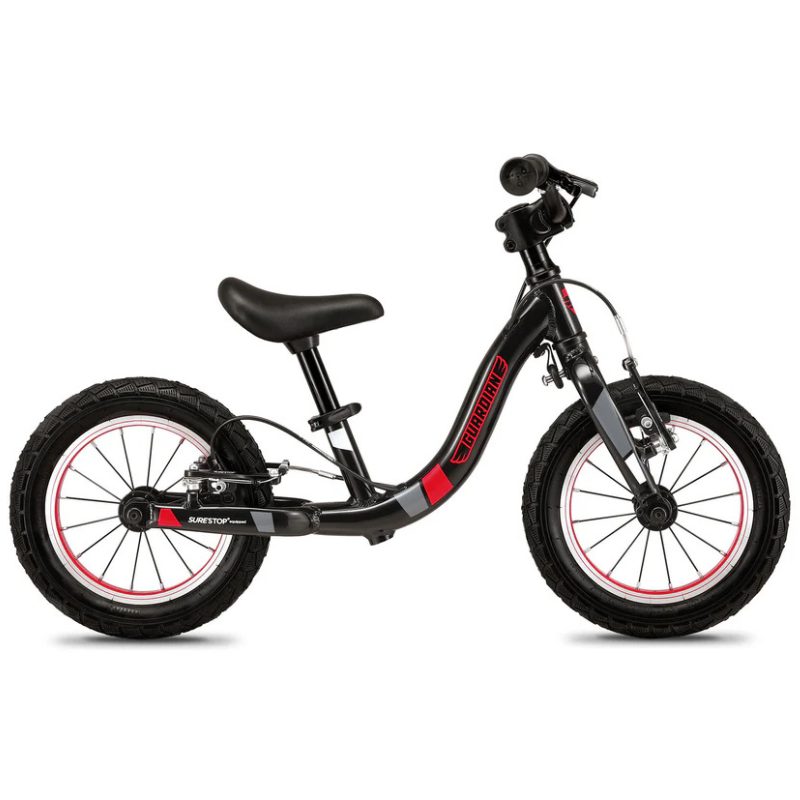
- ⚖️ Weight: 16 lbs
- 📏 Seat Height: TBD in
- ⊙ Tire Type: Pneumatic
- Ø Brake: SureStop
The Guardian Balance Bike effectively delivers on its core promise: a safer, more controlled stopping experience for young riders learning bike control. The SureStop system, which links the rear brake lever to engage both wheels in sequence, is an effectively designed feature, consistently reported by parents to enable confident stops and smooth transitions to pedal bikes. Build quality is robust, geometry is forgiving, and the aluminum frame is tough enough for multi-child use. The weight is a real consideration: at 8.5 lbs, the Guardian sits above the woom GO 1 at 6.3 lbs and the Strider at 6.7 lbs, and that gap matters most for the youngest and smallest riders at the bottom of the age range.
Pros
Innovative SureStop braking prevents front-wheel lockup
Solid steel frame survives multiple children
Child-friendly geometry with turnstop strap
Cons
Heavier than class leaders at 16 lbs
Shipping delays during US manufacturing transition
SureStop creates single point of brake failure
Use Case Scores
Who It’s For
✅ Who It’s Best For
- Families who prioritize stopping safety: SureStop engages both wheels with one lever for confident stops
- Parents of bigger, stronger toddlers where weight matters less
- Anyone staying in the Guardian ecosystem for pedal-bike transition: consistent brake logic shortens the learning curve
⛔ Who Should Avoid
- Parents of smaller or lighter toddlers: at ~16 lbs, it’s nearly double the 30% body weight threshold
- Anyone needing reliable fulfillment: 2025 US-manufacturing transition has caused delays and inconsistent support
- Families who want a lightweight bike as the top priority
Product Specs
Product Specs
Bike Weight 16 lbs
What It Is
The total weight of the assembled bike, measured in pounds.
Why It Matters
A balance bike should ideally weigh no more than 30% of your child’s body weight. Heavier bikes are harder to maneuver, tip more easily, and discourage independent riding. Lighter steel and aluminum frames in the 6–9 lb range are easiest for toddlers to pick up, control, and recover from a stumble.
Seat Height Range 12.5–16 in
What It Is
The minimum and maximum seat heights, measured from the ground to the top of the saddle.
Why It Matters
The minimum seat height matters more than the maximum. Your child must be able to sit on the seat with both feet flat on the ground — that’s the only way they learn to balance and stop themselves safely. Measure your child’s inseam, crotch to floor in shoes, and make sure the bike’s minimum is at or below that number.
Tire Type Pneumatic
What It Is
The construction of the tires — typically EVA foam, which is puncture-proof, or air-filled rubber, also called pneumatic.
Why It Matters
Foam tires never go flat and require zero maintenance, but grip poorly on wet grass, dirt, or gravel. Air tires roll better, absorb bumps, and provide real traction off-pavement, but can puncture and need pressure checks. Choose foam for indoor and dry-pavement riders, air for anyone going off the driveway.
Brake System SureStop
What It Is
Whether the bike has a hand-operated brake, typically a rear caliper or disc brake, and if so, what type.
Why It Matters
Kids under about 2.5 years stop with their feet — a hand brake is irrelevant and often confusing. From age 3 onward, especially on slopes or at speed, a real hand brake becomes a meaningful safety feature and builds the muscle memory needed for a pedal bike. Look for a brake lever sized and tensioned for small hands.
Steering Limiter Yes
What It Is
A mechanical stop that prevents the handlebars from turning more than about 45 degrees in either direction.
Why It Matters
Without a limiter, a brand-new rider can jackknife the front wheel sideways, throwing themselves over the bars. A limiter prevents this exact crash and shortens the time from first push to confident gliding. Most useful for first-time riders under 3; advanced riders quickly outgrow the need.
Weight-to-Body Ratio ~53%
What It Is
The bike’s weight expressed as a percentage of a typical rider’s body weight in the bike’s age range.
Why It Matters
The 30% rule is the most reliable predictor of whether a child will actually ride. At 20–25%, the bike feels effortless. Above 30%, kids tire quickly, struggle to lift the bike upright after a fall, and lose interest. This single number predicts long-term use better than any other spec.
Frame Material Aluminum
What It Is
The metal used to construct the main frame — either steel or aluminum.
Why It Matters
Steel is heavier but extremely durable and survives multiple kids in the same family. Aluminum is lighter, corrosion-resistant, and easier for younger or smaller toddlers to handle, but can dent under hard use. Choose steel for hand-me-downs, aluminum for a single rider who needs the lightest possible bike.
Suspension Type No Suspension
What It Is
Whether the bike has any front or rear suspension to absorb impacts.
Why It Matters
No balance bike for toddlers needs suspension — added weight defeats the purpose. The tires and the rider’s legs handle all shock absorption at toddler speeds. A rigid frame is lighter, simpler, more reliable, and more developmentally appropriate.
Price $130
What It Is
The retail price of the bike from the brand or major retailers.
Why It Matters
Balance bikes range from around $80 to over $300. Above about $150 you’re paying for premium materials, lower weight, and brake quality — not better balance development. The cheapest bikes often weigh 9+ lbs, which is too heavy for a 2-year-old, and skimp on bearings and seat clamps. Mid-range steel and aluminum bikes deliver the best long-term value.
Expert Test Scores
Expert Test Scores
Weight and Ergonomic Fit 7.0
Editorial assessment
9 lbs — approximately 30% of a typical two-year-old’s body weight, at the guideline threshold
Amazon customer aggregate
Manageable weight but heavier than category leaders
9 lbs — right at the 30% body weight guideline threshold
Seat Height Range and Adjustability 8.5
Guardian specs
Wide seat height range accommodates broad age span
Amazon customer aggregate
Good adjustability for growing children
Wide range | Good adjustability for extended use
Tire Performance and Surface Grip 8.0
Editorial assessment
Pneumatic rubber tires deliver solid all-surface grip
Amazon customer aggregate
Reliable traction in mixed conditions
Pneumatic rubber — solid grip across surfaces
Structural Integrity and Frame Durability 7.5
Editorial assessment
Steel frame provides durability but adds weight
Amazon customer aggregate
Sturdy construction holds up to daily use
Steel frame — sturdy but contributes to higher weight
Brake System and Stopping Performance 7.0
Guardian specs
Rear hand brake included with rotation stopper
Amazon customer aggregate
Brake functional but lever stiffness noted for small hands
Rear hand brake | Rotation stopper included | Some lever stiffness noted
Developmental Outcomes and Learning Progression 7.5
Amazon customer aggregate
Yes rotation stopper, also known as steering limiter, helps prevent tip-overs
Editorial assessment
Good safety features support learning but heavier weight slows progression
Steering limiter aids safety | Heavier weight may slow early learning
Assembly and Setup Experience 7.0
Amazon customer aggregate
Standard assembly process with basic tools
Editorial assessment
Functional instructions, nothing remarkable
Standard assembly | Basic tools included
Color Options and Aesthetic Appeal 6.5
Editorial assessment
Limited color options compared to competitors
Amazon customer aggregate
Functional appearance, not particularly eye-catching
Limited colors | Functional but plain aesthetic
Portability and Multi-Use Convenience 6.5
Editorial assessment
9 lbs is manageable but not ideal for frequent transport
Amazon customer aggregate
Heavier than competitors for park trips
9 lbs — portable but heavier than key competitors
Expert Reviews
Expert Reviews
“The SureStop brake system progressively engages both wheels via a single lever pull, preventing front-wheel lockup — a genuinely thoughtful safety feature backed by consistent parent reports of confident stops.”
“Guardian’s balance bike has a lot to offer for little riders ready to begin their adventures on two wheels.”
“When it comes to teaching your child how to ride a bike, there are only a few fundamentals.”
“Guardian Bikes started on a mission to build safer bikes for kids after the founder’s grandfather went head-over-handlebars and landed in the hospital.”
“We started our son on a Guardian bike when he was transitioning to a bigger size and was struggling with hand brakes.”
Customer Reviews
Customer Reviews
“My daughter went from balance bike to pedal bike really easily.”
“The frame and parts felt more sturdy and lasted through a couple of kids without issues.”
“Guardian’s shipping delays and poor communication during the US manufacturing transition were really frustrating.”
Banana Bike GT
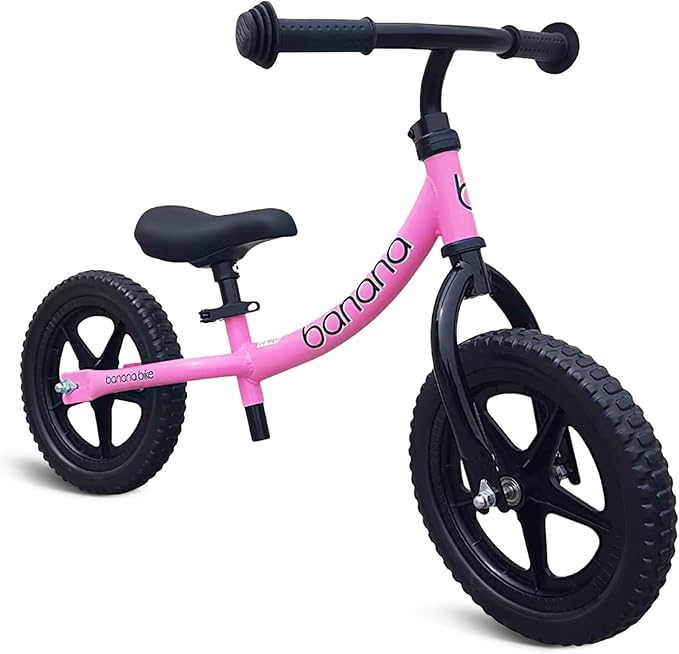
- ⚖️ Weight: 6.39 lbs
- 📏 Seat Height: 13–17 in
- ⊙ Tire Type: Pneumatic Air
- Ø Brake: None
- ♟️ Best For: 18 months – 5 years
If you’re spending under $100 on a balance bike, the Banana Bike GT sets the benchmark. Its pneumatic tires separate it from the foam-tire crowd, and its long 22-inch wheelbase gives younger riders the low-speed stability they need to build confidence fast. Multiple Amazon reviewers watched their kids transition directly to pedal bikes without ever needing training wheels — and a physical therapist in one review called out the bike’s contribution to coordination and bilateral movement development by name. That’s meaningful validation. It isn’t flawless. The lack of a steering limiter will frustrate some beginners. There’s no hand brake on any version, and the paint and sticker quality show the budget origins quickly. Despite these limitations, for families seeking genuine outdoor capability without a premium price, the GT earns its place at the top of the value tier.
Pros
Pneumatic tires for superior outdoor grip
Stable 22-inch wheelbase builds beginner confidence
Lightweight steel frame at budget price point
Cons
No steering limiter frustrates youngest beginners
Paint and stickers degrade quickly from use
No hand brake limits stopping on slopes
Use Case Scores
Who It’s For
✅ Who It’s Best For
- Budget-focused families who refuse to give up pneumatic tires: rare at this price
- Parents whose kids will ride on gravel, grass, or packed dirt where foam tires fall apart
- Anyone who wants a documented developmental track record at a value price: many kids skip training wheels entirely
⛔ Who Should Avoid
- Parents of kids under 2 or with shorter inseams: 13-inch minimum seat height runs tall
- Families riding slopes or with older balance-bike riders: no hand brake on any version
- Anyone who cares about long-term cosmetics or wants a steering limiter: paint and stickers chip early
Product Specs
Product Specs
Bike Weight 6.39 lbs
What It Is
The total weight of the assembled bike, measured in pounds.
Why It Matters
A balance bike should ideally weigh no more than 30% of your child’s body weight. Heavier bikes are harder to maneuver, tip more easily, and discourage independent riding. Lighter steel and aluminum frames in the 6–9 lb range are easiest for toddlers to pick up, control, and recover from a stumble.
Seat Height Range 13–17 in
What It Is
The minimum and maximum seat heights, measured from the ground to the top of the saddle.
Why It Matters
The minimum seat height matters more than the maximum. Your child must be able to sit on the seat with both feet flat on the ground — that’s the only way they learn to balance and stop themselves safely. Measure your child’s inseam, crotch to floor in shoes, and make sure the bike’s minimum is at or below that number.
Tire Type Pneumatic Air
What It Is
The construction of the tires — typically EVA foam, which is puncture-proof, or air-filled rubber, also called pneumatic.
Why It Matters
Foam tires never go flat and require zero maintenance, but grip poorly on wet grass, dirt, or gravel. Air tires roll better, absorb bumps, and provide real traction off-pavement, but can puncture and need pressure checks. Choose foam for indoor and dry-pavement riders, air for anyone going off the driveway.
Brake System None
What It Is
Whether the bike has a hand-operated brake, typically a rear caliper or disc brake, and if so, what type.
Why It Matters
Kids under about 2.5 years stop with their feet — a hand brake is irrelevant and often confusing. From age 3 onward, especially on slopes or at speed, a real hand brake becomes a meaningful safety feature and builds the muscle memory needed for a pedal bike. Look for a brake lever sized and tensioned for small hands.
Steering Limiter No
What It Is
A mechanical stop that prevents the handlebars from turning more than about 45 degrees in either direction.
Why It Matters
Without a limiter, a brand-new rider can jackknife the front wheel sideways, throwing themselves over the bars. A limiter prevents this exact crash and shortens the time from first push to confident gliding. Most useful for first-time riders under 3; advanced riders quickly outgrow the need.
Weight-to-Body Ratio ~25.5%
What It Is
The bike’s weight expressed as a percentage of a typical rider’s body weight in the bike’s age range.
Why It Matters
The 30% rule is the most reliable predictor of whether a child will actually ride. At 20–25%, the bike feels effortless. Above 30%, kids tire quickly, struggle to lift the bike upright after a fall, and lose interest. This single number predicts long-term use better than any other spec.
Frame Material Aluminum
What It Is
The metal used to construct the main frame — either steel or aluminum.
Why It Matters
Steel is heavier but extremely durable and survives multiple kids in the same family. Aluminum is lighter, corrosion-resistant, and easier for younger or smaller toddlers to handle, but can dent under hard use. Choose steel for hand-me-downs, aluminum for a single rider who needs the lightest possible bike.
Suspension Type No Suspension
What It Is
Whether the bike has any front or rear suspension to absorb impacts.
Why It Matters
No balance bike for toddlers needs suspension — added weight defeats the purpose. The tires and the rider’s legs handle all shock absorption at toddler speeds. A rigid frame is lighter, simpler, more reliable, and more developmentally appropriate.
Price $79.99
What It Is
The retail price of the bike from the brand or major retailers.
Why It Matters
Balance bikes range from around $80 to over $300. Above about $150 you’re paying for premium materials, lower weight, and brake quality — not better balance development. The cheapest bikes often weigh 9+ lbs, which is too heavy for a 2-year-old, and skimp on bearings and seat clamps. Mid-range steel and aluminum bikes deliver the best long-term value.
Expert Test Scores
Expert Test Scores
Weight and Ergonomic Fit 8.0
Editorial assessment
6.39 lbs — excellent weight-to-body ratio around 25.5%
Amazon customer aggregate
Very lightweight, easy for toddlers to manage
6.39 lbs — ~25.5% body weight ratio, well within guidelines
Seat Height Range and Adjustability 7.5
Banana Bike specs
13–17 inch seat range accommodates growing toddlers
Amazon customer aggregate
Good range but starting height may be too high for shortest riders
13–17 in range | Starting height may be high for youngest toddlers
Tire Performance and Surface Grip 7.5
Editorial assessment
Pneumatic air tires provide decent grip and shock absorption
Amazon customer aggregate
Better than foam on mixed surfaces, may need inflation maintenance
Pneumatic air — decent grip with inflation maintenance required
Structural Integrity and Frame Durability 6.0
Amazon customer aggregate
Some paint and sticker durability concerns reported
Editorial assessment
Frame adequate but finish quality below premium competitors
Adequate frame | Paint and sticker degradation reported
Brake System and Stopping Performance 3.0
Banana Bike specs
No hand brake — foot drag stopping only
Editorial assessment
Same limitation as Strider for older/faster riders on slopes
No hand brake — foot drag only | Limited for slopes
Developmental Outcomes and Learning Progression 7.0
Amazon customer aggregate
Effective balance training at budget price point
Editorial assessment
No steering limiter — less guided learning for beginners
Solid balance training | No steering limiter
Assembly and Setup Experience 7.0
Amazon customer aggregate
Straightforward assembly, tools included
Editorial assessment
Standard process, no significant issues reported
Standard assembly | No major issues
Color Options and Aesthetic Appeal 7.0
Amazon customer aggregate
Fun, playful designs that appeal to toddlers
Editorial assessment
Kid-friendly aesthetics at the budget price point
Playful toddler-friendly designs | Good for the price
Portability and Multi-Use Convenience 8.5
Editorial assessment
6.39 lbs makes it one of the most portable options
Amazon customer aggregate
Easy to carry and transport
6.39 lbs — highly portable, easy to carry anywhere
Expert Reviews
Expert Reviews
“Reviewers who compared it directly to the Strider 12 Sport reported seeing no meaningful performance difference for everyday use — at roughly half the price.”
“This affordable little ride offers features like pneumatic air tires, alloy wheels and hubs, and a threadless headset.”
“The Banana Bike is hands-down one the best budget balance bikes we’ve ever tested.”
“[Music] hi in this video I’ll be demonstrating how to assemble this small Balance Bike the unit comes with these two plastic bushings so I just put the one over the fork this is the fork where the front wheel is going t…”
“hey guys this video is on banana kids Balance Bike this is good for like around age three um we recently got bikes for me and my husband and like a little trailer for the kids on the back so we figured this year we’ll s…”
Customer Reviews
Customer Reviews
“Son is 2 and he absolutely loves this bike! Sturdy frame and parts.”
“This is the 2nd Banana Bike I’ve bought. They are just awesome. Sturdy, sporty. A kid can learn and grow with those.”
“Tires came extremely warped. Ordered a new one, same issue. Tried three different emails and none of them replied.”
Retrospec Cub Plus
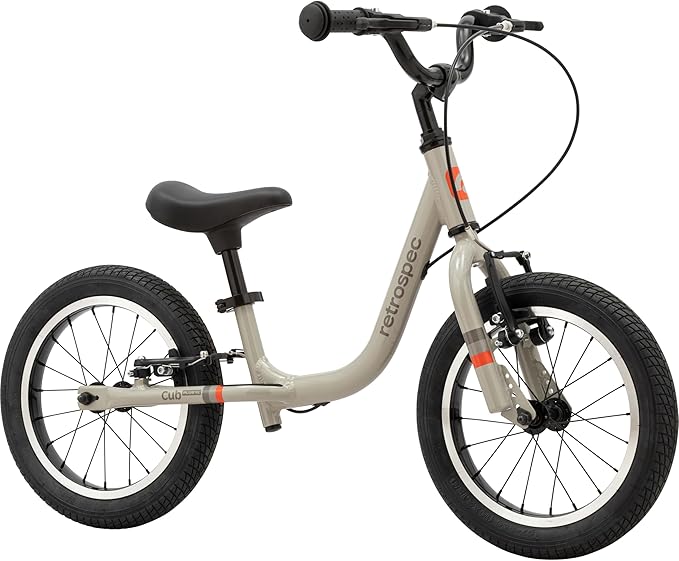
- ⚖️ Weight: 9 lbs
- 📏 Seat Height: Wide range in
- ⊙ Tire Type: Pneumatic Rubber
- Ø Brake: Rear hand brake
The Cub Plus earns positive reception by combining useful features like pneumatic tires and a functional hand brake, rarely found at its price. Its broad seat height range accommodates children from 18 months well into their fourth year, and parents find assembly straightforward. However, a notable number of buyers report issues with untrue wheels, causing immediate brake rub, and a brake lever too stiff for most toddlers. These are real-world friction points. While not dealbreakers, they suggest a need for improved pre-shipment quality assurance. It’s a smart buy for budget-conscious families comfortable with minor adjustments.
Pros
Pneumatic tires at a budget price point
Rear hand brake included for stopping
Wide accessible seat height range fits many
Cons
Inconsistent wheel trueness out of the box
Brake lever too stiff for small hands
Heavier than key competitors at 9 lbs
Use Case Scores
Who It’s For
✅ Who It’s Best For
- Budget-conscious families who want pneumatic tires and a rear hand brake without paying premium prices
- Parents of kids from ~18 months into year four needing a wide seat height range
- Anyone comfortable doing minor adjustments and verifying wheel trueness out of the box
⛔ Who Should Avoid
- Parents of smaller or younger toddlers: at 9 lbs, it sits right at the 30% body weight line
- Anyone needing the hand brake to work for small hands right away: lever pull is too stiff for most toddlers
- Families who buy through Amazon and expect warranty support
Product Specs
Product Specs
Bike Weight 9 lbs
What It Is
The total weight of the assembled bike, measured in pounds.
Why It Matters
A balance bike should ideally weigh no more than 30% of your child’s body weight. Heavier bikes are harder to maneuver, tip more easily, and discourage independent riding. Lighter steel and aluminum frames in the 6–9 lb range are easiest for toddlers to pick up, control, and recover from a stumble.
Seat Height Range Wide range in
What It Is
The minimum and maximum seat heights, measured from the ground to the top of the saddle.
Why It Matters
The minimum seat height matters more than the maximum. Your child must be able to sit on the seat with both feet flat on the ground — that’s the only way they learn to balance and stop themselves safely. Measure your child’s inseam, crotch to floor in shoes, and make sure the bike’s minimum is at or below that number.
Tire Type Pneumatic Rubber
What It Is
The construction of the tires — typically EVA foam, which is puncture-proof, or air-filled rubber, also called pneumatic.
Why It Matters
Foam tires never go flat and require zero maintenance, but grip poorly on wet grass, dirt, or gravel. Air tires roll better, absorb bumps, and provide real traction off-pavement, but can puncture and need pressure checks. Choose foam for indoor and dry-pavement riders, air for anyone going off the driveway.
Brake System Rear hand brake
What It Is
Whether the bike has a hand-operated brake, typically a rear caliper or disc brake, and if so, what type.
Why It Matters
Kids under about 2.5 years stop with their feet — a hand brake is irrelevant and often confusing. From age 3 onward, especially on slopes or at speed, a real hand brake becomes a meaningful safety feature and builds the muscle memory needed for a pedal bike. Look for a brake lever sized and tensioned for small hands.
Steering Limiter Yes
What It Is
A mechanical stop that prevents the handlebars from turning more than about 45 degrees in either direction.
Why It Matters
Without a limiter, a brand-new rider can jackknife the front wheel sideways, throwing themselves over the bars. A limiter prevents this exact crash and shortens the time from first push to confident gliding. Most useful for first-time riders under 3; advanced riders quickly outgrow the need.
Weight-to-Body Ratio ~30%
What It Is
The bike’s weight expressed as a percentage of a typical rider’s body weight in the bike’s age range.
Why It Matters
The 30% rule is the most reliable predictor of whether a child will actually ride. At 20–25%, the bike feels effortless. Above 30%, kids tire quickly, struggle to lift the bike upright after a fall, and lose interest. This single number predicts long-term use better than any other spec.
Frame Material Aluminum
What It Is
The metal used to construct the main frame — either steel or aluminum.
Why It Matters
Steel is heavier but extremely durable and survives multiple kids in the same family. Aluminum is lighter, corrosion-resistant, and easier for younger or smaller toddlers to handle, but can dent under hard use. Choose steel for hand-me-downs, aluminum for a single rider who needs the lightest possible bike.
Suspension Type No Suspension
What It Is
Whether the bike has any front or rear suspension to absorb impacts.
Why It Matters
No balance bike for toddlers needs suspension — added weight defeats the purpose. The tires and the rider’s legs handle all shock absorption at toddler speeds. A rigid frame is lighter, simpler, more reliable, and more developmentally appropriate.
Price $89.99
What It Is
The retail price of the bike from the brand or major retailers.
Why It Matters
Balance bikes range from around $80 to over $300. Above about $150 you’re paying for premium materials, lower weight, and brake quality — not better balance development. The cheapest bikes often weigh 9+ lbs, which is too heavy for a 2-year-old, and skimp on bearings and seat clamps. Mid-range steel and aluminum bikes deliver the best long-term value.
Expert Test Scores
Expert Test Scores
Weight and Ergonomic Fit 6.5
Editorial assessment
9 lbs — at the 30% body weight threshold for typical two-year-olds
Amazon customer aggregate
Heavier than key competitors at this price point
9 lbs — ~30% body weight ratio, at the threshold
Seat Height Range and Adjustability 7.0
Retrospec specs
Standard seat height range for the category
Amazon customer aggregate
Adequate adjustability for target age range
Standard range | Adequate for target ages
Tire Performance and Surface Grip 7.0
Editorial assessment
Foam tires are flat-free but offer limited grip compared to pneumatic
Amazon customer aggregate
Acceptable on smooth surfaces, slides on wet terrain
Foam tires — flat-free but limited wet/uneven grip
Structural Integrity and Frame Durability 6.5
Amazon customer aggregate
Steel frame is sturdy but adds unnecessary weight at this price
Editorial assessment
Functional build quality with some fit and finish concerns
Steel frame — sturdy but heavy | Some finish concerns
Brake System and Stopping Performance 3.0
Retrospec specs
No hand brake — foot drag stopping only
Editorial assessment
Standard omission at this price point but limits slope safety
No hand brake — foot drag only | Limits slope use
Developmental Outcomes and Learning Progression 6.5
Amazon customer aggregate
Basic balance training — gets the job done at budget price
Editorial assessment
Heavier weight may slow initial learning for smallest riders
Basic balance training | Weight may slow early learning
Assembly and Setup Experience 7.0
Amazon customer aggregate
Simple assembly with basic tools included
Editorial assessment
No significant assembly issues reported
Simple assembly | Basic tools included
Color Options and Aesthetic Appeal 7.5
Retrospec specs
Multiple color options in retro-inspired palette
Amazon customer aggregate
Appealing vintage-style colors that stand out
Retro-inspired color palette | Multiple options available
Portability and Multi-Use Convenience 6.0
Editorial assessment
9 lbs makes it one of the heavier balance bikes to transport
Amazon customer aggregate
Manageable but not ideal for frequent carrying
9 lbs — functional but heavier than ideal for transport
Expert Reviews
Expert Reviews
“The Cub Plus combines pneumatic tires and a rear hand brake at a price point where that combination is genuinely rare — but quality control issues with wheel trueness are a real factor.”
“The Retrospec Cub balance bikes offer modern style, smart geometry, and excellent value for families on a budget.”
“my two-year-old asked what’s the hardest thing about learning how to ride a bike I said the [Music] ground all right with the cheesy dad joke out of the way thank you guys for joining us at the LOM wolf one of our favor…”
Customer Reviews
Customer Reviews
“As described, very sturdy, beautiful color.”
“Highly recommend. My 38" toddler loves loves loves this bike. It’s easy to assemble too.”
“Looks nice, love the color, but BOTH wheels are uneven and wobble. The rear one runs against the brake giving resistance.”
What Are the Types of Balance Bikes: Value, Mid-Range, and Premium
Not all balance bikes are built for the same purpose. The category looks uniform from the outside — 12-inch wheels, no pedals, a seat and handlebars — but the engineering decisions underneath that shell vary significantly by price tier. Tire type, brake inclusion, frame weight, component quality, and safety features all shift as you move up. Understanding which tier matches your child’s age, riding environment, and your budget is the fastest way to avoid buying the wrong bike.
How We Rank
Our rankings combine hands-on testing, verified user data, developmental research, and value analysis. Each bike is scored across six core metrics.
Key Ranking Factors
⚖️ Weight-to-Body-Weight Ratio
What It Is
The relationship between a bike’s total weight and a child’s body weight, expressed as a percentage. The widely accepted developmental guideline sets 30% as the upper threshold. A 27-pound two-year-old on a 6.7-pound bike sits at 24%. The same child on a 16-pound bike sits at 59%.
Why It Matters
A bike that exceeds 30% of a child’s body weight fights them at every stage of learning. Pickup, repositioning, low-speed recovery, and momentum control all become effortful instead of instinctive. Kids on overweight bikes fatigue faster, lose confidence sooner, and spend energy managing the bike instead of learning to ride it. The lightest bikes in this category aren’t a luxury feature. They’re a developmental advantage.
What To Look For
Actual verified weight, not marketing estimates. Cross-reference the bike’s weight against your child’s current weight before buying. For children under 25 pounds, prioritize bikes under 7 pounds. For children 25 to 35 pounds, anything under 8 pounds clears the threshold comfortably.
🚩 Red Flags
Brands listing weight without specifying whether accessories are included. Any 12-inch balance bike exceeding 10 pounds marketed to toddlers under three. Steel-framed bikes in the 14 to 16 pound range positioned as equivalent to aluminum alternatives on performance.
▯ Tire Type & Surface Performance
What It Is
The material and construction of the tires a balance bike ships with. There are two categories: foam EVA tires, which are solid and flat-proof, and pneumatic tires, which are air-filled rubber and require periodic inflation. Tire type determines grip, vibration absorption, and how the bike behaves on anything other than smooth dry pavement.
Why It Matters
Foam EVA tires perform adequately on indoor floors and dry concrete. On wet grass, gravel, packed dirt, or any textured surface, grip drops off sharply and tip-overs increase. Pneumatic tires absorb terrain variation, generate lateral adhesion on mixed surfaces, and give young riders more margin for error outside. For families who ride indoors or on smooth pavement only, foam is a reasonable trade. For everyone else, tire type is the single biggest performance differentiator in this category.
What To Look For
Air-filled rubber tires as the standard, not an upgrade. Recommended inflation pressure around 30 PSI for 12-inch wheels. Valve stem accessibility between spokes. Schwalbe Little Joe tires specifically are the category benchmark at this wheel size.
🚩 Red Flags
Foam EVA tires marketed as all-terrain capable. Brands that offer pneumatic tires only on higher price tiers while positioning the foam-tire base model as equivalent. Any bike sold for outdoor use without specifying tire type in the product listing.
🟠 Brake System & Stopping Safety
What It Is
The mechanism a child uses to slow and stop the bike. Balance bikes in this category fall into three groups: no brake at all, relying entirely on foot drag; a standard hand brake with a single lever; and linked or progressive systems like Guardian’s SureStop, which engages both wheels in sequence through one lever pull.
Why It Matters
Foot drag is developmentally appropriate for children under two and a half on flat ground. It stops being sufficient the moment a child picks up real speed or encounters a slope. A child who has never used a hand brake on a balance bike arrives at their first pedal bike without that spatial memory, which extends the transition curve. Brake lever reach and pull weight also matter: a brake a toddler can’t physically squeeze is functionally the same as no brake at all.
What To Look For
Hand brake inclusion as standard, not optional. Lever pull weight under 10 pounds of force, the CPSC guideline for child-appropriate braking. Tool-free reach adjustment on the lever for smaller hands. Color-coded cables as a teaching aid. For families riding on slopes or with children three and older, a brake is not optional equipment.
🚩 Red Flags
Bikes marketed to three and four-year-olds with no hand brake. Brake levers with no reach adjustment that ship set for adult-sized hands. Any brand describing foot drag as a complete stopping solution for children past the early learning phase.
📐 Geometry & Fit Range
What It Is
The physical dimensions that determine whether a child can comfortably mount, propel, and steer a bike. The key numbers are minimum seat height, top tube length, and whether the bike includes a handlebar rotation limiter. Fit protocol sets seat height 0.5 to 1 inch below the child’s inseam, allowing full foot contact with a slight knee bend.
Why It Matters
A seat set too high forces a child onto their toes, which kills propulsion efficiency and undermines the balance development the bike is supposed to deliver. A top tube that’s too long puts young riders in a stretched-out position that compromises steering. A missing handlebar rotation limiter means a beginner can accidentally jackknife the front wheel mid-stride and go down hard. Getting fit right at the low end of the range matters more than headroom at the top.
What To Look For
Minimum seat height at or below 11.5 inches for the youngest riders in the target range. Top tube length proportionate to the child’s reach, not just their height. A handlebar rotation limiter strap as a standard safety feature. Quick-release seat clamps that adjust without tools for fast on-the-fly changes.
🚩 Red Flags
Bikes with minimum seat heights above 13 inches marketed to 18-month-olds. No published top tube measurement in product specs. Allen-key-required seat adjustment on a toddler bike, which turns every fit tweak into a production.
✚ Build Quality & Durability
What It Is
The materials, construction standards, and quality control consistency that determine how a bike holds up through years of toddler use. Frame material is usually steel or aluminum. Component quality ranges from plastic bushings on budget models to sealed bearings and internal cable routing on premium ones. Pre-shipment inspection practices determine whether the bike you receive matches the bike that was designed.
Why It Matters
A balance bike is frequently passed through two, three, or four children in the same family. A frame that survives one child easily but shows fatigue by the second cuts the value calculation in half. Quality control inconsistencies, wheels arriving out of true, frames with misaligned rear triangles, loose headsets, mean the bike requires mechanical intervention before a child can ride it. That’s a different problem than durability, and it’s harder to anticipate from a product listing.
What To Look For
Sealed bearings in hubs and headset over bushing-based systems. Powder-coated steel or aluminum frames with no visible flex under riding loads. Multi-child ownership reports in user reviews, not just single-season feedback. Brands with responsive warranty support and clear policies that apply regardless of purchase channel.
🚩 Red Flags
Brands that exclude Amazon purchasers from warranty coverage. Recurring reports of wheels arriving out of true or brake levers requiring immediate adjustment before first ride. Plastic headsets on bikes marketed as premium. Handlebar stems with a documented tendency to loosen under normal use.
📈 Developmental Outcomes
What It Is
How effectively a balance bike achieves its core purpose: preparing a child to ride a pedal bike independently, without training wheels, as early as developmentally possible. Measured through transition age, training wheel skip rates, time-in-saddle preference in comparative testing, and alignment with the research consensus on balance-first learning.
Why It Matters
Training wheels mask the balance problem rather than solve it. They teach children to lean into the wheel through a corner instead of leaning the bike, which has to be unlearned when they come off. Balance bikes strip away every variable except balance and steering from day one. Children who develop on a quality balance bike consistently reach independent pedal riding at younger ages and with shorter practice windows than training wheel users. The bike’s geometry, weight, and tire grip all feed directly into how fast this progression happens.
What To Look For
User-reported training wheel skip rates and transition ages in verified reviews, not just manufacturer claims. Multi-bike comparison data showing time-in-saddle preference among child testers. Alignment with the two-skill separation principle: balance and steering first, pedaling second. Bikes that accommodate the full balance phase without needing to be replaced mid-progression.
🚩 Red Flags
Brands marketing training wheel compatibility as a feature on a balance bike. Any bike where weight, geometry, or tire grip actively works against the learning progression the category is designed to support. Developmental claims without user data or research backing.