




The Problem With Cooking Meat to Temperature
Every home cook who has ever pulled a steak too early or left a pork shoulder on too long knows the frustration. You either hover over the grill checking constantly, stab the meat repeatedly with an instant-read thermometer and lose half the juice, or trust a Bluetooth probe that loses signal the moment you walk inside. None of these are good answers.
Wireless smart thermometers changed the game when they arrived, but most of them made a quiet trade-off: Bluetooth range of 30 to 150 feet, which sounds impressive until there is a metal smoker lid, a wall, and a living room between you and the grill. The good ones added WiFi to route through your home network and extend that range to essentially unlimited.
The ProTemp 2 Plus goes further than most by building that WiFi connection directly into the stand rather than requiring a separate bridge, integrating with a temperature control fan for charcoal automation, and squeezing six sensors into the thinnest probe in the category. On paper it is the most complete wireless thermometer system available under $200. In practice, it largely delivers — with a connectivity caveat that needs to be said upfront and clearly.
Where This Sits in ChefsTemp’s Lineup
ChefsTemp makes two wireless thermometer systems worth knowing about. The ProTemp S1 is their flagship, using platinum RTD sensors for competition-level accuracy. It is the choice for serious pitmasters who want the most precise temperature data available in a wireless probe and are willing to pay for it.
The ProTemp 2 Plus is the accessible flagship below it, using a combination of digital and thermocouple sensors that deliver accuracy within one degree Fahrenheit — plenty for any home cook or serious backyard griller. At $149.99 for the stand and one probe, it is priced aggressively for what it does. Additional probes run $49.99 each, and the stand charges and houses up to three simultaneously.
Also worth knowing: ChefsTemp makes the Finaltouch X10 instant-read thermometer at $69.99 for situations where a leave-in probe is not the right tool. The ProTemp 2 Plus and Finaltouch X10 are sold as a bundle at a slight discount and together cover every temperature-reading scenario a home cook would encounter.
How the Competition Lines Up
The wireless smart thermometer category has gotten genuinely competitive in the last two years and the ProTemp 2 Plus earns its place in the conversation, though it is not the answer for every buyer.
The Meater Pro at $129 is the most direct competitor on price. It is simpler, more portable, and easier to set up. It does not have native WiFi — Bluetooth only, with a relay through your phone required for extended range. The probe is 5mm versus the ProTemp 2 Plus’s 4.55mm, a small but real difference when you are cooking something you want to look pristine on the plate. No fan integration.
The ThermoWorks RFX is the signal reliability leader. It uses a proprietary low-frequency radio rather than Bluetooth or WiFi, which punches through metal walls and obstacles that drop competing signals. The trade-off: it requires a separate gateway, costs more at the probe level, has no ambient sensor on the probe itself, and has no fan integration.
The FireBoard Pulse uses a similar RF approach and is the choice for large offset smokers with air leaks that need serious fan airflow. It is corded rather than fully wireless, which is a real trade-off for people who want a clean grill setup.
Combustion Inc. packs eight sensors per probe for the most granular internal temperature data available. Connectivity has been inconsistent across user reports — a pattern that recurs in real-world testing.
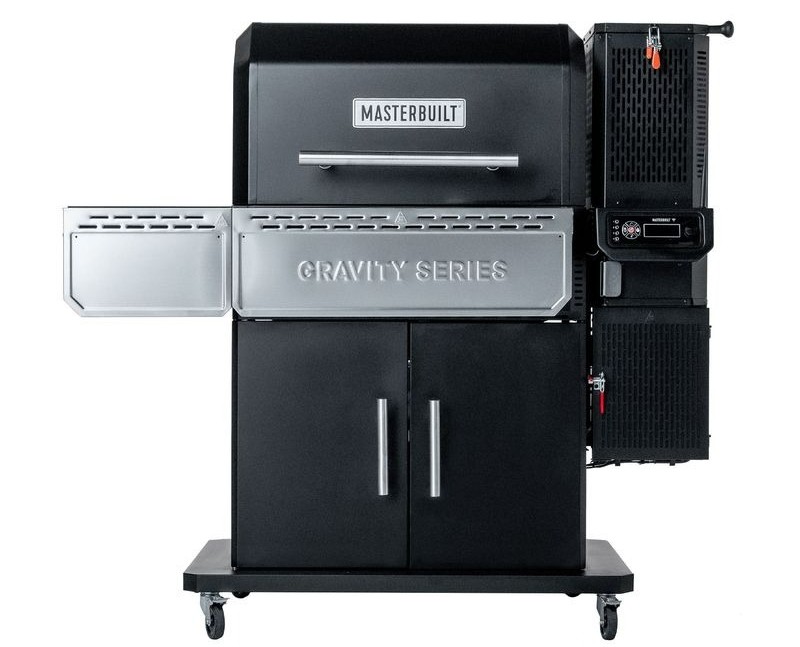
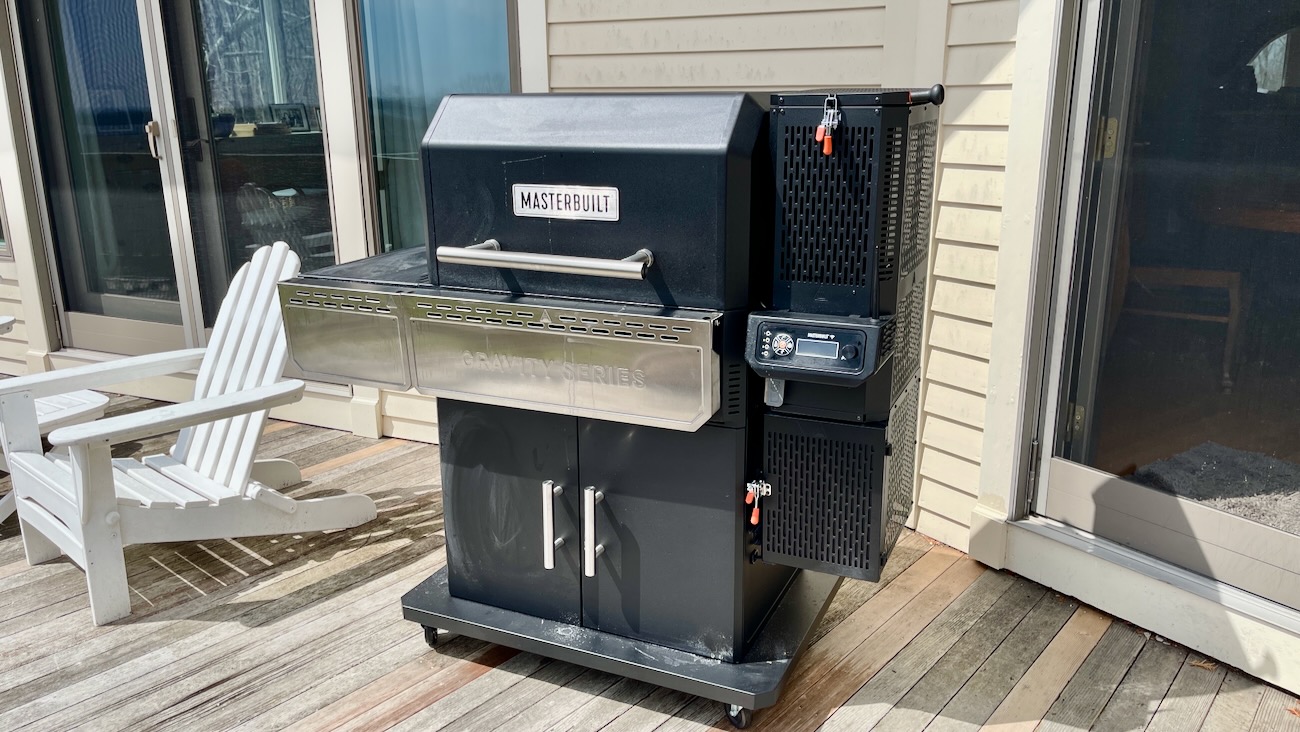
Where the ProTemp 2 Plus wins: native WiFi without a bridge, thinnest probe in the category, Breezo fan integration for charcoal grill automation, and nine-probe monitoring from a single app for serious multi-protein cooks. If you are running a charcoal setup like the Masterbuilt Gravity Series 1150 and want full temperature automation without cords, this is the probe that makes that possible. Where it trails: signal penetration through heavy metal obstacles versus RF competitors, and the connectivity inconsistencies covered below.
Design and What Is in the Box
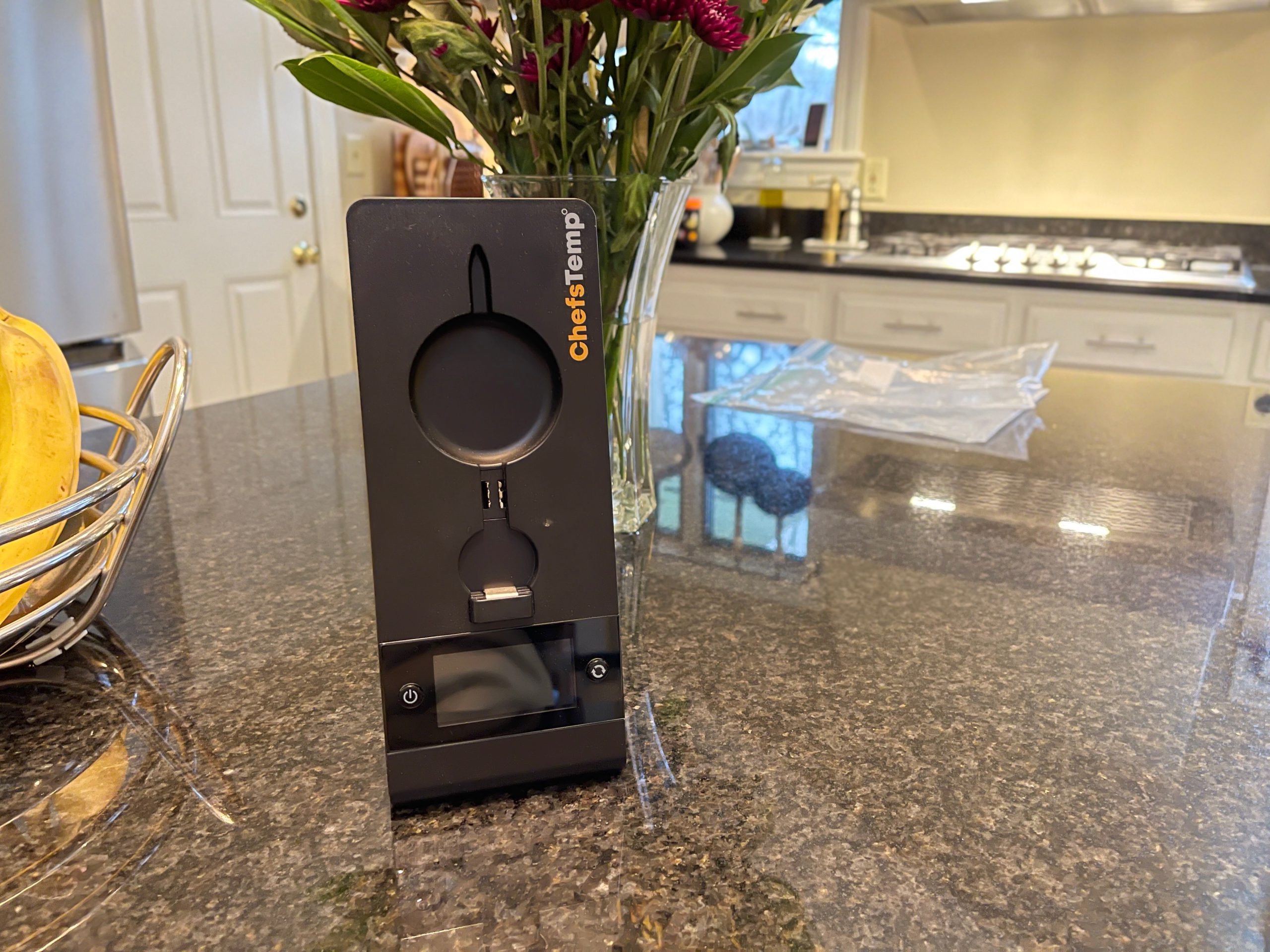
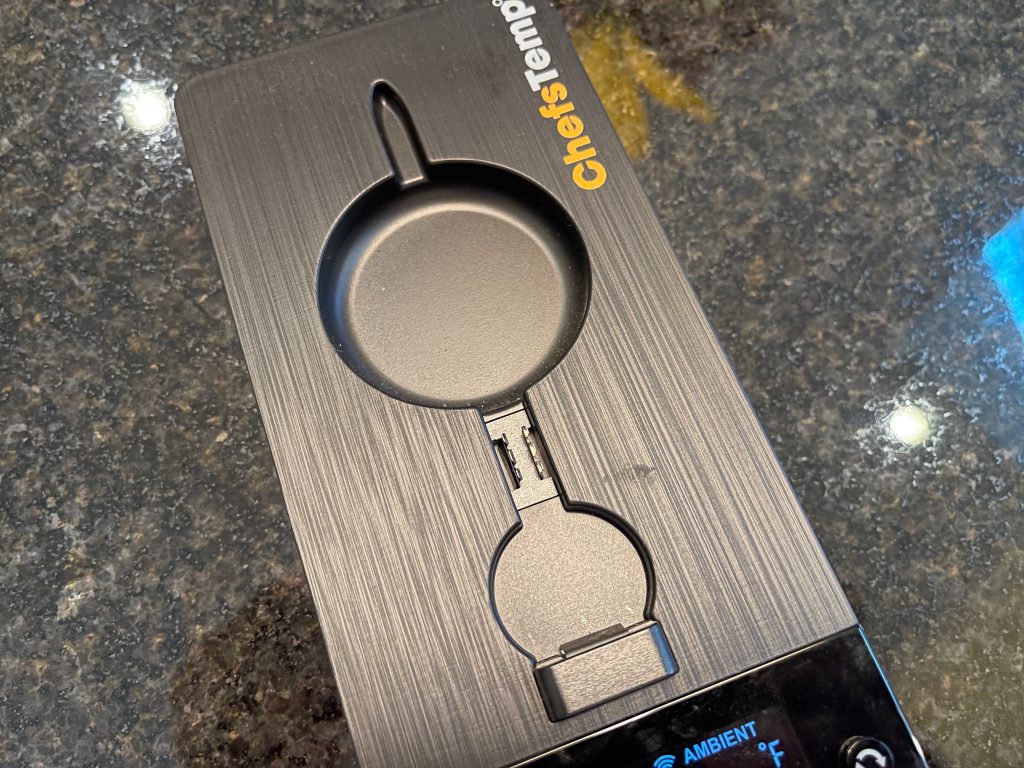
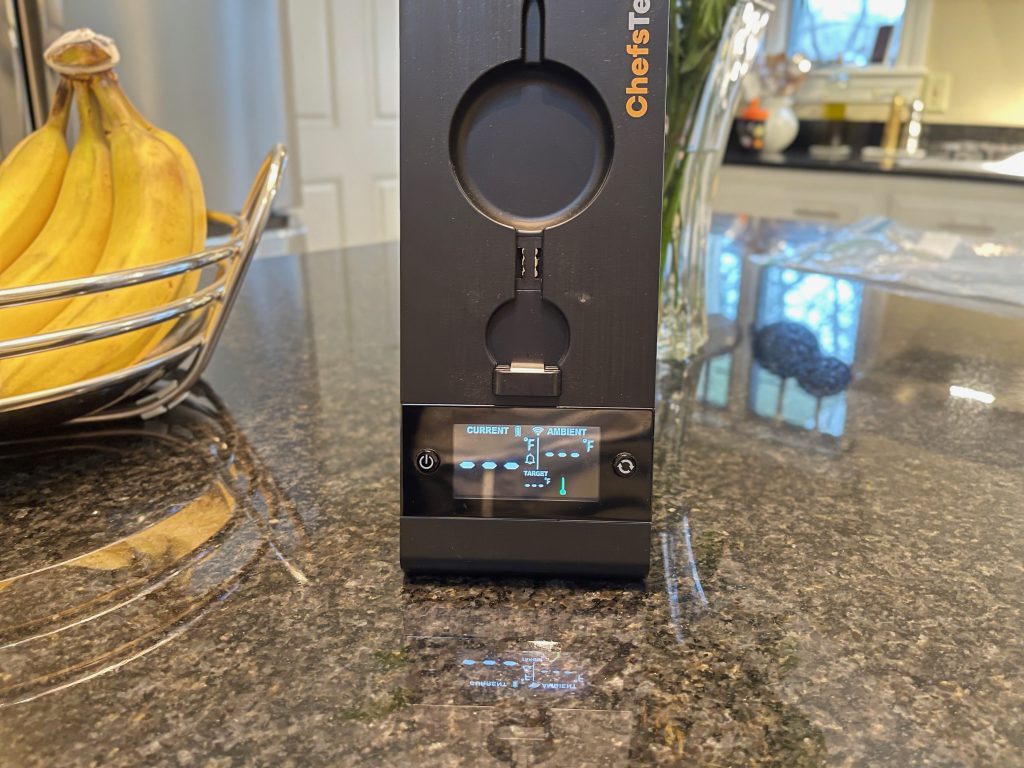
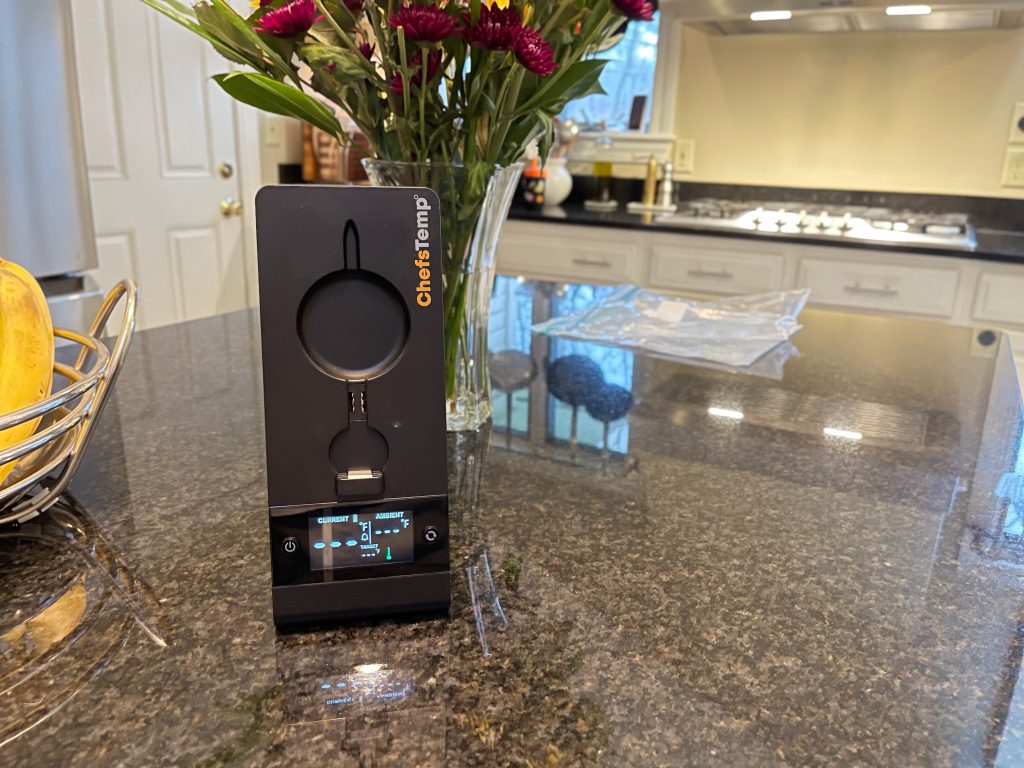
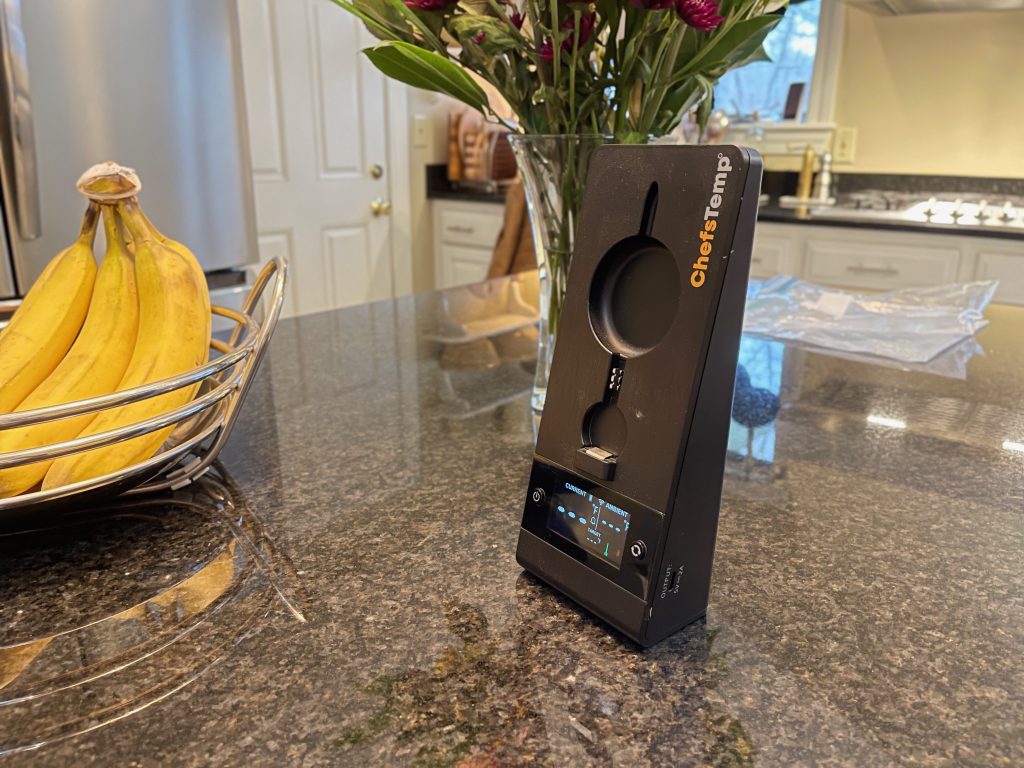
The stand is the brain of the system. It is a sleek upright unit with a display screen showing probe temperature, ambient temperature, battery state, and cook progress. The magnetic backing lets it attach to a refrigerator door or any metal surface, which is a genuinely useful feature for kitchen cooking.
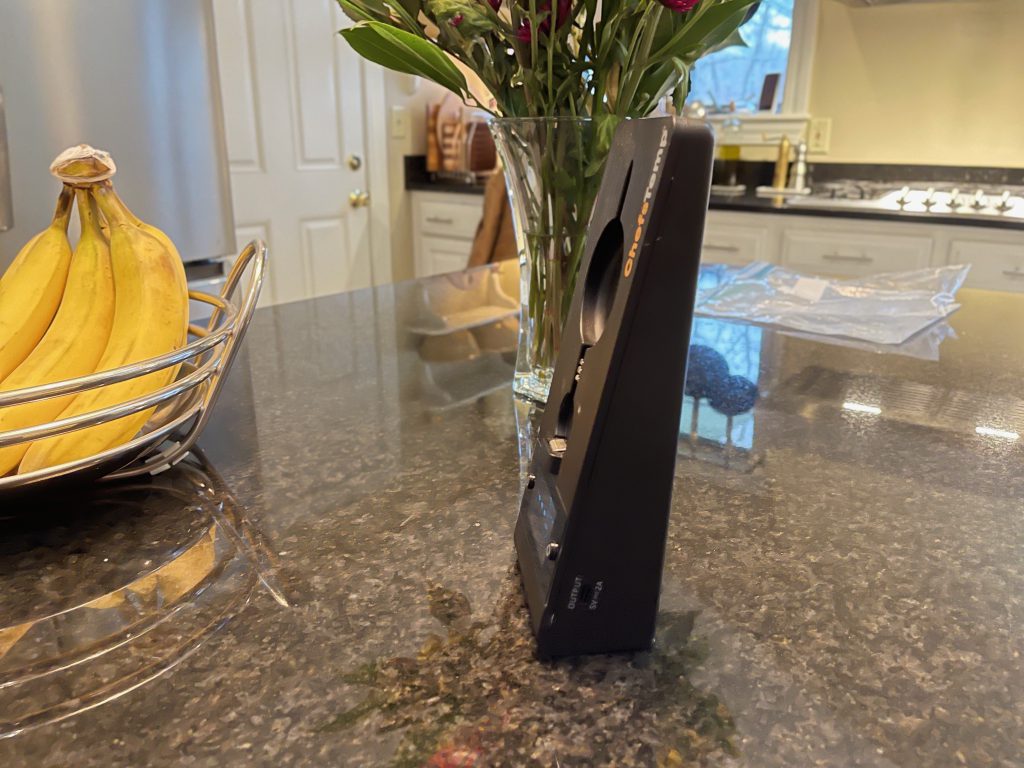
A USB-C port charges the stand. A passthrough port on the right side lets you charge your phone or another device from the stand when it is plugged in. The stand’s 10,000mAh battery delivers 80 to 100 hours of WiFi operation or over 1,000 hours in Bluetooth-only mode.
The probe charges in approximately 30 minutes and delivers 40 hours of use. The stand charges in four to five hours. The probe is 316-grade stainless steel — a meaningful step up from the 304 steel most competitors use in terms of corrosion resistance against acids, fats, and cleaning chemicals. It is NSF/ANSI food-grade certified. The handle is rated to 1,000 degrees Fahrenheit ambient, which covers direct grill exposure and high-heat scenarios. Internal temperature limit is 221 degrees Fahrenheit, covering everything from rare steak to pulled pork without issue.
The package comes with the stand, one probe, and a USB-C cable. No wall adapter. For people cooking multiple proteins simultaneously — which is almost everyone once they start using a wireless thermometer — the one-probe limitation is a real-world frustration. Additional probes at $49.99 each make sense to budget for upfront.
Setup: Mostly Smooth, a Few Wrinkles
Getting the stand connected to your app takes about five minutes under normal circumstances. The app pairs the probe to the stand via Bluetooth first, then connects the stand to your home WiFi. On Android and iOS the process is guided and clear.
Two things to know before you start. First, the ProTemp 2 Plus requires a 2.4GHz WiFi network. It will not connect to 5GHz. Many modern mesh routers broadcast both bands under the same name, which means the device may try to connect to 5GHz and fail. If you hit a setup wall, check your router settings and either split the bands or force the stand to connect to the 2.4GHz band specifically. This is the single most common cause of setup failure and ChefsTemp’s own FAQ addresses it explicitly.
Second, during WiFi setup the app does not scan and display available SSIDs for you to select. You have to type your network name manually. It is a small thing but an odd omission for a product at this price point and one that adds unnecessary friction for anyone who is not sure of their exact SSID spelling.
The probe insertion line is also worth calling out. The probe needs to be inserted past a minimum depth — 75mm or about three inches — to protect the internal electronics from heat damage. There are multiple marks on the probe shaft and the documentation shows this in images, but it is not immediately obvious which line is the one that matters. The app explains it but could do it more directly. Know before you cook: the probe has to go in past what looks like the first black line. Treat any marking before that as a reference, not the target.
Cooking Performance When It Works
When the system connects and holds, it is genuinely excellent.
The countdown timer is the feature that changes how you cook. The app takes your target temperature, the current internal temperature, and the rate of temperature change to calculate and display an estimated time to completion. For a long cook this means you can actually plan around it — know when to start sides, when to expect the stall on a brisket, when to go inside for a while. AmazingRibs.com noted the algorithm works well in practice even if ChefsTemp does not specify whether it accounts for carryover cooking, and the consistent feedback from buyers bears that out.
The six-sensor setup — five internal sensors along the shaft plus one ambient sensor in the handle — delivers two things most competitors do not. First, the five internal sensors mean probe placement is genuinely more forgiving. The app uses the lowest internal reading rather than a single point, which matters because the coldest spot in the meat is what you care about. Second, the ambient sensor in the handle reads the grill temperature surrounding the food rather than just the air at the probe tip, which is where many competing thermometers introduce ambient reading errors.
AmazingRibs.com’s hands-on testing ran the ProTemp 2 Plus against a ThermoWorks Smoke X4 and a RecTeq pellet smoker’s built-in probes across a full chicken cook, confirmed by a ThermoWorks Thermapen at pull time. The ProTemp stayed neck and neck throughout. That is the peer set you want to be running with.
The probe itself is the thinnest in the category at 4.55mm. Multiple Amazon buyers confirmed the mark it leaves is minimal — on something you are slicing and serving it is genuinely less noticeable than competitors. For everyday outdoor grilling this does not matter much. For a whole chicken or a pork shoulder you are proud of, it does.
The dual monitoring setup works well in practice. When near the grill the stand display handles everything. When I go inside the app takes over. The Apple Watch integration means the temperature is on your wrist if you happen to be wearing one, which several buyers called out as a standout feature for the freedom it gives during long cooks.
Battery life has been a non-issue across multiple cooking sessions. Across several cooks including grilling steaks and pork I have not had to charge the stand or probes. One verified Amazon buyer named Sergio ran 14 continuous hours on a pork butt cook and reported the battery lasted without issue. Another ran an 18-hour brisket with only occasional connection drops he attributed to cooking inside a metal smoker inside a metal shed — a signal environment that would challenge any WiFi thermometer.
The Connectivity Problem: The Honest Version
Here is where the review has to be direct.
I ran two probes across multiple cooks. The first probe that came with the system failed to connect properly via WiFi and thus never connected reliably to my phone. The temperature reading on the stand was also inconsistent. I moved to a second probe, which had worked fine previously. During a cook with two steaks, the second probe dropped from the phone but maintained its connection to the base station. That probe was still showing a countdown timer despite not transmitting temperature data to the phone — meaning it looked like it was working when it was not. The first probe that was actually reading correctly was not showing a countdown timer at all.
These are two different failure modes happening simultaneously. One probe dead to the phone but alive on the stand, showing a countdown. One probe live to the phone but without a countdown. Neither state is what the product is supposed to do.
This is not an isolated experience. The pattern across Amazon reviews is consistent: when it connects, people love it. When it does not, the failure is hard to diagnose and difficult to recover from mid-cook. Marc Lighter gave it four stars and summarized it plainly: “Love the concept. Works great when it works. I end up losing connection to it a lot.” Chris gave it one star after investing in the full ChefsTemp system: “The probe is extremely difficult to pair, and loses connection during the cook. The base station does not charge correctly.” Douglas went through two replacement units, eventually got a base that connected but never successfully linked to WiFi, and returned it for a different brand entirely — giving it three stars only because customer service was responsive throughout.
The RF competitors like the ThermoWorks RFX and FireBoard Pulse use a lower-frequency radio that punches through metal and walls in a way that WiFi and Bluetooth cannot. For backyard cooking where the stand is within reasonable range of your router this is manageable. For a metal smoker on the far side of a large property, or any setup with significant signal obstacles between the stand and your router, it is a real limitation.
There is also a probe naming issue worth flagging. When running two probes simultaneously — which is the obvious use case for anyone cooking multiple proteins — you cannot rename the probes to reflect what they are monitoring during the cook. The naming function exists but routes back through WiFi setup rather than being accessible during an active cook session. Trying to track pork chops on probe one and a steak on probe two without being able to label them on the fly is a meaningful usability gap for a product designed for exactly that scenario.
Who Should Buy It
The ProTemp 2 Plus is the right choice for serious backyard grillers and smokers who want the most ambitious feature set available at this price point and are willing to work through some setup friction. The countdown timer, six-sensor accuracy, fan integration for charcoal automation, and nine-probe monitoring capability are genuinely differentiated. If you are doing long low-and-slow cooks where unlimited WiFi range matters and you can position the stand within clean line-of-sight of your router, this system delivers real value.
It is harder to recommend for anyone who wants true plug-and-play reliability above all else. The ThermoWorks RFX is the answer if signal stability through metal and walls is the priority and you are willing to pay more for it. The Meater Pro is the answer if you want simplicity and portability at a lower price and can live without native WiFi. The FireBoard Pulse is the answer if you run a large, leaky offset smoker that needs serious fan airflow.
Only buy the ProTemp 2 Plus with one probe if you cook one thing at a time. Budget for a second probe immediately if you cook multiple proteins in the same session, because the one-probe limitation will frustrate you within the first few cooks.