You are a driver passing through a neighborhood seconds after Flock Safety‘s software flags a sound as a gunshot. Your license plate is now on a list. You did nothing wrong, witnessed nothing, and have no idea any of this happened.
That scenario follows directly from how the system is designed to work.
Sound Into Suspicion
Flock’s Safe City bundle turns an uncertain sound into a list of identifiable vehicles, and the constitutional question begins right there.
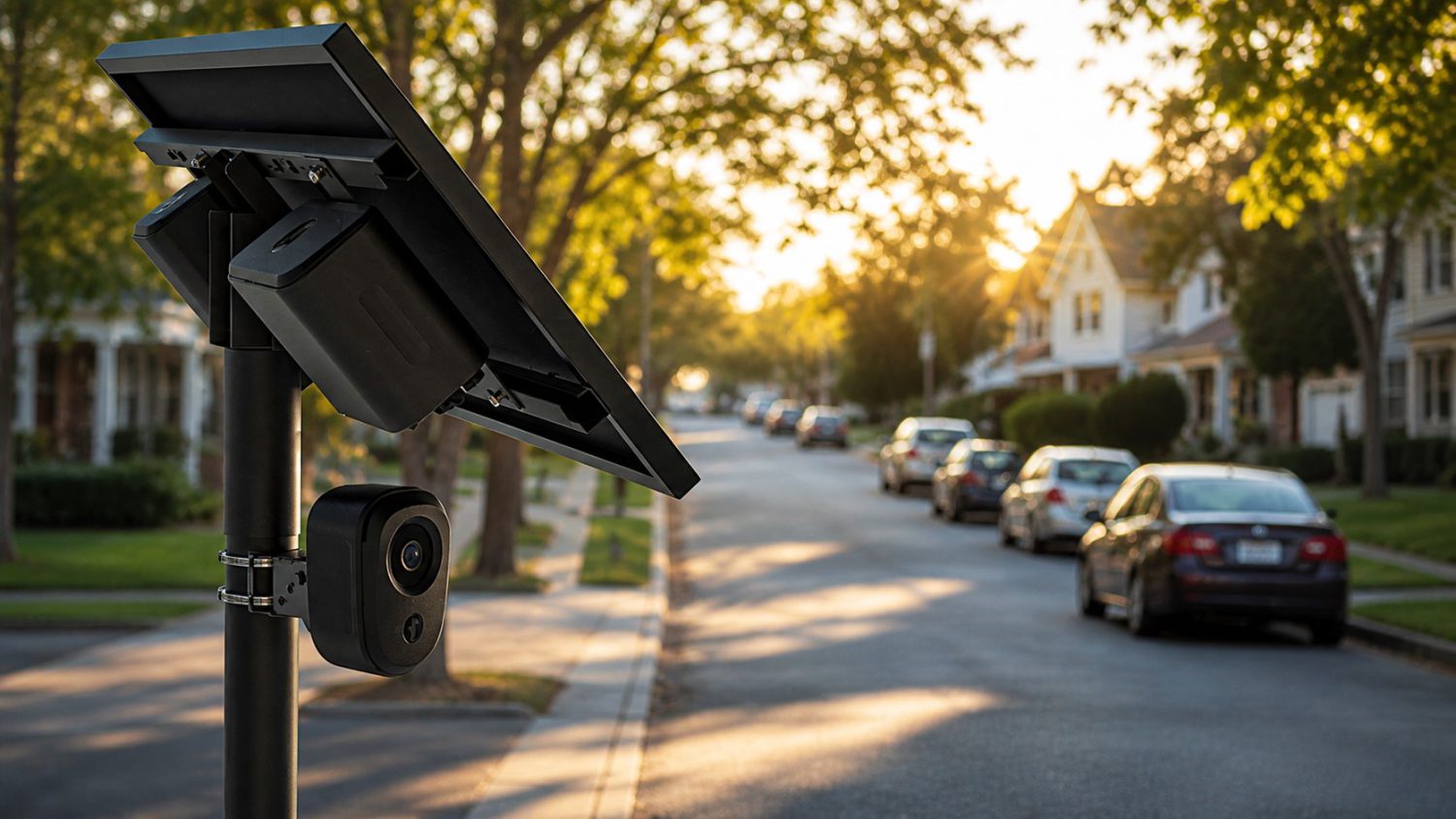
Flock’s Safe City bundle connects audio detectors, license plate readers, and video under one municipal subscription. The detectors analyze rolling three-second windows of ambient sound. If the software classifies a sound as a qualifying event, it retains an encrypted clip and sends an alert; FlockOS then surfaces vehicles captured by nearby ALPR cameras entering or leaving the area around the time of the sound.
Flock characterizes this as an investigative lead, not an enforcement action. That framing matters, because the constitutional danger arrives the moment an officer treats a proximity list as individualized suspicion.
Worth noting: Flock’s system is also designed to detect fireworks, sideshows, and vehicle crashes. The system can flag non-gunshot events by design, which means every vehicle list generated by an acoustic alert carries an unresolved question about what actually happened. They did nothing wrong, witnessed nothing, and have no idea any of this happened , much like users caught by apps secretly tracking users without their knowledge.
The Tenth Circuit addressed a related situation in United States v. Daniels (2024). The court declined to treat an unarmed person as suspicious because a 911 caller had reported armed men nearby who did not match that person’s description. Courts have been cautious about treating proximity to a report as evidence of involvement.
What the Courts Have Said (and Haven’t)
The case law is developing in contradictory directions, and that gap is exactly where cities need to act.
In Commonwealth v. Foster, the Pennsylvania Supreme Court upheld an investigative stop after police responded within seconds to a gunfire alert and observed conduct they regarded as evasive. The alert was one factor among several particularized circumstances, not the sole basis for the stop.
In State v. Carrillo, a New Jersey appellate court reached the opposite result, suppressing evidence from a minivan after concluding that an alert plus an ALPR hit did not adequately connect the vehicle to a shooting. Prosecutors also conceded that the video they had characterized as showing muzzle flashes showed no muzzle flashes at all.
United States v. Porter (5th Cir. 2025) held that using a 10-camera ALPR network to locate a previously known vehicle was not a Fourth Amendment search. That holding may not extend to querying a database for every vehicle near an automatically generated acoustic alert, since locating a specific known vehicle and generating a broad proximity list raise different factual questions. Where an alert-triggered ALPR query falls on that spectrum remains genuinely unresolved.
The law is not settled. Cities are deploying these systems anyway.
What Cities Should Do Before the Next Contract Renewal
Bundled surveillance platforms are to civil liberties what terms-of-service agreements are to informed consent: everyone clicks through, and the consequences arrive later.
Cities have leverage to change this before signing, not after. A warrant should be required before any alert-triggered ALPR query, with the allowable time window and geographic radius defined in writing. Genuine exigent circumstances can be carved out, but they need explicit definitions, not open-ended discretion. The risks are not hypothetical , a covert surveillance app built to target political dissidents shows how quickly such tools can be turned against the public.
Any decision to connect acoustic alerts to plate-reader data should go through a public hearing and an affirmative council vote. It should not disappear into a line item in a vendor contract.
Every query should be logged and auditable. Records on vehicles that turn out to be uninvolved should be deleted once they are no longer needed as evidence. No stop and no search should rest solely on an alert plus a vehicle’s proximity to that alert.
Flock says its system supports logged searches and that associated information is reviewed by law-enforcement personnel. Local policy determines whether those safeguards operate in practice or exist only in vendor documentation.
Cities renewing gunshot-detection contracts in the next budget cycle have real negotiating power. Warrant requirements, retention limits, and audit rights are terms that belong in the contract. The question is whether elected officials set those rules before courts are forced to do it for them.