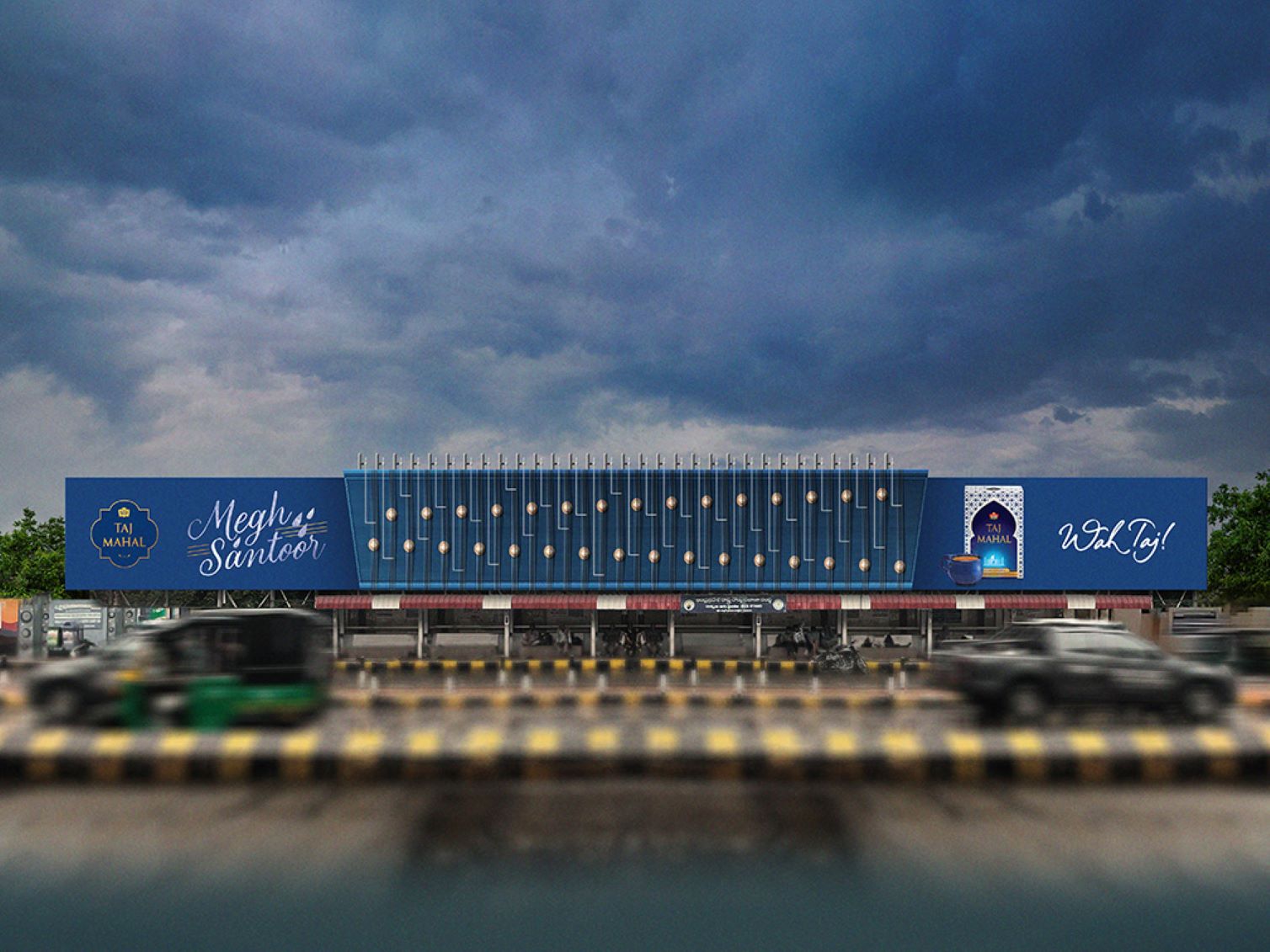
You’re standing at Vijayawada junction when the monsoon hits, as monsoons do, without warning. A 150-foot billboard across the street starts playing Raag Megh Malhar. Not a screen. Not a speaker blasting a jingle. An actual musical performance, triggered by rain. That’s the Megh Santoor — Brooke Bond Taj Mahal Tea’s outdoor installation, certified by Guinness World Records on 10 September 2023 as the largest environmentally interactive billboard ever built.
Thirty-One Strings, Zero Algorithms
Rainwater hits the surface, the mechanism responds, and Hindustani classical music follows.
Rainwater activates 31 strings and handles built into the billboard’s surface. A custom mechanical and sensor-based system — tuned, according to campaign reports, to rainfall intensity — converts precipitation into classical music in real time. Ogilvy India led the creative work, with Rapport Outdoor Advertising as collaborators. Musician Taufiq Qureshi reportedly supervised the musical execution. Per campaign-reported figures, the whole thing took six months to develop and required more than 50 professionals.
Key specs, certified by Guinness:
- Size: 210.86 sq metres (2,269.75 sq ft); approximately 150 feet wide
- Location: Opposite Vijayawada railway station, Andhra Pradesh, India
- Record category: Largest environmentally interactive billboard
- Date certified: 10 September 2023
- Music: Raag Megh Malhar — a Hindustani classical raga deeply associated with monsoon rains
The Raga Wasn’t Random
Megh Malhar and monsoon season share a relationship that Taj Mahal Tea understood exactly.
Raag Megh Malhar is a raga closely tied to rain — performed to honor it, to sit inside it. The sensory logic here is remarkably precise: rain falls, the raga plays, you want tea. Taj Mahal Tea didn’t manufacture that emotion. It positioned itself at the exact intersection where the emotion already lives.
Static billboards compete for a glance. This one waited for weather and earned a moment.
What Brands Are Actually Engineering Now
Experiential out-of-home advertising is increasingly built, not just bought.
Brands willing to construct something real — rather than purchase another slot — are finding that the installation becomes the press release, the social content, and the cultural artifact all at once. Think of it as the immersive pop-up model applied to public infrastructure, except the weather handles the timing.
The Megh Santoor didn’t interrupt a single commute. It gave Vijayawada’s railway crowd something to film, something to feel, and somewhere to be during a downpour. That’s not an ad. That’s a reason to stay.