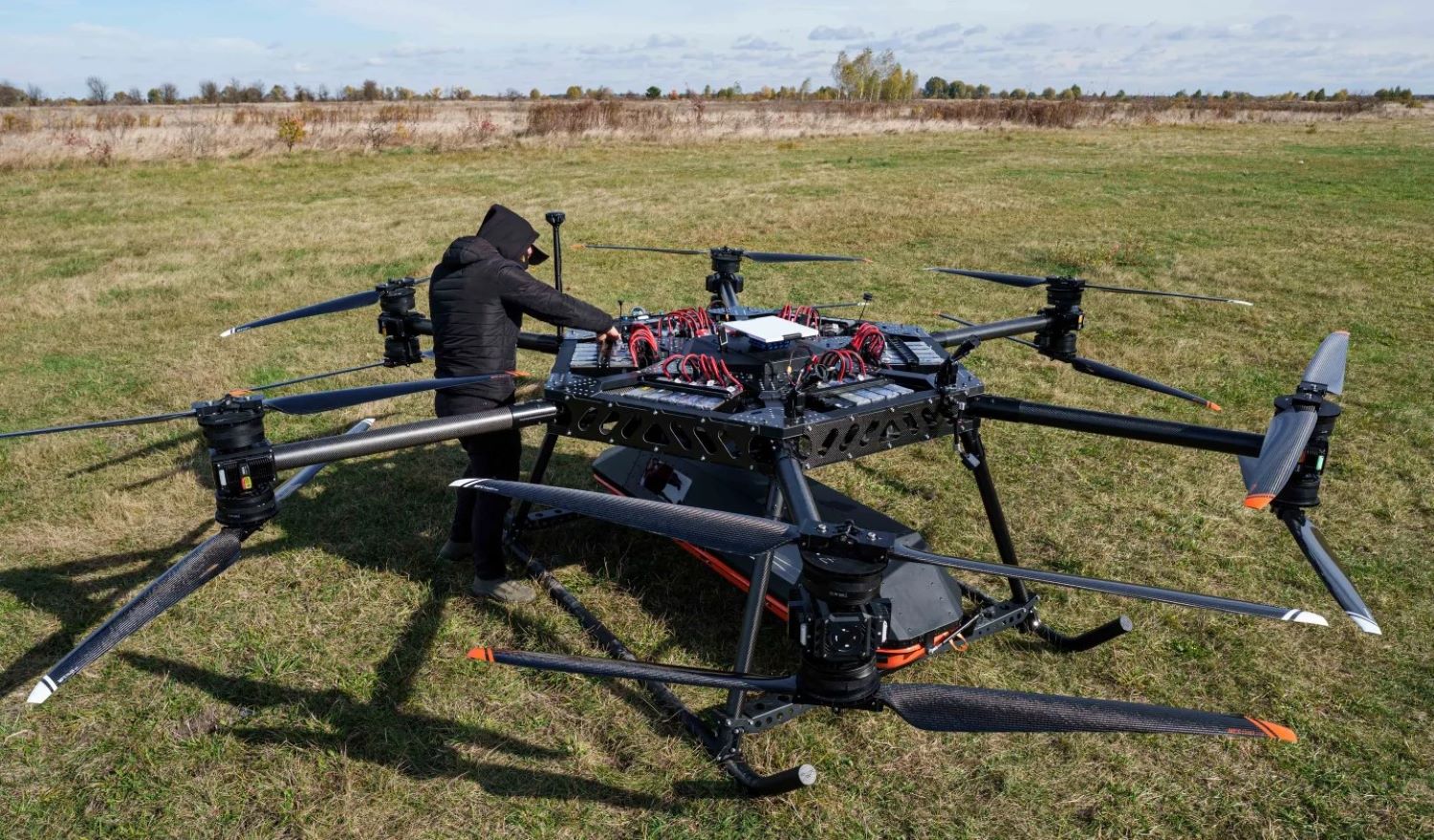
According to AP reporting, ground robots evacuating casualties in Ukraine’s front-line kill zones may take two to three hours to cover comparable distances, navigating minefields, craters, mud, and persistent enemy drone coverage. For severely wounded soldiers, that delay can be fatal.
StarGate, an aerial drone developed by Ukrainian defense-tech company SkyFall, is designed to close that gap. A combat brigade is now evaluating the system under front-line conditions, and AP journalists received exclusive access to a field demonstration.
What StarGate Does
The drone is built around a single operational premise: reach terrain no ground vehicle can reliably cross, retrieve a wounded soldier, and return.
The concept is straightforward. SkyFall says the six-propeller drone carries up to 150 kilograms (330 pounds), enough for a soldier in full body armor with combat equipment, in a stretcher-based evacuation module.
Its one-way range of 15 kilometers roughly matches the depth of the threatened battlefield zone described by commanders from Ukraine’s 475th Separate Assault Regiment, the unit that originally requested the system. SkyFall says it cruises at 65 kph, tops out at 105 kph, and can be flight-ready in approximately 10 minutes.
Each unit is estimated to cost at least $50,000, according to SkyFall. Those are company figures, not independently verified pricing.
Built for a Hostile Sky
Surviving long enough to complete a mission is the harder engineering problem, and SkyFall has built several layers of redundancy to address it.
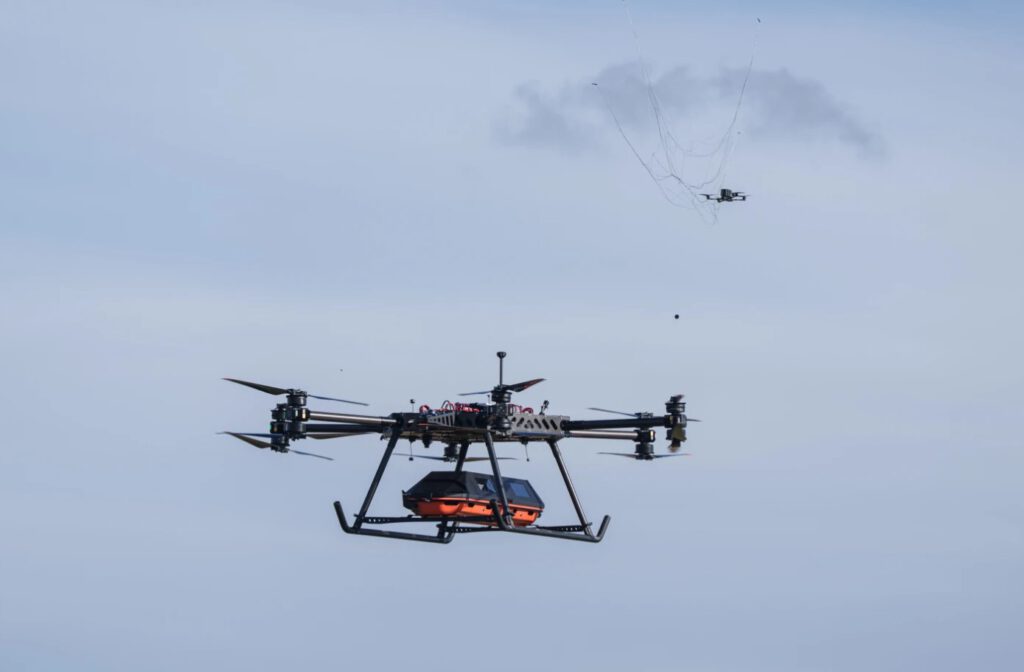
StarGate runs two communications channels: Starlink and SkyFall’s proprietary L-Link system. When GPS is jammed or spoofed by electronic warfare, an onboard AI system is designed to assist with navigation. If communications are lost entirely, SkyFall says the drone can plot its own route back to a safe zone.
During the AP demonstration, first-person-view drones simulated attacks while electronic jamming was activated. A net launcher disrupted one incoming drone mid-flight.
SkyFall also says StarGate can operate in rain and snow and uses thermal imaging for nighttime missions. What the company has not provided is reliability data, survival statistics against concentrated drone attacks, or any independent battlefield performance figures. Meaningful operational numbers were not publicly available in the reporting reviewed.
Promising, Not Proven
StarGate is under active combat evaluation, and the people doing the evaluating are the first to say the results are not yet in.
The commander of the evaluating unit told AP the brigade needs at least a month of operational experience before any meaningful success-rate data can exist. That candor is worth noting.
SkyFall says it aims to produce up to 1,000 units per month by the end of 2026. That is a company projection, not a verified production commitment.
Critical questions remain unanswered. How well does the drone protect a casualty during flight over contested terrain? How does battery endurance hold up under a full 150-kilogram payload at operational range? How practical is it to load a wounded soldier onto a stretcher in an exposed position while under fire?
StarGate is a prototype under combat evaluation, not a proven replacement for ground evacuation teams or armored medical vehicles.
The decisive test is operational data: missions completed, failure rates, and resistance to jamming all matter, as do maintenance demands and cost per successful evacuation. Until those figures come back from the front, StarGate remains an urgent idea with an unfinished story.