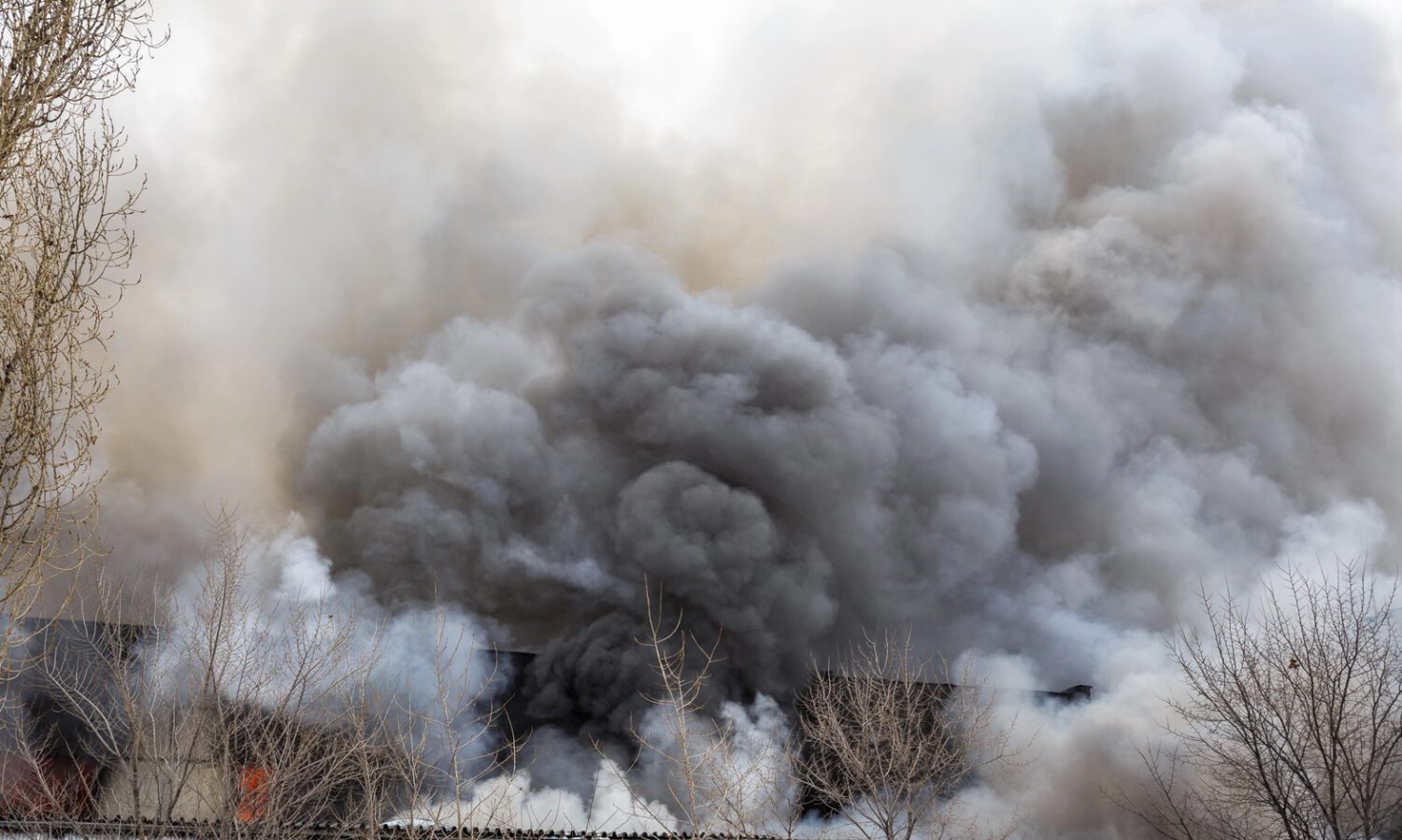
Three Yandex data centers were reportedly struck by drones between Oct. 8 and Oct. 11. The incidents took more than 80 services offline and sent HTTP-request traffic from Yandex networks to 0.4% of recent peak levels, according to Cloudflare data cited in reporting.
The disruption reached far beyond any military-linked workloads that may have been present. Ordinary businesses, developers, and consumers relying on Yandex Cloud, search, transport, and AI tools absorbed the damage alongside them.
Three Strikes, Four Days
A sequence of reported attacks across four days disabled facilities in three Russian regions.
On Oct. 8, a Yandex facility in Sasovo, in Russia’s Ryazan region, was reportedly hit and described as having stopped operating completely. That site reportedly housed two of Yandex’s three supercomputers.
The following day, a Yandex campus in Kaluga was reportedly damaged, with several hardware modules disabled.
A third strike reportedly hit the Vladimir data center on Oct. 11, suspending operations there and placing Yandex Cloud into emergency operating mode. The Vladimir facility reportedly hosted the Yandex Cloud availability zone ru-central1-a and the company’s third supercomputer, Galushkin.
Scale of the Outage
Traffic and service data from the period illustrate how sharply the incidents degraded Yandex infrastructure.
Cloudflare data cited in reporting showed HTTP-request traffic from Yandex networks fell to approximately 57% of recent peak levels on Oct. 8, coinciding with the Sasovo strike. Traffic collapsed further in the days that followed.
NetBlocks reportedly measured Yandex Cloud traffic at roughly 30% of normal and Yandex LLC traffic at approximately 63% of normal following subsequent incidents. Downdetector tracked user reports of disruptions across Yandex Cloud, Yandex Documents, and Yandex Tables.
Disruptions reportedly spanned cloud computing, storage, managed databases, search-related services, transport, media, and consumer products.
One qualification matters here: the 0.4% figure measures HTTP-request traffic associated with Yandex networks. It does not establish that 99.6% of Russian bots were permanently destroyed, nor that all affected traffic was malicious or propaganda-linked.
One Provider, Nowhere to Hide
The attacks exposed the structural risk of concentrating cloud capacity and specialized hardware within a small number of large facilities.
Concentrating cloud capacity and specialized hardware across a small number of large facilities creates a structural vulnerability. Damage to several availability zones can cascade into unrelated applications that simply share the same provider.
The reported loss of two supercomputers is significant; both systems supported Yandex AI and neural-network workloads, including AI-model development. Customers were reportedly advised to activate disaster-recovery plans after the Vladimir strike, the clearest signal of how far the disruption reached.
Geographic separation is not a luxury feature. It is the architecture that reduces the risk of a single incident becoming a provider-wide outage.
Reported Context and Unresolved Questions
The motive behind the strikes remains a reported explanation rather than an independently verified finding.
The strikes have been described in reporting as retaliation for Russian attacks on Ukrainian data infrastructure. That remains a reported explanation, not an independently verified or legally established finding.
The dual-use nature of data centers makes clean conclusions difficult. Facilities may simultaneously support civilian cloud services, consumer applications, and government or military workloads, and the available reporting does not establish which applied to these specific sites, or whether targeting them was lawful under international humanitarian law.
What This Changes
The episode makes a direct case for geographic redundancy and tested disaster-recovery procedures.
For cloud customers and operators, the incident is a concrete argument for geographic redundancy and tested disaster-recovery procedures that do not depend on a single national provider or region.
More broadly, it signals that national digital infrastructure concentrated within a small number of physical facilities carries strategic risk, one that cloud operators and policymakers elsewhere may now reassess how to address with respect to AI data centers.