Losing sight of a kid for even thirty seconds in a crowded store is enough to make any parent’s stomach drop. A GPS tracker won’t stop that feeling from happening, but it gives you a way to find the answer fast instead of standing in a parking lot yelling a name into the wind.
We looked at real-time cellular trackers, phone-based options, and Bluetooth trackers that piggyback on Apple and Samsung’s device networks. Cellular trackers work almost anywhere, all the time, for a monthly fee. Bluetooth trackers cost nothing extra to run, but only work well where other phones are nearby to relay the signal. We’ll flag which is which as we go, because that difference matters more than most gift guides let on.
1. Bark Watch — Best Overall

There’s no internet on the Bark Watch. No app store, no browser, none of the usual attention traps. A kid gets a phone number, a location pin, and an SOS button, and Bark left it at that on purpose, building the whole thing on real Samsung Galaxy Watch8 hardware instead of the plastic-toy build most kids’ smartwatches settle for.
That hardware runs its own LTE connection, so the watch works without a smartphone anywhere nearby. Any number that hasn’t been approved gets blocked automatically, and texts sent from the watch can’t be deleted on Bark’s end, so a conversation a parent needs to see later stays visible no matter what. Like the phone, it runs on Bark’s parent app, the same foundation behind every Bark kid safe device, so a family already using it for one child’s phone or tablet can add the watch without learning a second system.
GPS runs on L1+L5 dual-frequency positioning, the same technology found in far more expensive sports watches, and one Amazon reviewer measured accuracy within a tenth of a mile during urban walking tests. Location tracking works three ways: a live map, and custom zone alerts, so a family can pick whichever combination fits how closely they want to watch things.
The same features that help keep all children safe have been recognized by multiple states as being an approved assistive technology. Families with Medicaid may be eligible to get coverage for their dependent’s device. This makes Bark a top pick for families of children with special needs, whether elopement or independence is a top priority. Families considering the Bark Watch can visit this site to see if their state is approved.
Between the device payment and the required service plan, which covers cell service, parental controls, and a Bark Premium family subscription for the whole family, the total lands at $27 a month for the first two years and drops to $15 a month once the device is paid off. For a kid in elementary or early middle school who needs a way to check in and get picked up, this is about as capable as a first connected device gets.
2. Bark Phone — Best for Older Kids
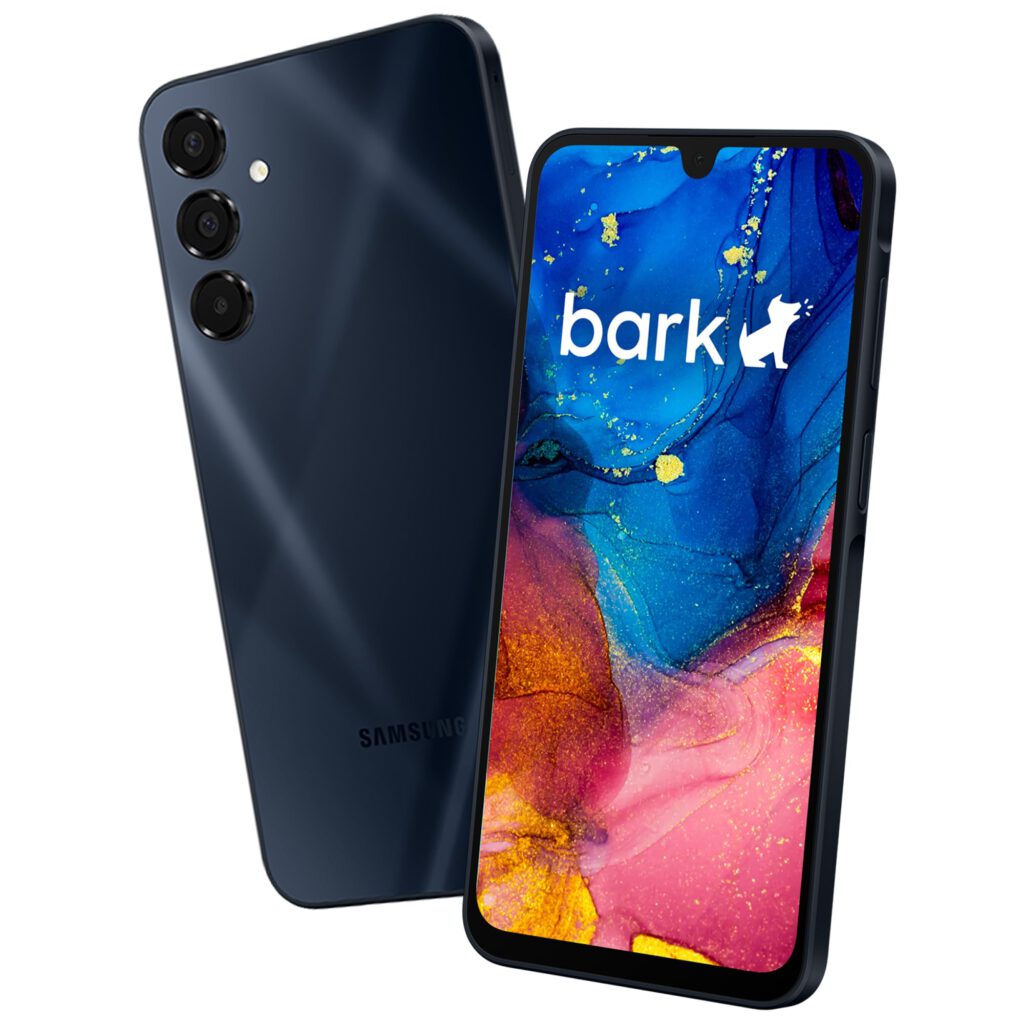
The Bark Phone is a real Samsung Galaxy A Series, currently an A16 5G as of publishing, and Bark built its monitoring into the operating system itself instead of layering it on as an app a kid could just delete. Family IT Guy tested that claim directly and found that changing any setting on the phone requires a code that only generates inside the parent’s Bark app, so there’s no way around it without physical access to that second device. This means location tracking can’t be turned off easily, giving parents ease of mind.
In addition to GPS tracking, Bark’s parental controls are built into the device. Content monitoring covers texts, emails, and more than 30 apps for signs of bullying, sexual content, and self-harm language, and it reaches further than most competing tools claim to. During testing, a WhatsApp message referencing depression triggered a parent alert within 30 minutes, which confirms the system gets into encrypted apps that usually block outside monitoring entirely.
Protect Young Eyes has also run backdoor tests on five kid phones, including Bark, Gabb, Pinwheel, Troomi, and MMGuardian, and Bark was the only one that caught a kid reaching explicit content through the phone’s browser. Their testing also found Bark flags Spotify for explicit audio content, something Troomi and Pinwheel let slide even though both platforms carry the same app.
The device itself costs $15 a month, and a required plan adds $29 a month for talk, text, and location, or $39 and up if you want browsing and apps included too. Every tier bundles in Bark Premium for the rest of the family’s other devices at no added cost, which softens the higher price tag somewhat. That’s the same Bark app monitoring every device your child has, so a family isn’t managing one dashboard for the phone and a different one for anything else a kid carries.
This is the strongest fit for a kid around 8 to 13 who’s ready for a real phone, especially for parents who’d rather start locked down and open things up gradually as trust builds.
3. AngelSense — Best for Elopement Risk

Most trackers on this list can be taken off in ten seconds. AngelSense can’t, and that’s the entire point. The device attaches with locking pins that require a special tool to remove, built specifically for kids and adults with special needs who face a real elopement risk.
SafeWise named it the winner of their 2026 Kids Safety Awards for best overall GPS tracker. Location updates fire as often as every 10 seconds in emergency mode, and the device blends GPS, WiFi triangulation, and cellular tower positioning to land roughly 95 percent accuracy outdoors, with indoor location narrowed to within 50 to 100 feet.
Two features come up again and again in parent reviews on G2 and Trustpilot: a listen-in mode that lets a parent check in through the device’s microphone, and two-way calling that lets a kid reach a parent directly without needing a phone of their own.
None of that comes free of tradeoffs. AngelSense claims one to three days of battery life, but real-world testing lands closer to 18 to 30 hours, which means a nightly charge isn’t optional and puts it behind every other tracker here on that front.
Pricing depends heavily on timing. AngelSense frequently runs first-purchase promotions that waive the $229 device cost entirely, but the service plan is a fixed cost regardless, landing between $44.99 and $64.99 a month depending on the billing term you choose. Families managing a genuine wandering risk are the clearest use case, and the design reflects that.
4. Tracki — Best Dedicated Tracker

Tracki wasn’t built as a kids’ product first. It’s a cellular GPS tracker for people, pets, vehicles, and luggage, which turns out to be an advantage: the platform has been stress-tested across use cases a kid-only tracker never faces.
SafeWise handed it their award for best value and best performance in rural areas, a real distinction since most trackers on this list struggle the moment they leave dense cell coverage. Real GPS and cellular networks power the tracking here, not Bluetooth, so a kid can be tracked at any distance rather than only within range of a paired phone. Coverage extends across roughly 190 countries, which matters if your family travels.
Update frequency is adjustable, from every 10 seconds down to every 30 minutes, and that single setting is the biggest lever on battery life. Tracki advertises up to 30 days on power-saving mode and up to a year with an extended battery accessory, though reviewers running frequent updates report the real number closer to a day or two.
The hardware itself is frequently discounted down to $10 to $15, though the plan you’ll actually pay for month to month starts around $9.88 for 60-second updates and climbs to roughly $30 for updates every 10 seconds. If content monitoring isn’t a priority and you just want dependable GPS without a phone plan attached, this is the strongest option on the list.
5. Apple AirTag — Best Budget Pick for iPhone Families
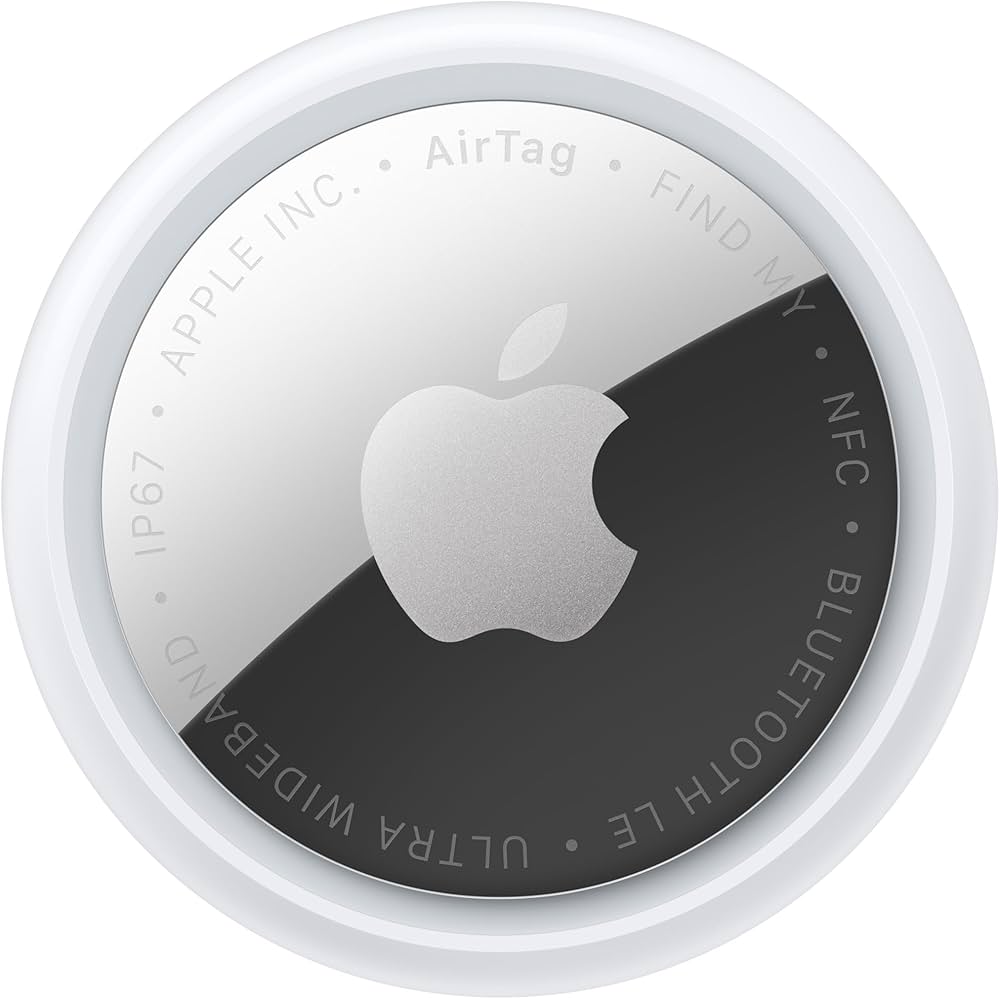
No monthly bill, ever. That’s the entire pitch behind the AirTag, and it’s a real one: instead of running its own cellular connection, it piggybacks on Apple’s Find My network, reporting its location whenever it passes near any of the hundreds of millions of iPhones out in the world.
Setup takes one tap, and the coin-sized tracker runs on a replaceable battery rated for about a year, making it the lowest-maintenance option here by a wide margin.
Apple has been explicit that AirTag was designed to track items, not people, and points families toward Apple Watch with Family Setup instead. Take that seriously. In an area without many iPhones nearby, the AirTag’s location simply won’t update, and unlike the Bark Watch or AngelSense, there’s no way to call a kid directly through it. The battery compartment has also drawn attention as a potential choking risk for young kids, so think twice before handing one to a child who still puts things in their mouth.
A single AirTag costs $29, and four-packs regularly drop from a $99 list price down to somewhere between $60 and $70. This works best as a supplemental tracker clipped to a backpack or tucked into a coat pocket, not as the primary safety device for a young kid heading out alone.
6. Samsung SmartTag2 — Best Budget Pick for Android Families

Samsung built the SmartTag2 as its answer to the AirTag, and for Android families, it’s the closest equivalent, running through the SmartThings Find network instead of Apple’s. It actually beats the AirTag on one hard spec: battery life, rated up to 500 days in standard mode and 700 days in power-saving mode, comfortably ahead of the AirTag’s one-year estimate.
Retailer reviews mention using it on a kid’s backpack specifically for this purpose, and the IP67 rating means it can handle rain and everyday drops without issue. German outlets Stiftung Warentest and PC Welt both rated it well among Bluetooth trackers as a category.
The tradeoff is the same one the AirTag carries. Since it relies on nearby Samsung devices to relay a location instead of its own cellular connection, it won’t update in real time and loses accuracy indoors or behind obstacles. It’s also locked to the Samsung ecosystem, so it’s off the table entirely for an iPhone household.
It’s typically about $30 for a single tag, or $100 to $116 for a four-pack. If your family runs Android and just wants a no-subscription tracker for a jacket or backpack, this is the pick, though it isn’t built to stand in as a kid’s only safety device.
What Should You Be Getting?
Start with your kid’s age and how much independence they actually have day to day. A kid walking to school alone or getting picked up from a friend’s house needs real-time location tracking and a way to call for help, which points toward wearables like the Bark Watch. A kid old enough for a full phone but not ready for an unlocked one points toward the Bark Phone.
If your family manages a real elopement risk, AngelSense’s non-removable design and listen-in feature solve a problem the other trackers on this list weren’t built for. But if non-removable design isn’t a deal breaker for families on Medicaid, it’s worth checking to see if your child is eligible for a Bark Watch with a Medicaid voucher option
If you just want backup coverage on a backpack or coat and you’re not worried about real-time updates in a pinch, the AirTag or SmartTag2 gets the job done for a fraction of the cost, as long as you match it to the right ecosystem: AirTag for iPhone families, SmartTag2 for Android families.
And if your priority is real-time cellular GPS without content monitoring or a phone plan attached, Tracki fills that space, especially for families who travel or live somewhere with spotty cell coverage.
Keep in mind, however: AngelSense, Tracki, and both Bark devices all use real cellular GPS, which reports location on its own wherever there’s a signal. The AirTag and SmartTag2 depend on nearby Apple or Samsung devices to relay a location, so they hold up well in populated areas and less reliably anywhere remote or low on other devices.
Bottom Line
For most families, the Bark Phone and Bark Watch cover the two situations parents run into most: a kid who needs a real phone with guardrails already built in, and younger kids (or kids with special needs) who just need a way to check in and be found. Both come with real-time GPS-powered location tracking and monitoring that’s been independently tested and confirmed to work, not just advertised.
Everything else on this list fills in the edges. AngelSense for families managing elopement risk, Tracki for real-time GPS without the phone or the monitoring layer, and the AirTag or SmartTag2 for a low-cost backup that rides quietly in a backpack.