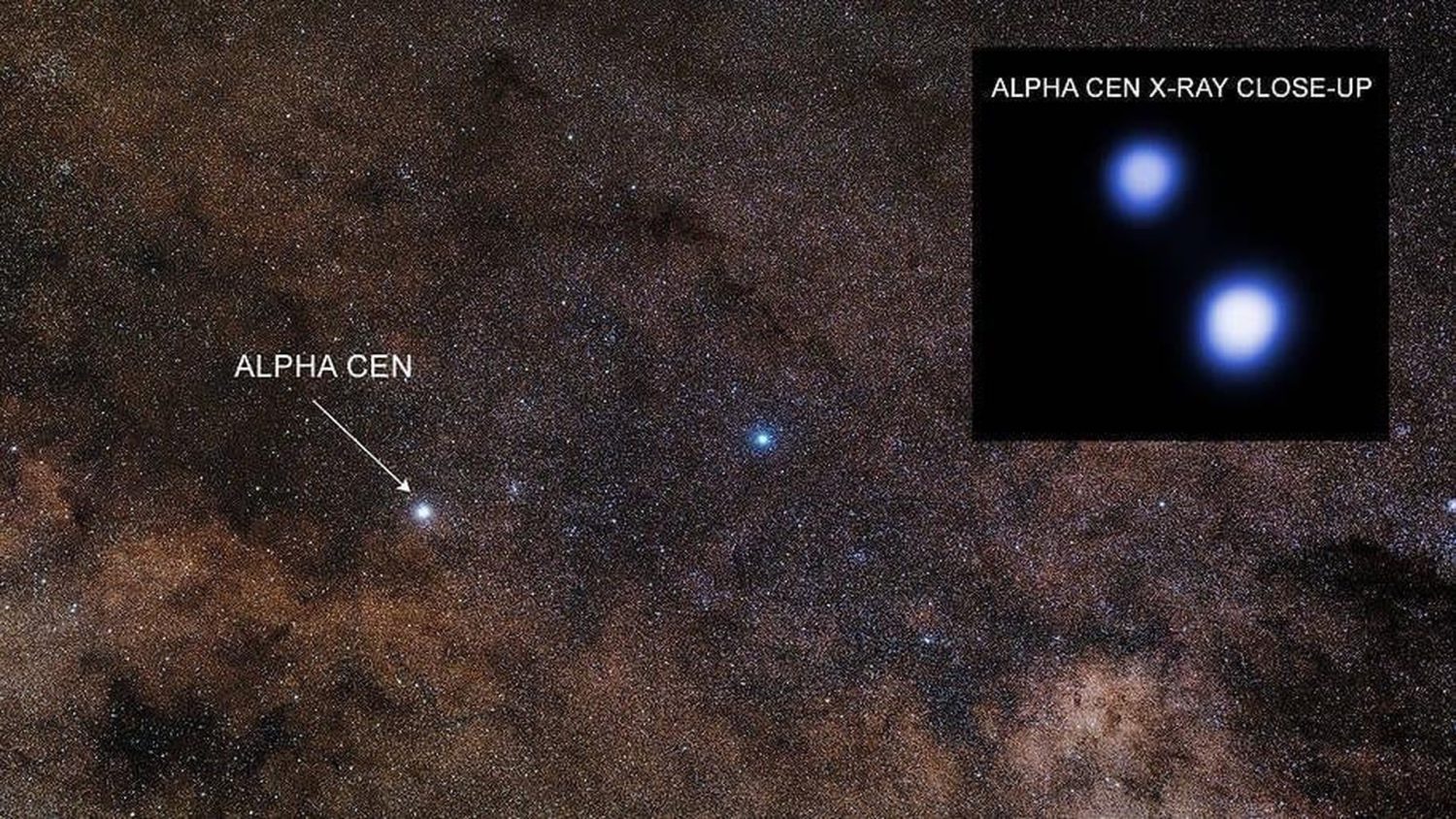
Somewhere between “audacious” and “are you serious,” you’ll find the Fermi Explorer Mission. The newly announced non-profit wants to launch a spacecraft roughly the size of a shoebox toward Alpha Centauri — 4.4 light-years away — on a journey lasting approximately 80,000 years, for under $15 million. The founders are Philip Johnston, Ezra Feilden, and Adi Oltean: the same team building orbital AI data centers at Starcloud. As TechCrunch put it, “if space data centers feel far-fetched, why not interstellar travel?”
The Long Way Around the Sun
Getting to another star on a budget means working with gravity, not against it.
Electric propulsion does the heavy lifting here — no exotic physics required. After a rideshare launch into low-Earth orbit, the spacecraft uses xenon ion thrusters to spiral inward, dropping its closest solar approach from 1 AU to roughly 0.42 AU. Near the Sun, it fires its thrusters during each close pass, exploiting the Oberth effect: burning fuel deeper in a gravity well extracts disproportionate speed. Over about 12 years, these “perihelion pump” burns stack until the craft escapes the Solar System at roughly 24–25 km/s — far beyond even the fastest hypersonic speeds achievable in Earth’s atmosphere. Then it simply coasts. For 80,000 years.
Credibility Check
The founders bring real orbital hardware experience — not just ambition.
These aren’t napkin-sketch dreamers. Oltean is a former principal software engineer at SpaceX’s Starlink division and a Microsoft veteran. Feilden built satellite hardware at Oxford Space Systems and Airbus Defence and Space. Johnston handled satellite projects at McKinsey before co-founding companies. Starcloud has already flown an NVIDIA H100 GPU in orbit to test thermal management — real hardware, real launches. The team reportedly has spacecraft bus bids already coming in under the $15M cap.
Science or Time Capsule?
The honest tension is straightforward: this probe will go silent long before it arrives anywhere.
The craft will almost certainly go inert after its power runs out, well before reaching interstellar cruise distance. Future probes — laser-driven light sails, nuclear-powered craft — will likely launch decades from now and arrive millennia earlier, passing Fermi Explorer like a Tesla passing a covered wagon. Critics call it symbolic at best, expensive theater at worst. The founders don’t dispute this. Their claim is simpler: Voyager was never aimed at a star. Someone has to be first to launch with intent.
Your Name, Traveling for 80,000 Years
For $100, your name rides along on the longest road trip in human history.
Participation tiers include:
- $100 — your name physically engraved on the spacecraft
- $10 — your name listed on the mission website
Scientific and artistic payloads are being solicited — a modern Golden Record for whoever or whatever might eventually encounter it. The mission targets launch before the end of 2029, carrying a 1 kg payload in a 10 cm cube toward where Alpha Centauri will be in roughly 79,500 years.
Whatever finds that shoebox drifting through interstellar space will discover an artifact launched when humanity was still arguing about which streaming service owned which superhero. That’s either the most poignant thing we’ve ever done, or the most human thing we’ve ever done. Probably both.