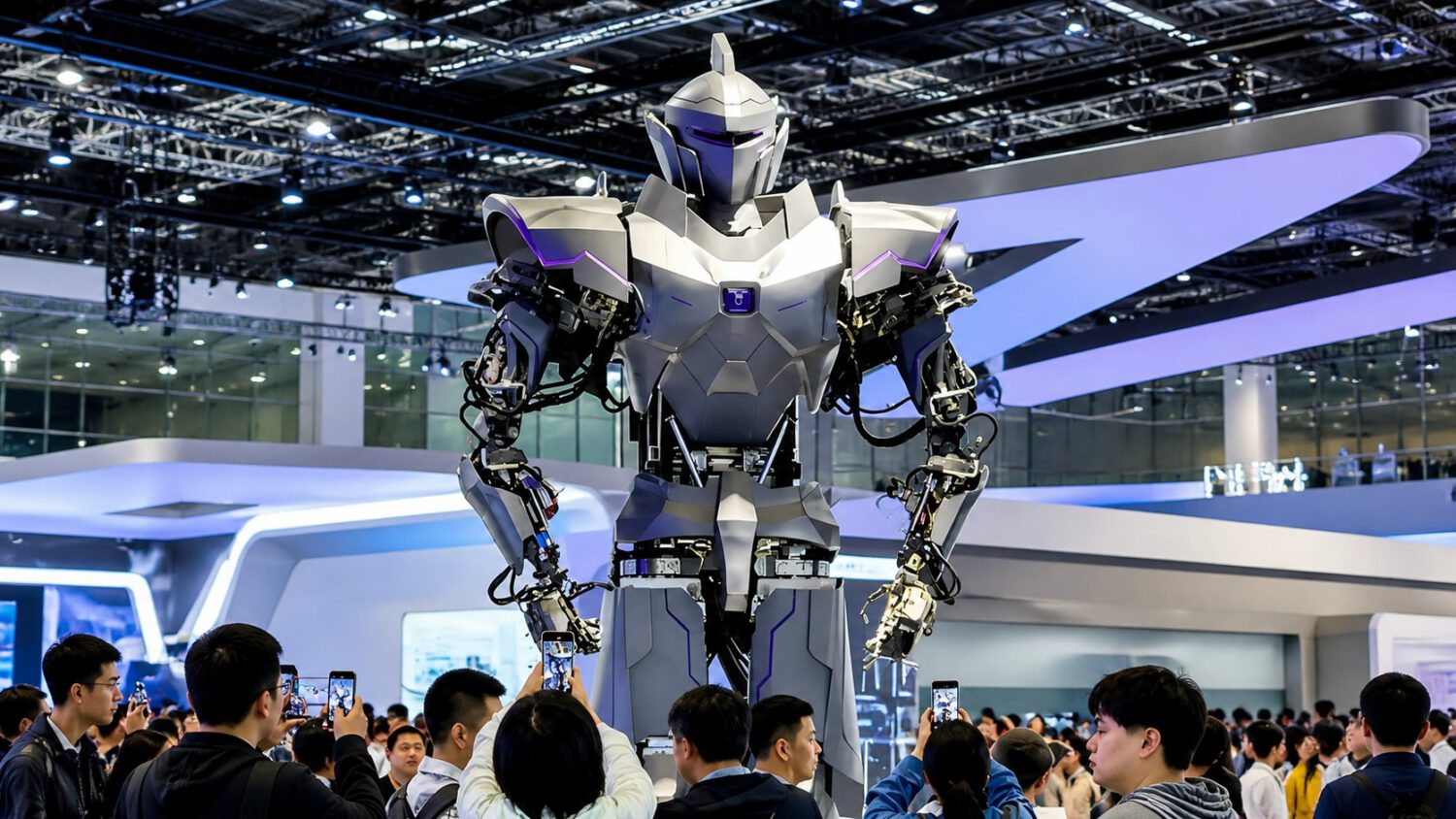
Most humanoid robots announced in recent years are roughly human-sized, electrically driven, and destined for warehouses or research labs. Neo1, developed by Beijing-based NeodraDynamics Robotics Technology, is none of those things. Standing approximately 4 meters tall and weighing about 1.2 tons, Neo1 was presented at the 2026 China International Industry Fair as a machine built for environments where sending a person is already a bad idea. All headline specifications come from NeodraDynamics and have not been independently verified.
The Hydraulic Bet Behind the Machine
NeodraDynamics is wagering that hydraulic force density can take humanoid robots where electric motors cannot.
Where most contemporary humanoids rely entirely on electric motors, Neo1 uses a hydraulic-electric hybrid architecture. Of its 41 active degrees of freedom, 39 joints use compact hydraulic actuators; only the two rotational joints in the forearms use electric drives. Hydraulic systems can generate high force from comparatively small actuators, which is attractive for lifting and shock-intensive work, though they also introduce demands around fluid management, heat, seals, and pressure that electric systems do not face in the same way.
What NeodraDynamics Claims
The company’s reported specifications are ambitious, and each one warrants careful attribution.
NeodraDynamics states each hydraulic actuator weighs approximately 1 kilogram while producing continuous thrust measured in tons. Per-arm payload is claimed at 300 kilograms, with a combined two-arm figure of 500 kilograms, roughly 1,102 pounds. The arms reportedly reach across a 1.7-meter working radius, and grip force is stated at approximately 500 kilogram-force.
Repeat-positioning accuracy is reported at plus or minus 0.005 millimeters, though other descriptions in available reporting cite different figures, including 0.01-millimeter fingertip precision. The measurement type, test conditions, and source date for any precision figure have not been established in publicly available material. NeodraDynamics also claims an operating range of minus 50 to 250 degrees Celsius, with a stated subsea depth capability of 10,000 meters. Those environmental figures should be read as manufacturer targets, not results from independent testing.
Where NeodraDynamics Wants to Deploy It
The company is targeting sectors where physical risk, extreme environments, or heavy loads put human workers at a serious disadvantage.
The intended applications are the kind of work the company describes as “4D”: dangerous, dirty, difficult, and dull. NeodraDynamics is targeting heavy component assembly, port cargo handling, underground mining, nuclear-facility maintenance, fuel transfer, disaster response and debris clearance, and high-altitude construction. JD Industrial is reportedly involved in prototype testing through its supply-chain and customer network. Available reporting does not establish that Neo1 has entered commercial deployment or routine industrial use.
What the Specs Don’t Tell You
Several fundamental operational questions remain unanswered in publicly available sources.
Whether Neo1 walks autonomously, is teleoperated, or uses some combination of both control modes has not been established. Operating duration, energy consumption, hydraulic-fluid requirements, and maintenance costs are absent from available reporting. Safety certification, production pricing, and any delivery schedule are similarly unconfirmed.
What was demonstrated at an exhibition and what performs reliably inside a working mine or a nuclear facility are two very different things. The available record does not bridge that gap.
The Practical Stakes
Independent field results, not exhibition specifications, will determine whether Neo1 changes anything in heavy industry.
If Neo1’s payload and environmental claims hold up under independent field testing, the case for humanoid robots in confined or hazardous spaces where conventional equipment struggles to reach becomes credible. Cranes, remotely operated vehicles, and purpose-built heavy manipulators are the established tools in most of the sectors NeodraDynamics is targeting, and displacing them requires more than exhibition figures. Watch for independent operating data before treating these specifications as anything more than a promising starting point.