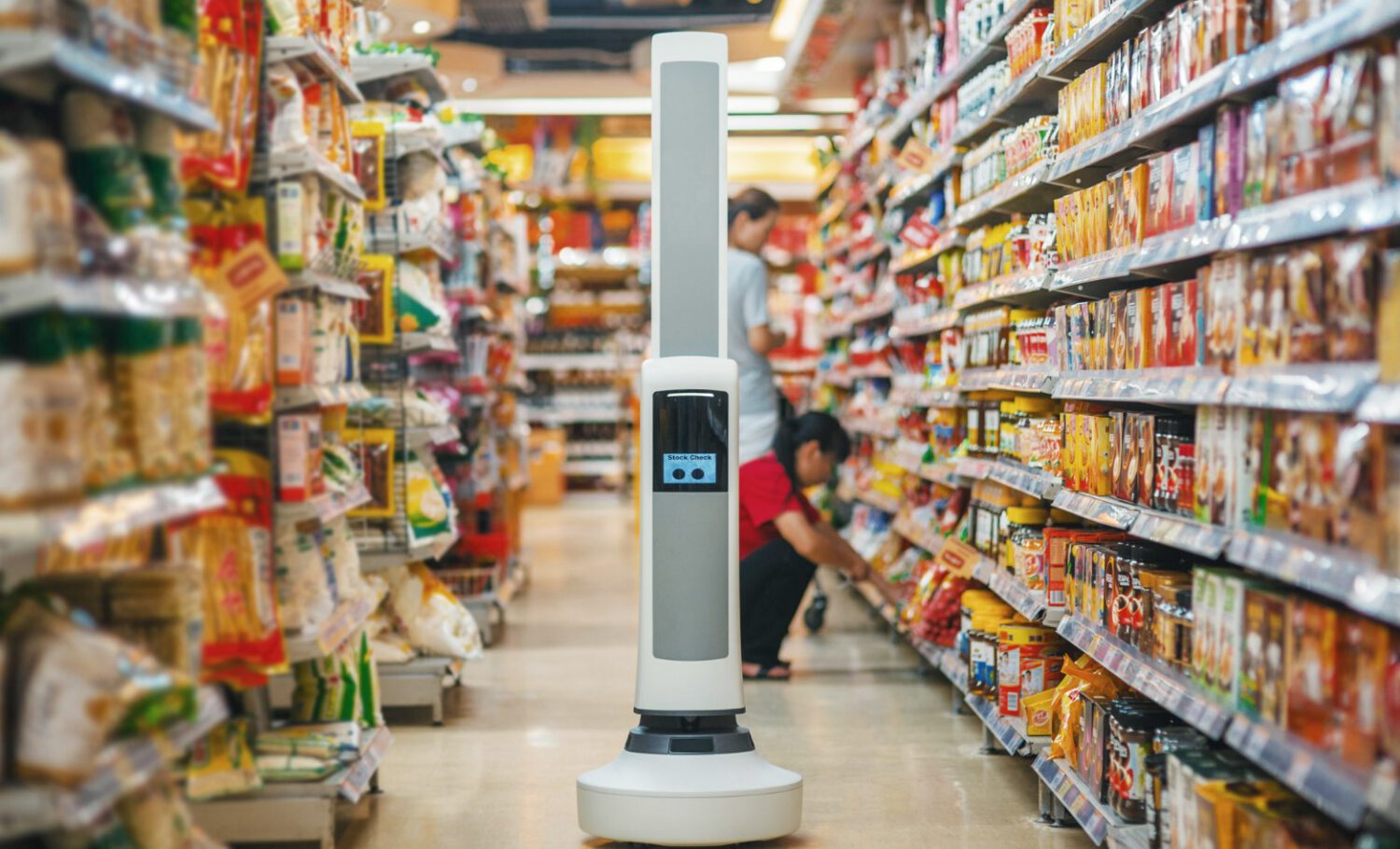
A six-foot tower with colored lights and a screen that reads “Hi, I’m Tally!” is now moving through the aisles of some Los Angeles Ralphs stores. One shopper at the Pico Boulevard location thought the humanoid robot was following him until an employee explained what it actually does.
Tally is an autonomous inventory robot built by Burlingame-based Simbe Robotics, designed to scan shelves for out-of-stock products, pricing errors, and misplaced items. This is not a tech demo: Tally is operational in LA Ralphs stores, which are owned and operated by Kroger.
What Tally Actually Does
The robot analyzes shelf conditions autonomously and sends its findings directly to store employees.
Tally navigates store aisles on its own, using sensors, cameras, and computer vision to assess shelf conditions. It sends prioritized task lists to store associates, flagging wherever products are missing, low, or incorrectly priced.
Simbe says the system is “designed to understand shelf conditions, not identify or track humans.” The company says Tally can reallocate up to 50 labor hours per store per week away from repetitive shelf checks, a figure central to both its sales pitch and the concerns it raises.
The newer Tally 4.0 generation adds higher-resolution cameras, edge-AI processing powered by NVIDIA technology, and expanded sensing. Simbe positions the system as a full store-intelligence platform rather than a simple stock counter.
A Ralphs spokesperson said the technology helps associates “more easily and quickly identify and address shelves where products are low or out of stock.” Simbe says more than 3,000 robots have been contracted for retail deployments worldwide, with retailers including Lowe’s, Tesco, BJ’s, and Bristol Farms reported among those hosting the technology.
Workers Aren’t Buying the Reassurance
Union representatives say employees should not discover major workplace changes only after a robot is already on the floor.
UFCW Local 770 President Kathy Finn said workers “should not be finding out about major changes to their workplace only after new technology shows up in their stores.” Shelf-checking, identifying out-of-stock products, and maintaining store conditions are tasks UFCW members currently perform.
Workers and union representatives warn that if Tally handles the repetitive auditing work, retailers gain justification to reduce hours or restructure roles over time, even without eliminating specific job titles outright. Some Ralphs employees also worry the technology could eventually be used to monitor workers, even though Simbe says Tally is intended to analyze shelves rather than track people.
Workers view the robot as part of a broader pattern. Self-checkout systems and electronic shelf labels each arrived with similar reassurances about supporting rather than replacing human labor.
Kroger has announced plans to cut 3,000 corporate positions over three years while expanding AI tools. Those cuts do not directly target store-floor jobs, but they shape how employees read the company’s direction.
Shoppers Are Divided
Reactions in the aisles range from genuine curiosity to unease about machines replacing everyday human interaction.
Some customers find Tally useful, reasoning that better inventory data means fewer empty shelves. Others see the robot as one more sign that ordinary human exchange is disappearing from retail.
The privacy question remains open. Simbe draws a clear line between shelf analysis and human tracking. The materials reviewed here do not specify what the sensors capture, how long data is retained, or who can access it, and shoppers sharing aisles with Tally’s cameras have a reasonable interest in those answers.
The robot’s existence is not the real issue. How Kroger chooses to use what Tally learns will determine whether this technology supports store workers or quietly reshapes what their jobs are worth.