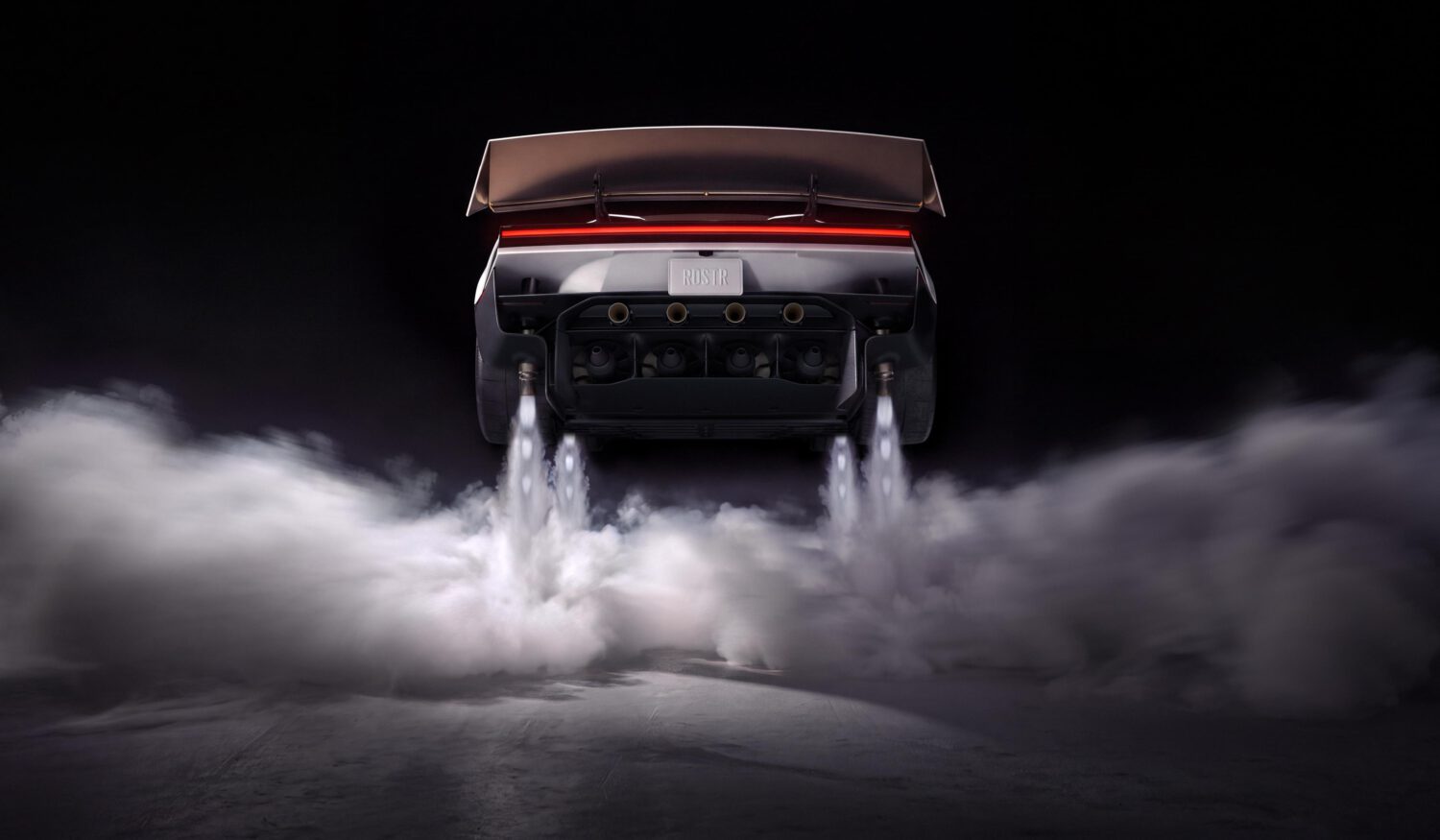
Ten cold-gas thrusters integrated into a road car, reportedly developed in coordination between two companies sharing the same chief executive, and targeting sub-one-second acceleration to 60 mph. That engineering concept alone generates headlines, but the larger story sits in the questions it leaves unanswered: who owns the technology, what export rules might apply, and what Tesla shareholders would be entitled to know.
Those questions do not yet have public answers. What does exist is a documented history of commercial ties between Tesla and SpaceX, a publicly described Roadster concept, and a set of regulatory and governance concerns worth examining before the claims outpace the record.
What Tesla and SpaceX Have Actually Confirmed
Tesla’s proposed “Rocket” configuration would use approximately 10 thrusters and roughly 600 liters of compressed air. A “Thrust” variant is described as targeting sub-one-second 0-to-60-mph performance.
Tesla engineering executive Lars Moravy has publicly described the compressed-air configuration, placing the concept on the record. No such disclosure identified in the sources reviewed includes a finalized production specification, a confirmed sales program, or any statement that the system will use actual SpaceX flight hardware.
Tesla has consistently disclosed SpaceX as a related party in SEC filings, citing overlapping ownership, management, and board affiliations. Earlier filings document SpaceX purchases of Tesla vehicle parts, battery components, energy systems, custom tooling, engineering support, and software licensing across multiple years.
Documented commercial interaction between two companies does not, on its own, establish joint technology ownership, undisclosed subsidies, or merger intent. Tesla’s filings state these transactions are managed under its Related Person Transactions Policy and disclosed under applicable SEC rules.
The Regulatory Fault Line
The International Traffic in Arms Regulations govern defense articles, technical data, and defense services listed on the U.S. Munitions List. USML Category IV, as described in 22 C.F.R. § 121.1, covers launch vehicles, guided missiles, ballistic missiles, rockets, and related systems.
For engineers working with cold-gas propulsion or composite pressure vessels, that category is worth examining closely. Even so, classification depends on the specific item, its technical data, and applicable regulatory provisions; the connection to aerospace development alone does not settle the question.
A Roadster component does not automatically become ITAR-controlled because SpaceX had a role in its development. Consider the difference between a kitchen knife and a bayonet: the underlying material may be similar, but the legal classification is determined by specific characteristics and context, not by association.
A “deemed export” concern is legally plausible under applicable EAR and ITAR provisions if controlled technical data were made accessible to foreign nationals, even inside U.S. borders. No such evidence was identified in the sources reviewed for the Roadster project. These are the questions any competent compliance team would need to resolve before a component enters a production vehicle or crosses an international border; they are not findings of violation.
The Governance Questions Shareholders Should Ask
Any technology transaction between Tesla and SpaceX calls for a familiar governance review. Was the arrangement properly authorized? Was it priced at arm’s length? Does it serve Tesla shareholders’ interests, or does value flow primarily to the private entity?
Those questions apply regardless of how capable the engineering turns out to be. On the intellectual property side, a thruster-equipped production vehicle raises consequential ownership questions that remain open.
Which entity holds the vehicle-specific designs: Tesla, SpaceX, or a contractor? How are safety validation, product recalls, and liability allocated across two separate corporate structures?
If any technical data carries ITAR, EAR, or contractual restrictions, that could affect Tesla’s ability to manufacture, service, or sell the vehicle internationally. No source reviewed here confirms the existence or terms of a Tesla-SpaceX co-development agreement for the Roadster, including transfer prices, royalties, or IP assignments.
No source confirms that SpaceX has licensed proprietary manufacturing know-how, flight-control software, or pressure-vessel technology to Tesla for automotive use. Those gaps are not evidence of misconduct; they represent the open record as it stands. They could also create disclosure obligations for Tesla depending on materiality and applicable SEC rules, if the project generates significant costs or dependencies.
The Stakes Beyond the Launch Numbers
The most consequential outcome here may not be whatever acceleration figure the Roadster eventually posts. It may be the model this project establishes for transferring advanced technology between public and private companies with overlapping leadership.
How Tesla answers the compliance and disclosure questions could become a notable precedent that outlasts any performance benchmark.