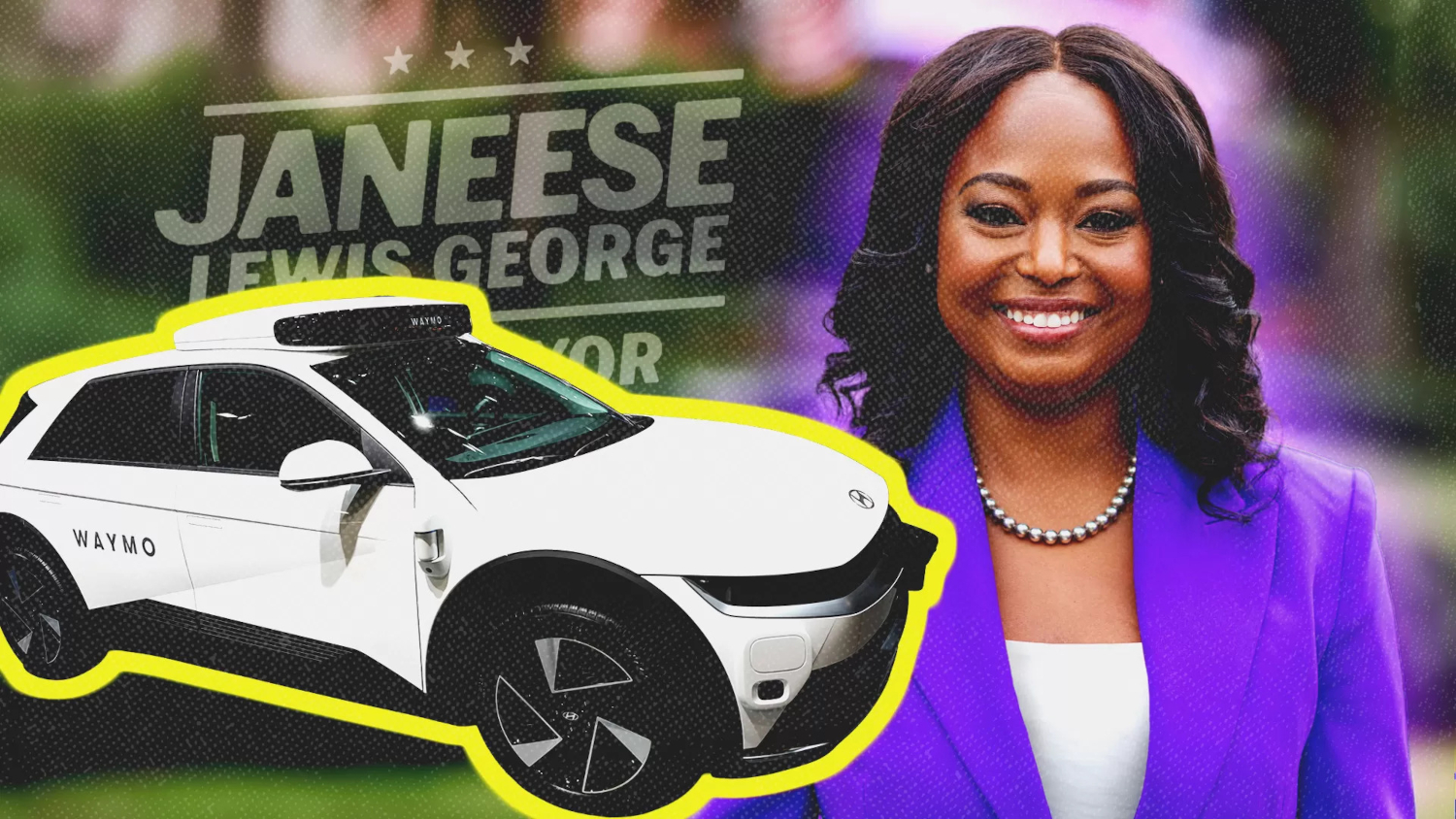
The person most likely to govern Washington, D.C., next is publicly opposing legislation that would let driverless cars carry paying passengers on city streets. Janeese Lewis George won the Democratic mayoral primary with labor-union support, according to local reporting, and her opposition could shape how any approved bill gets implemented.
Lewis George stated her position through posts on X, as reported by multiple local outlets. D.C. faces a jobs crisis, she argued, and moving quickly on autonomous-vehicle legalization risks piling AI-related displacement onto workers already under pressure. She subsequently called on the Council to delay consideration of the bill.
A Frontrunner Draws a Line
Her public opposition carries political weight that extends well beyond the Council vote itself.
Councilmember Charles Allen introduced the legislation and has said he intends to advance it despite Lewis George’s objections. The bill is expected to receive committee consideration.
The political tension is real. Whether a future mayor who opposed the bill from the start would approach permitting decisions and enforcement with the same priorities as its supporters remains an open question.
“DC is facing a jobs crisis. Rushing the legalization of autonomous vehicles is irresponsible given the anticipated AI-related job displacement and disruptions that put countless workers at risk.”
, Janeese Lewis George, paraphrased from posts reported by local media
What the Bill Would and Would Not Do
The proposed legislation sets strict limits on when and how driverless commercial service could begin.
Under the bill, the District Department of Transportation would gain authority to issue permits for fully driverless testing and, eventually, commercial service. Commercial rollout could not begin before January 2028, and the initial fleet would be capped at 200 vehicles.
Operators would need to carry at least $5 million in liability insurance and provide service across all eight wards. They would also share operational data with the city and pay per-mile fees directed toward Metro funding and worker-transition programs.
That last provision matters. The bill’s supporters built worker-assistance funding into the structure. That signals they recognize potential displacement costs, even while arguing those costs can be managed through regulation and staged rollout.
The Labor Question Deserves a Careful Answer
The effects of automation on D.C. workers extend well beyond any single employment category.
The exact number of full-time D.C. residents who work primarily as rideshare drivers remains unclear pending independent verification. Displacement effects extend beyond full-time drivers. Part-time drivers, taxi operators, and households relying on rideshare income all face potential exposure. Aggregate workforce comparisons alone do not capture the concentrated harm on workers with limited alternatives.
In Phoenix, where Waymo has offered autonomous commercial service since 2020, human-operated rideshare has not disappeared. According to one analysis, whose methodology has not been independently verified for this article, Waymo accounts for roughly 16 percent of rideshare trips there. That context suggests autonomous vehicles may function initially as an additional competitor rather than an immediate substitute. It does not prove that driver earnings go unaffected.
Research cited in early reporting suggests AV competition could modestly reduce human drivers’ hourly pay and trips per hour over time. Those studies require independent review before being treated as settled.
What the Policy Test Actually Is
The central question is whether D.C. can stage deployment carefully enough to protect both riders and drivers.
Automation could carry real costs, even in a capped, fee-funded pilot with a delayed launch. The question is whether D.C. can measure those costs in real time, deliver on worker-transition commitments, and maintain equitable service coverage before making a broader citywide judgment.
Lewis George’s delay request and Allen’s intent to move forward mean this fight is not over. For riders who need affordable transportation and for drivers whose income depends on the current system, the outcome is not abstract.