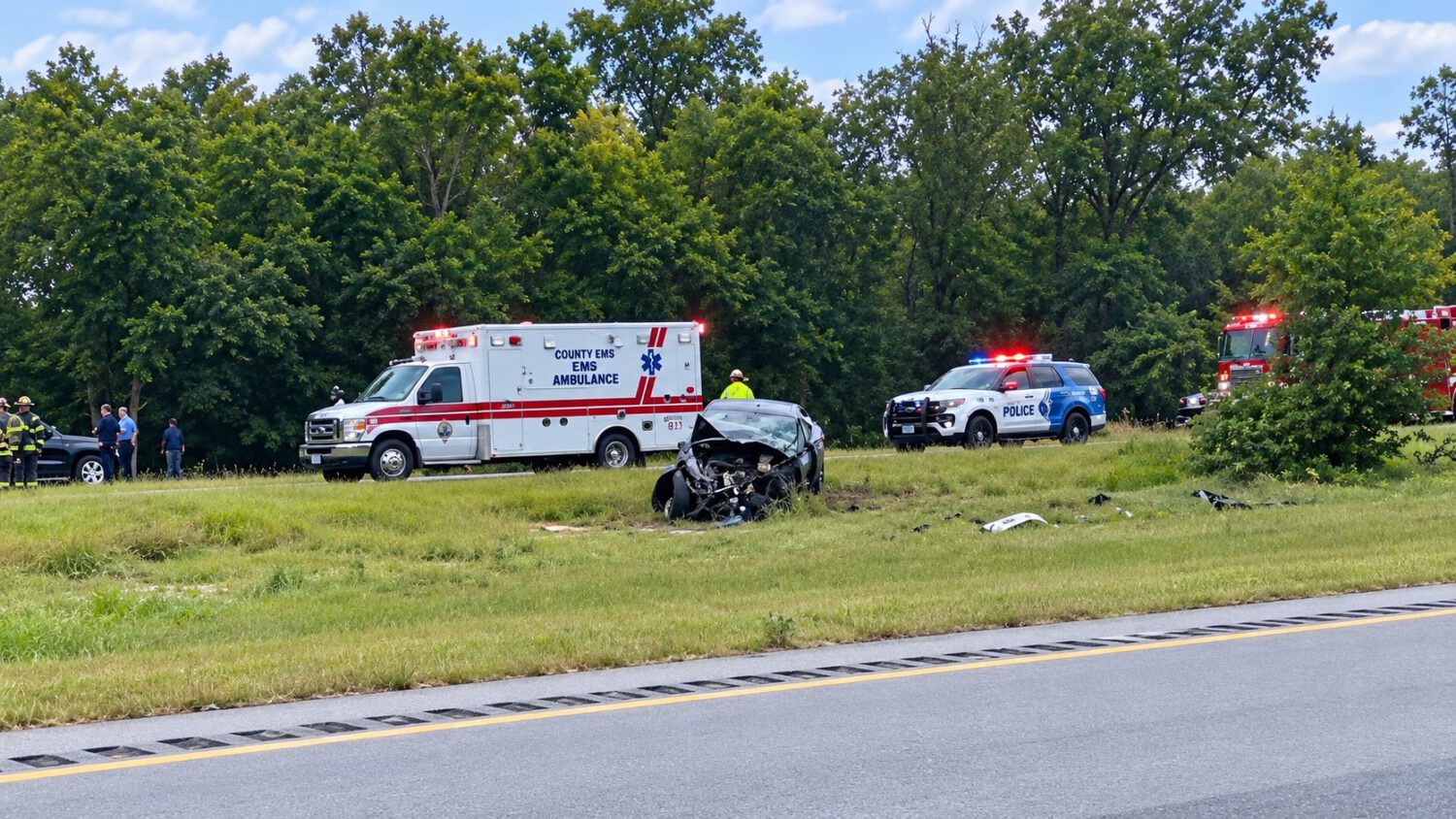
Phillip “Phil” Eastman, 68, of Springfield, Pennsylvania, died on Aug. 22, 2026, after a 2021 Tesla Model Y crossed the grass median on southbound Route 55 near Vineland, struck a tree, entered northbound lanes, and hit the Chevrolet SUV he was driving. The Tesla driver and a Chevrolet passenger were hospitalized with moderate injuries.
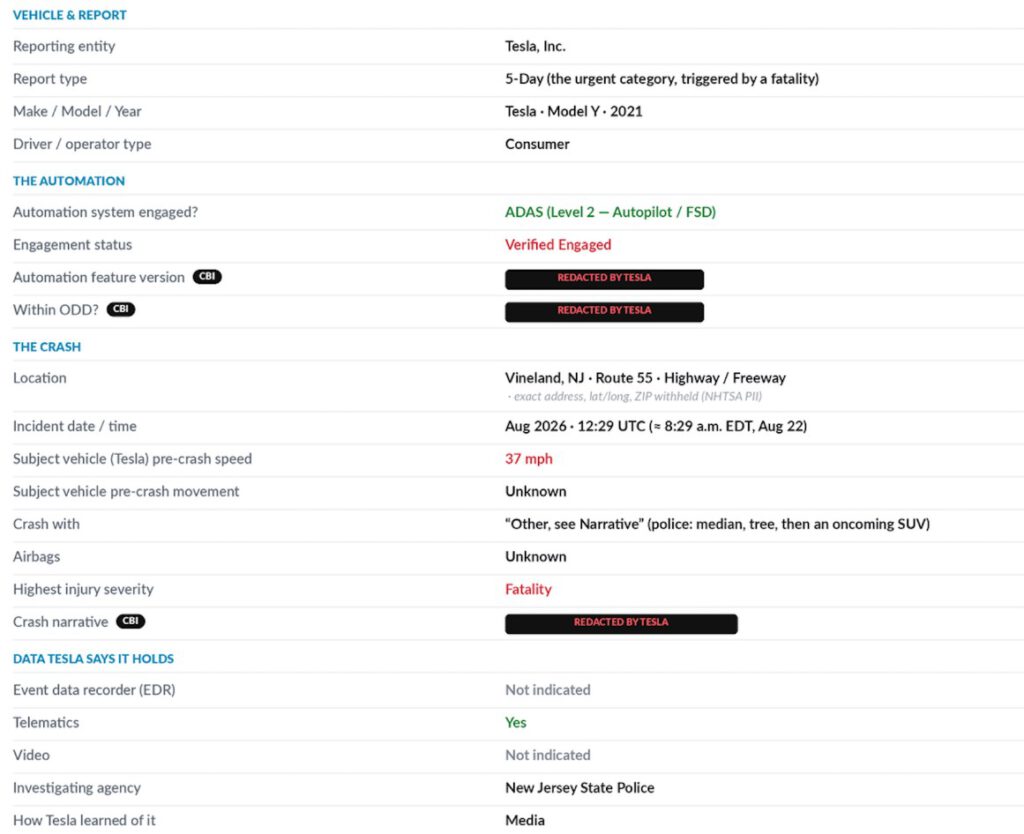
Initial news coverage of the crash made no mention of driver-assistance technology. Tesla’s submission to the National Highway Traffic Safety Administration reportedly changed that, marking the vehicle’s automation engagement status as “Verified Engaged.”
What the filing still reportedly withholds is where this story gets uncomfortable.
What the Federal Record Actually Says
“Verified Engaged” means a qualifying driver-assistance system was reportedly running during the relevant window; it does not mean the system was steering when the driverless Tesla left the road.
NHTSA’s Standing General Order requires manufacturers to report crashes involving a Level 2 driver-assistance feature active within 30 seconds before impact when a fatality or specified serious injury occurs. This requirement is verified and applies to all covered automakers, not solely Tesla. Tesla’s filing reportedly satisfied that threshold.
According to Electrek’s reporting on the filing, the logged incident timestamp of 12:29 UTC corresponds to approximately 8:29 a.m. local time, consistent with the police-reported crash at 8:31 a.m. The filing also reportedly recorded a pre-crash speed of 37 mph, though that figure appears to be a telematics snapshot within the reporting window rather than a confirmed speed at the moment the Tesla departed the roadway.
What Tesla Redacted, and Why That Matters
The mandatory disclosure reportedly produced an engagement flag and very little else of substance.
Tesla reportedly redacted the crash narrative, the software version running on the vehicle, and information about whether the roadway fell within the system’s approved operating area, citing confidential business information. Based on available reporting, the public record does not establish whether the vehicle was running basic Autopilot or Full Self-Driving, whether the driver overrode the system before the Tesla crossed the median, or what onboard sensor or event-recorder data captured in the final seconds.
Think of it as a mandatory data-breach disclosure that confirms a breach occurred, then redacts the breach date, the systems affected, and the number of records exposed. The form is filed. The facts are not.
This is not exclusively a Tesla problem. Other automakers operate under the same Standing General Order rules. The framework that permits manufacturers to withhold crash narratives and system-behavior data as proprietary information represents a structural weakness in the reporting regime, not merely a company-specific choice. Tesla’s filing is the case in front of us; the underlying policy pattern deserves equal scrutiny.
The crash remains under investigation according to available reporting. No charges have been filed, and no official determination of fault appears in the public record.
A Floor That Needs Raising
If “Verified Engaged” is the minimum disclosure a fatal crash produces, that minimum is not sufficient.
The engagement flag confirms that a qualifying system was active. It does not tell you what the system was doing or what the driver was doing. It does not confirm whether road conditions matched the system’s design parameters.
Those facts matter to Eastman’s family and to safety researchers. They also matter to anyone driving alongside a vehicle running Level 2 assistance on a divided highway at 8:30 in the morning.
Mandatory reporting is intended to inform regulatory action and public understanding, not to generate a technically compliant record that leaves critical questions unanswered. If the current disclosure rules cannot surface the information most relevant to a fatal crash, those rules need to be strengthened until they can.