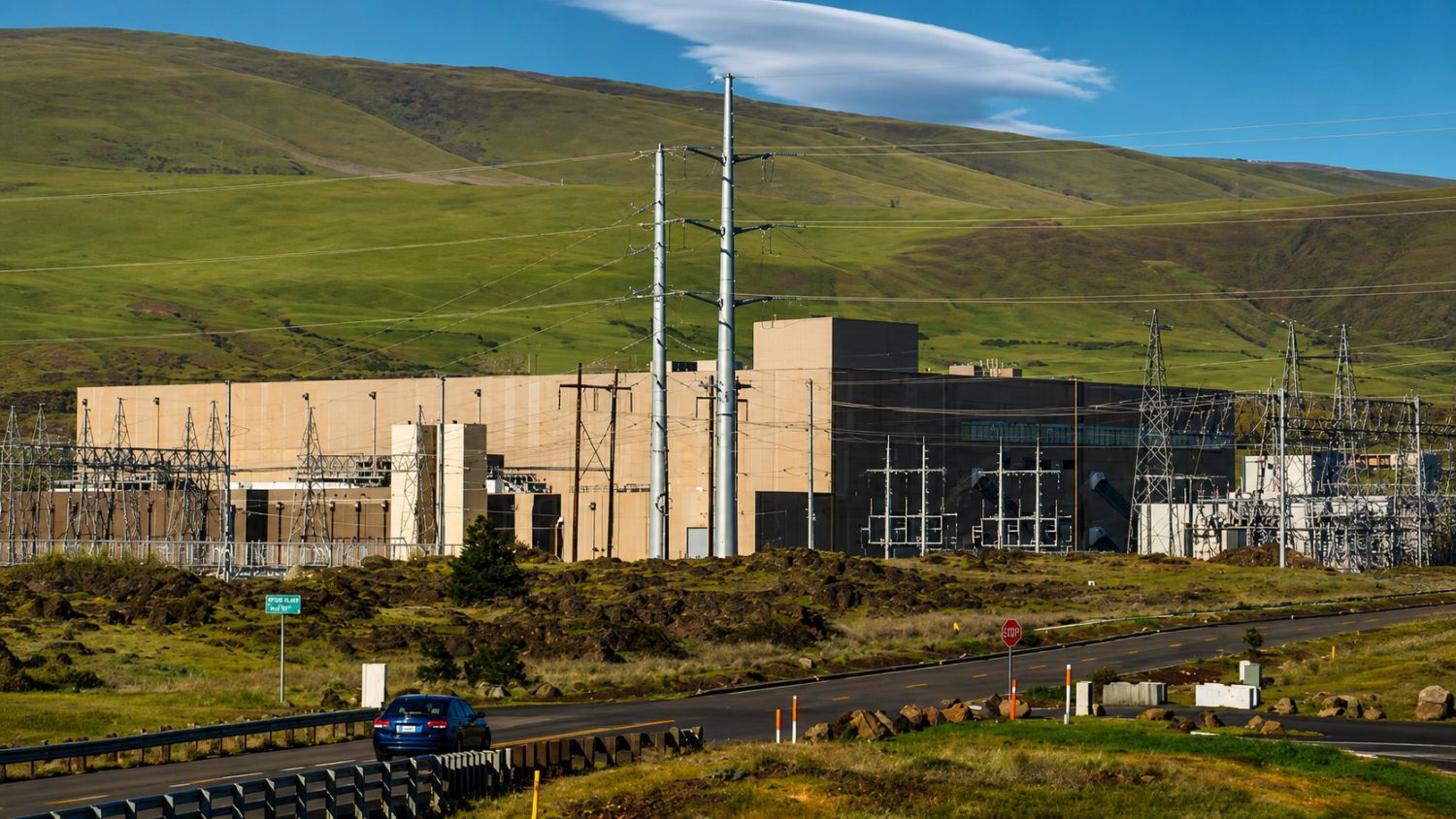
Nearly one-quarter of all retail electricity sold in Oregon now powers a data center. That figure comes from a new ECOnorthwest and University of Virginia report, funded by the Lemelson Foundation, giving state officials their first comprehensive count of Oregon’s data center footprint and what it demands from the grid.
111 Facilities, 2,630 Jobs, and a Grid Under Pressure
The scale of Oregon’s data center industry is now documented in one place for the first time, and the numbers are harder to ignore than the abstract headlines.
Oregon currently has 111 operational data centers occupying roughly 22.1 million square feet, according to the report hosted by the Oregon Department of Energy. Another 32 facilities are under construction or in planning, adding an estimated 6.9 million square feet once built.
That physical footprint sits in sharp contrast to the sector’s direct employment. All 111 facilities together support an estimated 2,630 workers, per the ECOnorthwest–UVA report.
The electricity numbers reveal the sector’s true weight on the grid. ECOnorthwest economist Pedro Ferreira stated plainly in an interview with OPB: “By the end of 2025, data centers were already a big user of electricity in Oregon, accounting for almost 23% of all the electricity demand in Oregon, and we expect this number to grow up to 31, 32% by 2030.”
Toward One-Third of Oregon’s Grid by 2030
Projections show data center demand could reshape Oregon’s entire electricity system within five years, regardless of how aggressively the sector grows.
The report projects data center electricity demand could reach approximately 25 terawatt-hours per year by 2030, according to ECOnorthwest–UVA modeling cited in the Oregon Data Center Advisory Committee meeting summary. Mashable’s coverage frames that figure as roughly 31 to 32 percent of total state electricity demand, equivalent to the annual consumption of about 2.5 million homes.
That percentage could climb higher depending on how fast other sectors grow alongside data centers. Per the DCAC meeting summary, if other electricity demand remains relatively flat, 25 terawatt-hours could represent closer to 40 percent of Oregon’s current consumption.
Even conservative projections carry weight. Oregon Department of Energy documents presented to the DCAC note that a scenario with 50 percent lower data center growth still raises overall state electricity loads by more than 25 percent by 2030.
The report authors state the infrastructure stakes directly: “Data center electricity demand is increasing substantially…accommodating large-load growth will require new electricity resources, transmission capacity, and coordinated infrastructure planning,” according to “Understanding Oregon’s Data Center Industry,” published by ECOnorthwest and the University of Virginia and hosted by the Oregon Department of Energy.
Oregon’s Policy Response: Making Data Centers Pay for What They Use
Oregon is already treating large data centers as a distinct class of electricity customer, with rate structures designed to shield households and small businesses from grid-expansion costs.
Oregon’s POWER Act (2025) and the ongoing work of the Data Center Advisory Committee reflect a deliberate effort to move beyond treating large data centers as ordinary industrial users. If your utility is Portland General Electric, that shift is already reflected in your bill.
PGE’s new rate class for facilities above 20 megawatts raises data center electricity bills by roughly 30 percent. Residential bills edge down approximately 1.3 percent and small-business bills drop about 3.7 percent, because data centers now bear full responsibility for new grid infrastructure costs tied to serving them, according to Portland Civic Lab’s analysis of the rate order.
Contracts run 10 to 30 years and include 90 percent minimum demand charges. Facilities above 100 megawatts pay a 1-cent-per-kilowatt-hour surcharge directed toward efficiency programs for energy-burdened households.
Competing Views on Oregon’s Data Center Bargain
Supporters and critics agree the sector is growing; they disagree sharply on whether Oregon is getting a fair return.
Supporters of data center growth point to the tax base, high-value capital investment, and a rate structure that now shifts grid-expansion costs away from households. Critics counter that electricity consumption is outsized relative to direct job creation, and that siting incentives have not always delivered commensurate community benefit.
Mashable reports that other U.S. states are now restricting new data center construction amid similar concerns about grid strain and climate commitments. Oregon’s report provides, for the first time, a factual foundation for that debate: concrete counts, verified projections, and a state advisory process already using the data to shape energy strategy.