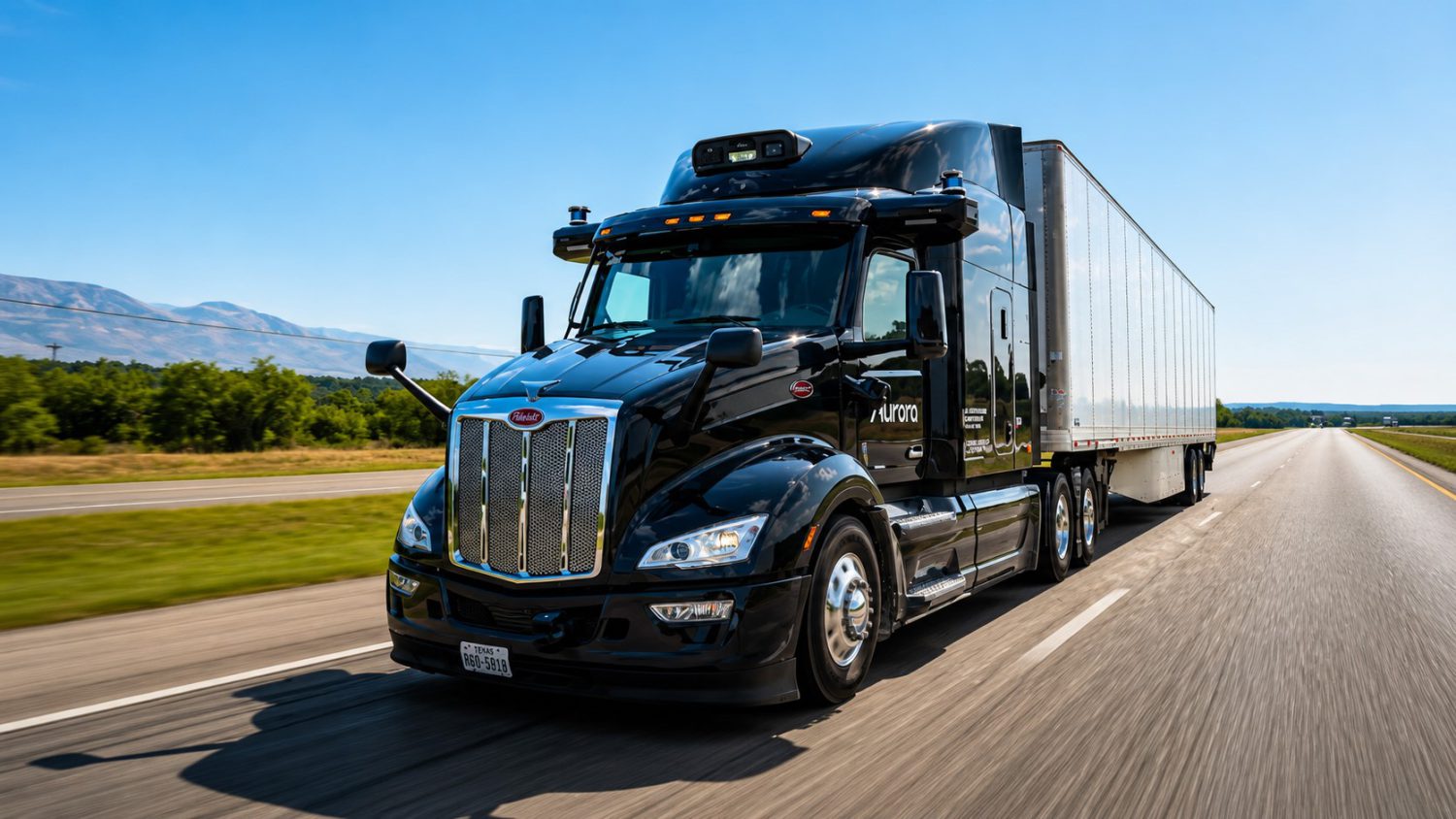
A sensor-laden semi-truck the size of a small building rolls alongside traffic on I-5 near Stockton. No one is steering — yet a trained human operator sits ready by law, watching the AI manage every lane change. That’s the reality California just authorized.
On April 28, 2026, California’s Office of Administrative Law approved new DMV regulations creating the state’s first permitting pathway for autonomous heavy-duty commercial vehicles — trucks over 10,001 lb, up to a full 80,000 lb Class 8 semi. Aurora Innovation and Kodiak AI secured the first permits in August 2026. California’s logistics corridors — feeding the ports of Los Angeles, Long Beach, and Oakland — are now officially open for AI-driven freight testing.
Don’t Mistake “Permitted” for “Driverless”
Supervised testing, not sci-fi autonomy, defines what’s actually happening on California roads right now.
A trained human safety operator must remain behind the wheel at all times. These trucks are not autonomous in the way a driverless Tesla robotaxi works. They’re supervised. Routes are restricted to major freight corridors — I-5, SR-99, I-10, I-15 — and trucks can’t operate on roads posted at 25 mph or below, except on direct routes. Kodiak’s drivered testing permit is dated August 13, 2026.
Before any company can apply for driverless deployment, it must log 500,000 miles with a safety driver (100,000 within California), then another 500,000 driverless test miles. Heavy-duty trucks face roughly ten times the mileage requirements of light-duty AVs — a deliberate signal from regulators who aren’t treating an 80,000 lb AI vehicle like a delivery van. California requires mountains of performance data before a driverless permit is even considered. Companies must also submit a detailed safety case documenting system design, risk mitigation, and incident response before any permit is granted.
Truckers Aren’t Being Replaced This Week
The regulatory math alone makes large-scale driver displacement a distant scenario, not an imminent one.
Safety drivers are legally integral to this phase, not a formality. Industry analysts expect autonomous trucks to handle hub-to-hub freight corridors first — not wholesale humanoid robot driver displacement. Full driverless deployment requires separate permits and extensive accumulated safety data, placing it several regulatory steps away.
Notably, Kodiak already runs driverless freight commercially in Texas. California is catching up, not leading. What it brings is stricter standards — including a liability shift that routes violations to the manufacturer rather than the human driver, a change that could reshape insurance models across the freight industry.
The California DMV describes these rules as “the most comprehensive AV regulations in the nation.” That framing matters beyond trucking. The same regulatory framework — phased testing, mandatory safety cases, human oversight requirements — will likely shape how AI systems get cleared for other high-stakes public spaces, long after these trucks become a routine sight on the 5.