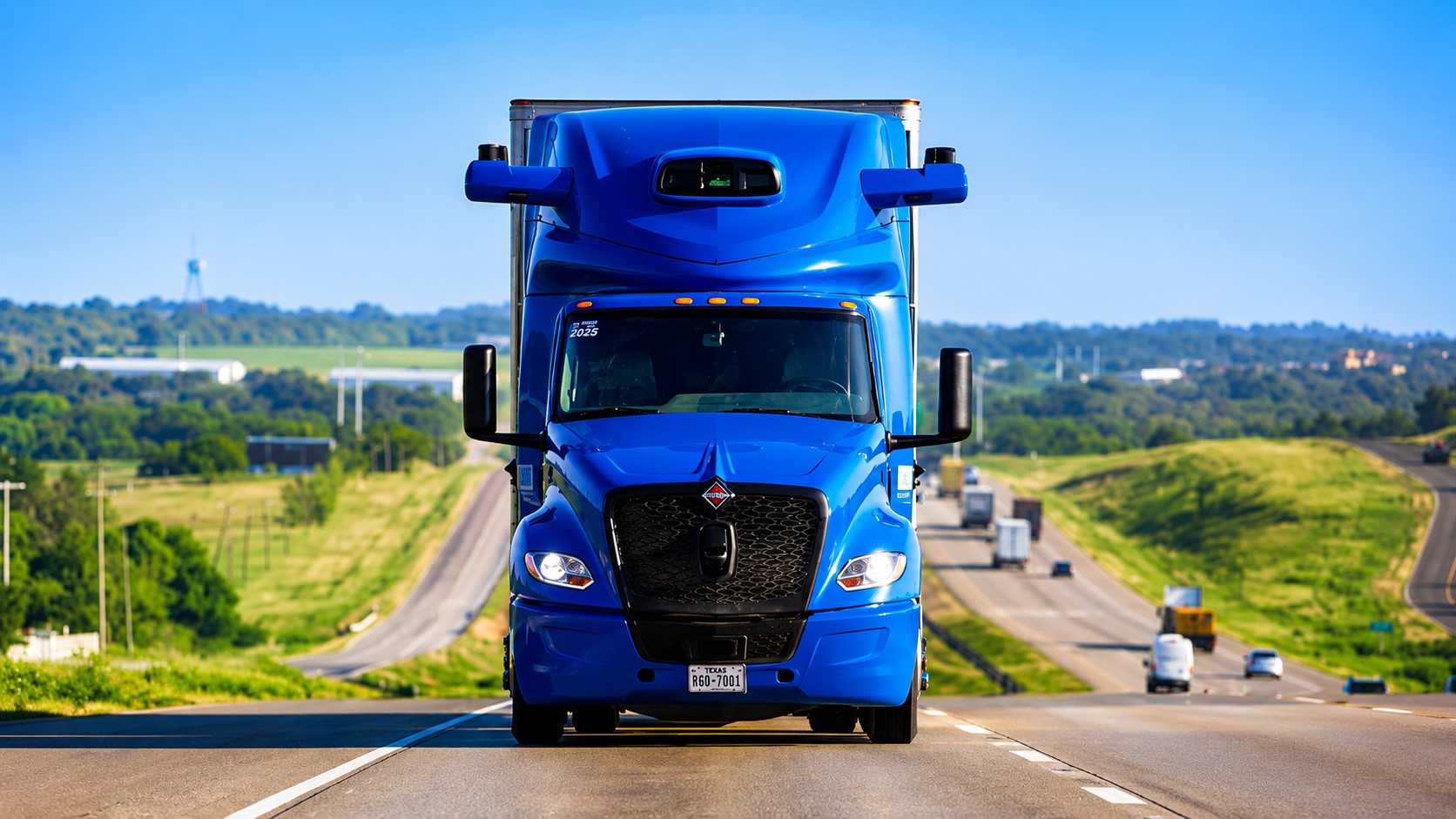
An 80,000-pound truck barreling down I-45 between Dallas and Houston with an empty driver’s seat sounds like the setup for a dystopian thriller. It’s actually Tuesday for Aurora Innovation. The company has launched its second-generation driverless Class 8 fleet — not a pilot, not a demo, but commercial freight operations across 10 Sun Belt routes. Freight costs touch everything from grocery prices to next-day delivery windows, which means this affects you directly. Aurora just crossed from proving the technology works to proving the business does.
Built to Last a Million Miles
New hardware doubles lidar detection range and cuts costs in half, while manufacturing partner Roush targets a production run-rate of 1,000 trucks this year.
The new commercial hardware kit is engineered to survive one million miles — roughly eight times what a typical human driver logs annually. Aurora’s upgraded FirstLight FMCW lidar detects objects at 1,000 meters, double the prior generation’s range. At highway speeds, that extra detection distance buys precious seconds for decision-making. Hardware costs dropped 50% or more versus the first-generation kit, which is the difference between a science project and a shipping line.
Built on the International LT Series and upfitted by Roush at a dedicated facility, the second-gen fleet currently covers 10 driverless Sun Belt routes with nearly 440,000 driverless miles logged. Aurora is targeting 200-plus trucks operating by year-end, with customers already signed onto driverless contracts including:
- Hirschbach
- Uber Freight
- McLane
- Detmar
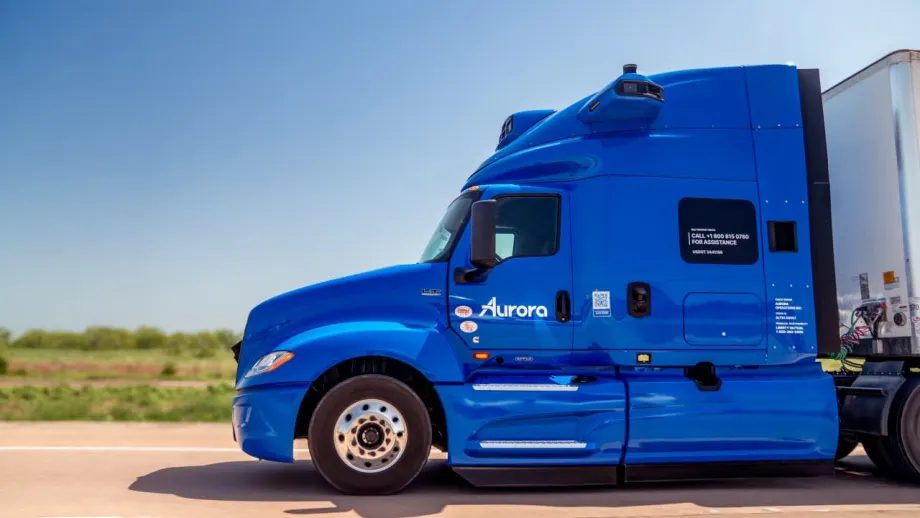
On the question everyone asks: a roadside assistance team member may occasionally ride in the rear seat — not to drive, not to supervise. The Aurora Driver handles that alone. Aurora CEO Chris Urmson framed the moment plainly: “Last year’s driverless launch proved our technology could operate safely on public roads — our new platform now provides the foundation to deliver at scale.”
The Economics Are the Real Story
At $0.85 per mile and roughly double the annual mileage of a human-driven truck, Aurora is pitching a structural cost advantage that freight managers can actually model.
Aurora’s pricing target sits at $0.85 per mile through its Transportation as a Service model — below the roughly $1 per mile associated with human-driven long-haul. The bigger lever: these trucks can theoretically run 250,000-plus miles annually, versus the 100,000 to 125,000 miles human drivers log under hours-of-service rules. That’s not incremental improvement. That’s a structural shift in how freight gets priced.
Starting next year, Aurora plans to offer trucks for customers to own and operate themselves, paired with subscription access to the Aurora Driver software. Independent consultancy Edge Case Research reviewed Aurora’s Safety Case framework and called it “substantively aligned with leading industry best practices,” according to Aurora’s summary of the review. That external validation matters when you’re asking fleet managers to trust an algorithm with their cargo — and regulators to trust it with public highways.
If Aurora hits 200 trucks this year and Hirschbach’s planned 500-truck deployment materializes, driverless freight stops being a headline and becomes a shipping option. The empty seat is coming to a highway near you.