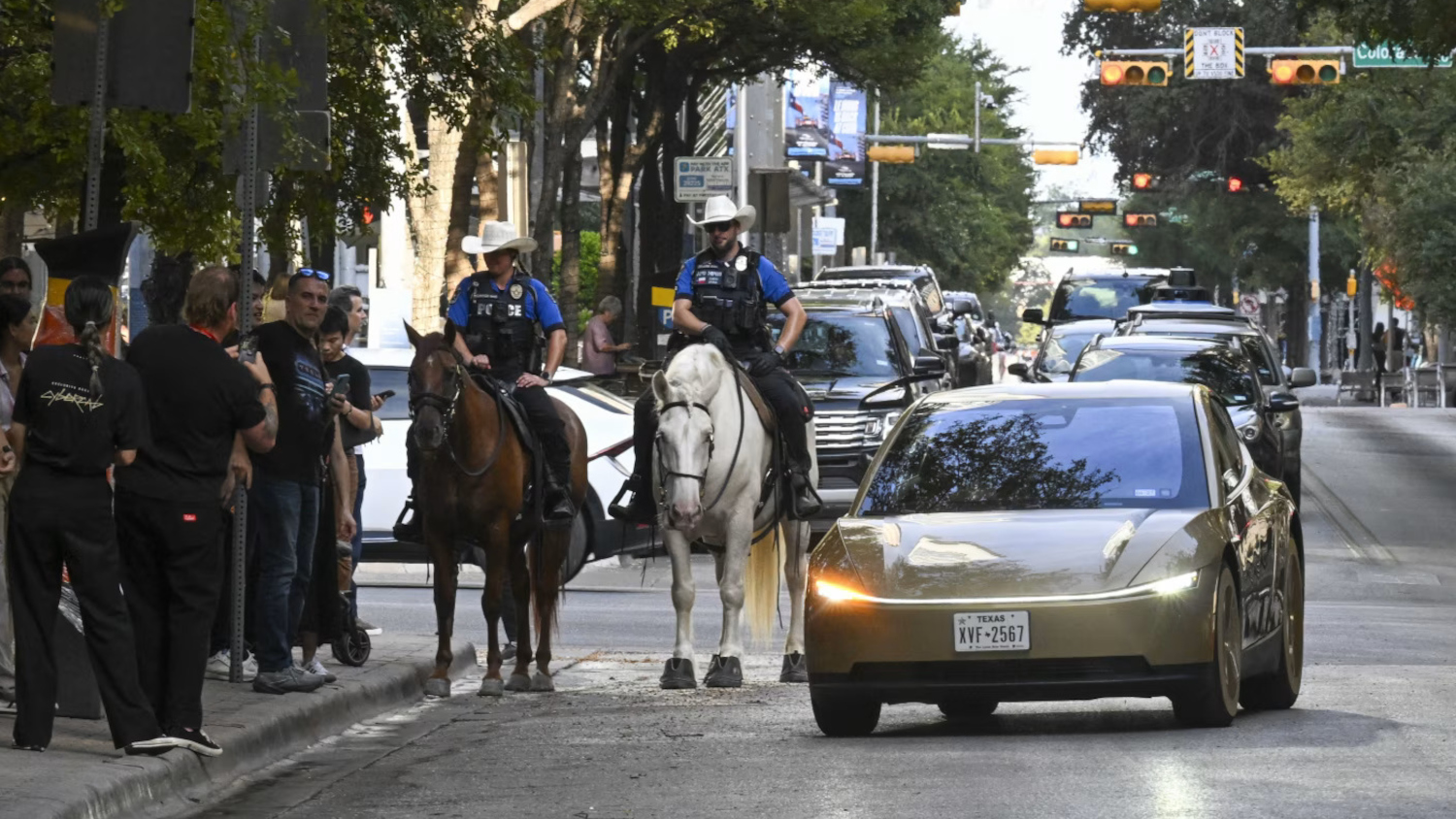
A driverless Tesla car with no steering wheel, no pedals, and no mirrors started picking up paying passengers in Austin. Within days, federal regulators opened a formal audit. That compressed timeline tells you everything about how Tesla calculated its odds with the Cybercab rollout.
On September 3, 2026, NHTSA opened Audit Query AQ26002 into roughly 1,000 Cybercabs. The core question: did Tesla’s self-certification that this two-seat robotaxi meets all Federal Motor Vehicle Safety Standards actually hold up? Those standards, written decades ago, assume every vehicle has a human driver with a wheel, mirrors, and a foot on a pedal. Tesla says the Cybercab complies anyway.
Self-Certified and Moving: Tesla’s Regulatory Gamble
Tesla skipped the exemption queue every other autonomous vehicle maker has waited in — and now NHTSA wants to know why.
In Austin, 45 registered Cybercabs are already bookable through Tesla’s Robotaxi app — no steering wheel, pedals, or mirrors in sight. NHTSA’s audit targets the technical data behind Tesla’s FMVSS compliance claim, including whether Tesla deemed certain standards simply inapplicable to its driverless design. A non-compliance finding could trigger:
- a recall
- a redesign
- significant civil penalties
Meanwhile, NHTSA has proposed — but not yet enacted — rules that would remove manual pedal requirements for autonomous vehicles entirely.
Tesla has manufacturing capacity for 125,000+ Cybercabs annually and plans consumer sales priced under $30,000. This is not a pilot. It’s a product launch.
Zoox ran this exact play in 2022. Amazon’s robotaxi subsidiary self-certified its own no-wheel vehicle as FMVSS-compliant. NHTSA pushed back, found non-compliance, and Zoox eventually did what regulators expected: it filed for a Part 555 exemption. In July 2026, NHTSA granted it — the first-ever commercial exemption for a passenger robotaxi without manual controls. Zoox earned that approval with:
- 18-plus months of testing
- more than 750,000 autonomous miles logged
- a two-year deployment cap of 2,500 vehicles annually, plus speed and weather restrictions
Tesla skipped that queue entirely, like someone bypassing a two-hour restaurant wait by insisting they already have a reservation no one can find.
NHTSA has made its philosophy plain. When granting Zoox its exemption, the agency noted it could “pull the exemption if we see major safety issues,” according to Reuters.
Recall Risk or Rubber Stamp: What Comes Next
The audit’s outcome will either validate Tesla’s aggressive self-certification strategy or force a reckoning across the entire AV industry.
Tesla’s position, per the Wall Street Journal and Reuters, is that the Cybercab meets “all applicable” safety standards. The audit’s outcome splits into two very different futures.
If NHTSA validates Tesla’s approach, it sets a significant precedent: that radically novel AV designs can potentially bypass the formal exemption process, with no deployment caps required. That’s the move-fast playbook scoring a real win.
Non-compliance flips the script entirely. Recall orders, potential redesigns, civil penalties — and a clear signal to every other AV manufacturer that Zoox’s cautious, data-heavy exemption path wasn’t optional, it was the only path that works. Your read on which outcome is likelier probably depends on how much faith you place in regulators keeping pace with a company already charging fares.
The FMVSS weren’t written for vehicles without sun visors because, once upon a time, humans needed them to drive. Those rules aren’t updated yet. That regulatory gap is exactly where Tesla planted its flag.
The autonomous future isn’t hypothetical anymore — it’s hailing rides in Austin. Whether the regulatory framework can catch up to a company already collecting fares is the only question that matters now.