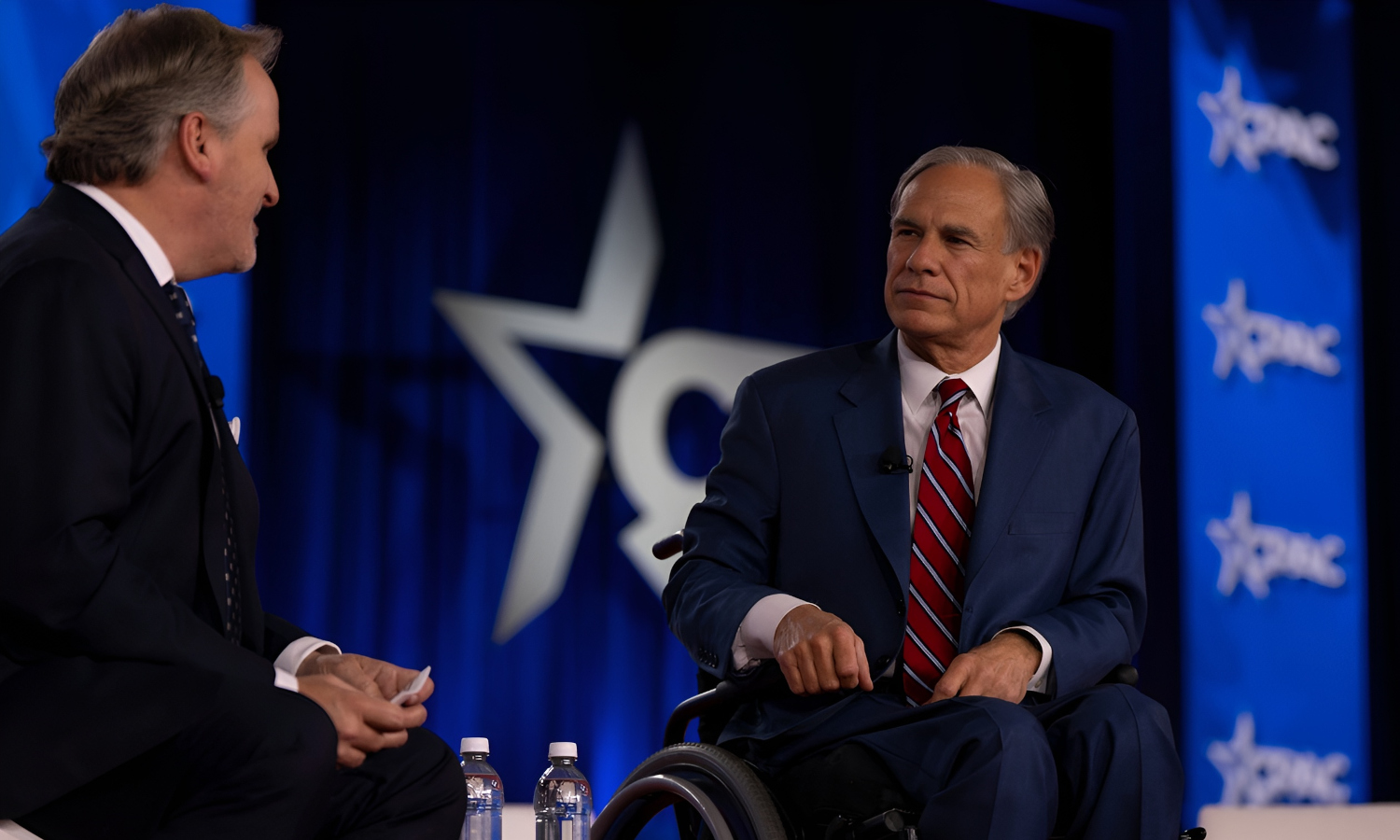
Less than a year ago, Greg Abbott was Texas’s loudest AI cheerleader, calling the state the “epicenter of AI development.” Now he wants to repeal data center tax incentives, pause new grid connections, and restrict these facilities from rural land. That’s not a policy tweak — it’s a full reversal. It signals a serious crack inside the Republican Party over AI infrastructure, happening in the state that was supposed to be its home base.
When the Party of Business Turns Populist
How two Texas Republicans landed on the same side — and why the timing matters.
Ken Paxton voted in 2013 for the very tax incentive that helped build Texas’s data center industry. He now wants it killed. That kind of irony does its own heavy lifting. Both Paxton’s “Texas First Data Center Plan” and Abbott’s August 3 grid audit landed within days of each other — political positioning ahead of November, not a sudden awakening. A Fox News poll cited by Fortune found 60% of Republicans and 53% of self-identified MAGA voters oppose data centers, despite Trump’s full-throated support. Republican strategist Brad Dayspring frames the tension as “pro-growth instincts and the push to beat China in the AI race” colliding hard with “a populist backlash over affordability.”
Here’s why communities are furious:
- ERCOT is sitting on 474 gigawatts of connection requests — more than five times Texas’s record peak demand
- Each building at Stargate’s Abilene campus needs roughly 1 million gallons of water for cooling
- Stargate’s permitted onsite generators can emit over 1.6 million tons of greenhouse gases annually — approved via minor permits with minimal public notice
And this stopped being a Texas problem a long time ago. Over 120 moratoriums have been proposed across 38 states as of July. Only 30% of Texans would support a data center in their community, per a Texas Politics Project poll — and nationally, the numbers aren’t friendlier.
OpenAI CEO Sam Altman acknowledged the mood plainly, as quoted by Fortune: “Clearly, people hate data centers.” Tech firms poured over $300 million into the midterms via super PACs. According to Reuters:
- Anthropic-affiliated PACs spent $2.6 million in Texas
- PACs linked to OpenAI co-founder Greg Brockman spent $4.8 million
- Meta contributed $1.4 million to a state-candidate PAC
Strategist Kevin Madden noted the industry “wasn’t necessarily engaging at the level they needed to” — a polite way of saying the money arrived two years late.
Trump vs. His Own Party – and Democrats Smell Blood
The president personally announced Stargate in Abilene; Abbott and Paxton are now publicly contradicting him.
Trump posted on Truth Social that Americans fighting data centers risk ending up “backwards and poor.” Abbott and Paxton are now running against exactly what Trump celebrated. Republican officials are quietly downplaying the split, saying they’ll advise candidates to do “what’s best for them and their communities.”
Democratic challenger Gina Hinojosa landed the sharpest attack: Abbott’s pause on approvals “effectively ends on November 4, the day after the election.” Political scientist David Karol notes it’s now important for Republicans to “put distance” between themselves and the big tech companies behind these projects. For the party of business, that’s a striking place to land.
Republican candidates in at least five states — Michigan, Wisconsin, and Pennsylvania among them — have adopted tougher data center rhetoric. Only 20% of Americans think new data center construction is a good idea. Big tech built the infrastructure of the AI age. It forgot to build political cover.