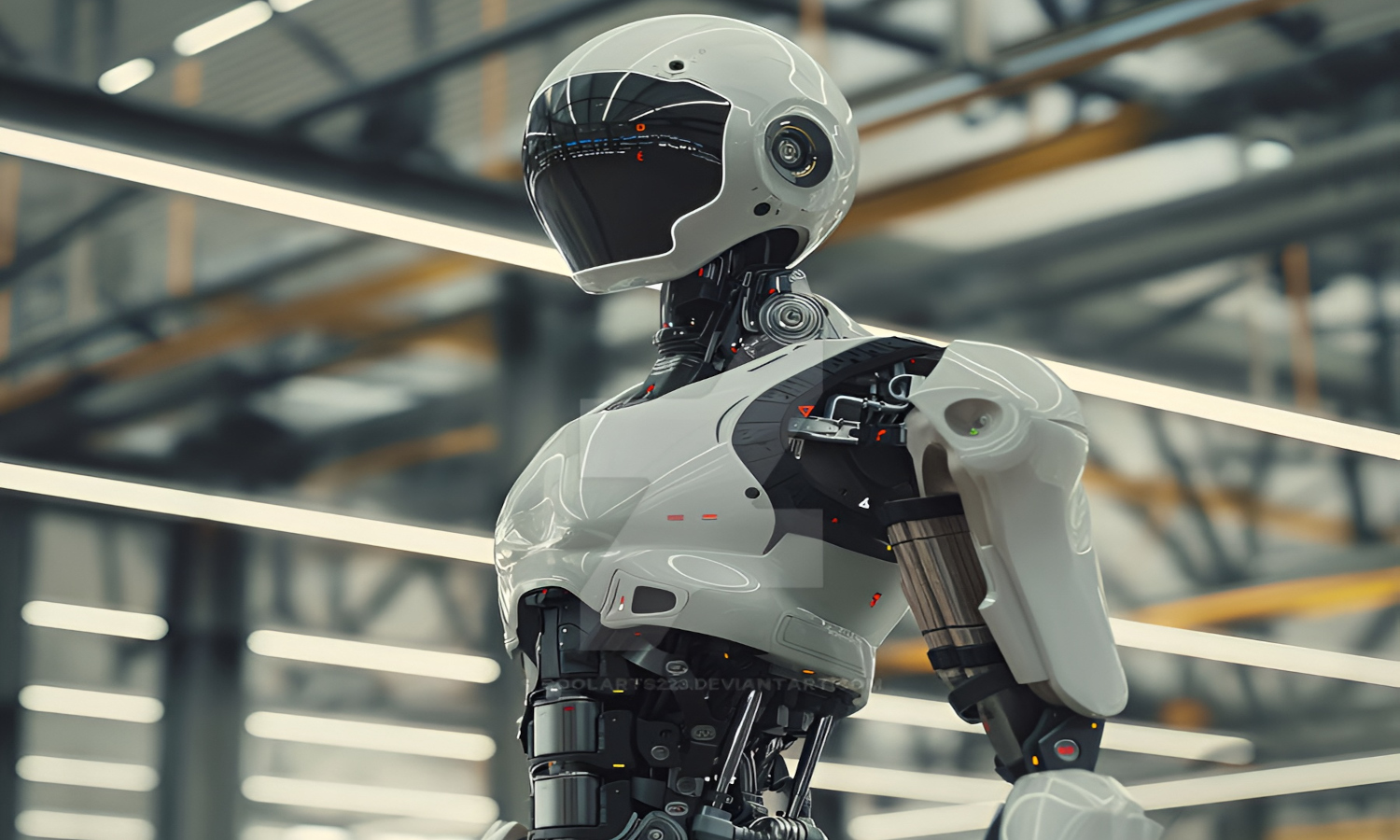
Sam Altman just confirmed what OpenAI’s job listings had already been whispering: the company will “definitely” build a humanoid robot. Not just the AI brain that runs it. The actual physical body. Asked on the Sources podcast whether OpenAI’s robotics push meant data-center machines or humanoids, Altman said “both” — and that changed the stakes considerably. Owning the world’s most powerful AI model, it turns out, is no longer considered sufficient strategic control.
The Brain Was Never the Whole Story
Without owning the robot, you can’t generate the training data needed to make embodied AI actually work.
OpenAI quietly killed its first robotics project in 2021 for one reason: not enough physical interaction data. Without robots operating in the real world — failing, correcting, grinding through real tasks — the training pipeline runs dry. Hexagon Robotics understood this early. Their Aeon robots are deployed across 1,000 stations in Schaeffler factories, generating continuous real-world training data from actual industrial work. Control the body, control the learning.
OpenAI’s job listings make clear this isn’t vaporware:
- 19 open robotics roles in San Francisco, up from 11 at the division’s May 2026 launch
- At least four roles focused specifically on actuators — the joints that make robots move
- One position owns custom electromechanical actuators end-to-end: motors, transmissions, thermal architecture, manufacturability
- Additional postings in PCB layout, firmware, and commodity management signal a full hardware infrastructure build-out
Nobody designs their own electromagnets and gear trains because the body is easy.
“The world is very much designed for people … so matching that form factor seems good.” — Sam Altman, TIME interview
The Body Is the Hard Part – Ask Elon
Tesla’s five-year Optimus journey is the clearest warning OpenAI should study before celebrating its hiring spree.
Tesla announced Optimus five years ago. Production started around August 2026 on converted Model S/X lines. Zero customer units have shipped. Musk recently called it the “hardest product to scale manufacturing that we’ve ever made.” OpenAI has capital and AI credibility — what it doesn’t have is five years of manufacturing scar tissue.
The supply chain math adds another layer of difficulty. Actuators represent 40–60% of a humanoid robot’s bill of materials, per McKinsey. China controls roughly 90% of global magnet processing, making those actuators deeply supply-chain-dependent. AGIBOT and Unitree already hold roughly 75% of global humanoid shipments — a market that hit 19,100 units in H1 2026, up 272% year-over-year. Your next humanoid robot, if it ever arrives, may well have Chinese-made joints regardless of who builds the brain.
“We can’t outsource AI for the same reason we can’t outsource our hardware.” — Brett Adcock, Figure AI CEO
The Gap Between “Definitely” and “Delivered”
The distance between Altman’s vision and a robot on your doorstep is measured in actuators, supply chains, and time.
Altman gave TIME a firm date for the Jony Ive-designed tabletop device: early 2027. For the humanoid, he offered “definitely” — no timeline, no prototype, no manufacturing partner announced. That gap between vision and reality is exactly where the real story lives.