


A few bucks a day at the coffee shop adds up fast. Five dollars, four times a week, comes out to over $1,000 a year. That math is what pushed me toward the AutoBarista Pro, and it’s also the math that makes a $949 coffee machine feel less crazy than it sounds on paper.
Where It Sits in the Lineup
Ninja sells two versions of the AutoBarista. The standard model, AE1001, costs $899.99. The Pro, AE1051, costs $949.99. For $50 more, the Pro gets you 13 one-touch drink presets instead of 10, a fifth froth setting called Extra Thick, and a second bean hopper. That second hopper is the real reason to spend the extra $50, and I’ll get into why below.
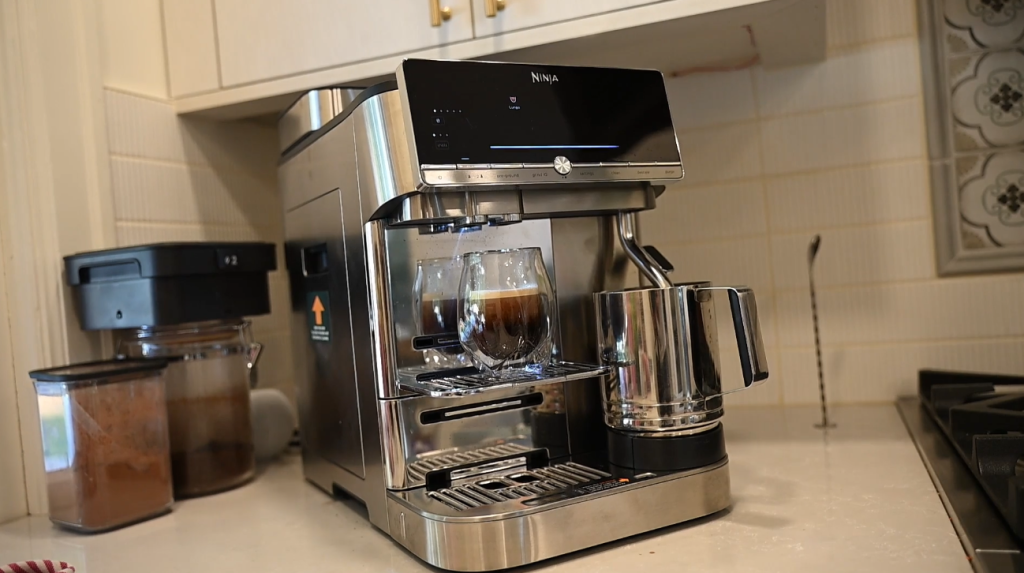
Both machines sit above Ninja’s Luxe Cafe line, which starts at $599.99 for the Premier and tops out at $749.99 for the Luxe Cafe Pro. The difference matters. The Luxe Cafe still uses a portafilter, meaning you’re loading grounds, locking it in, and pulling the shot yourself. The AutoBarista skips all of that. You pick a drink and the machine grinds, doses, tamps, and brews on its own.
Outside the Ninja lineup, the AutoBarista Pro competes with machines like the $999 Jura ENA 4 and the $1,300 De’Longhi Magnifica Plus. Both cost close to the same or more and don’t match the Pro’s combination of dual hoppers, drip coffee, and cold brew in one machine.
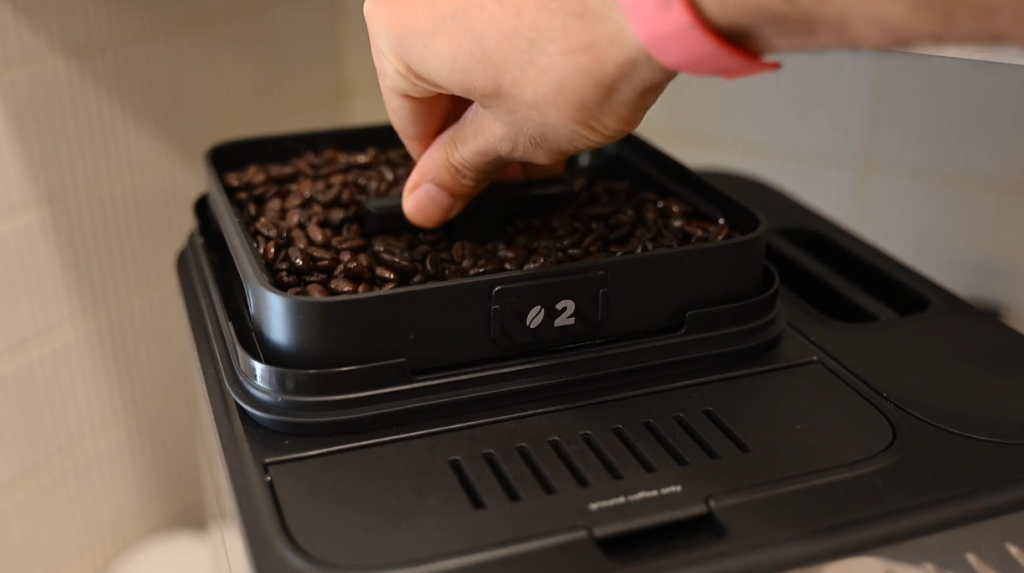
Setup and Daily Routine
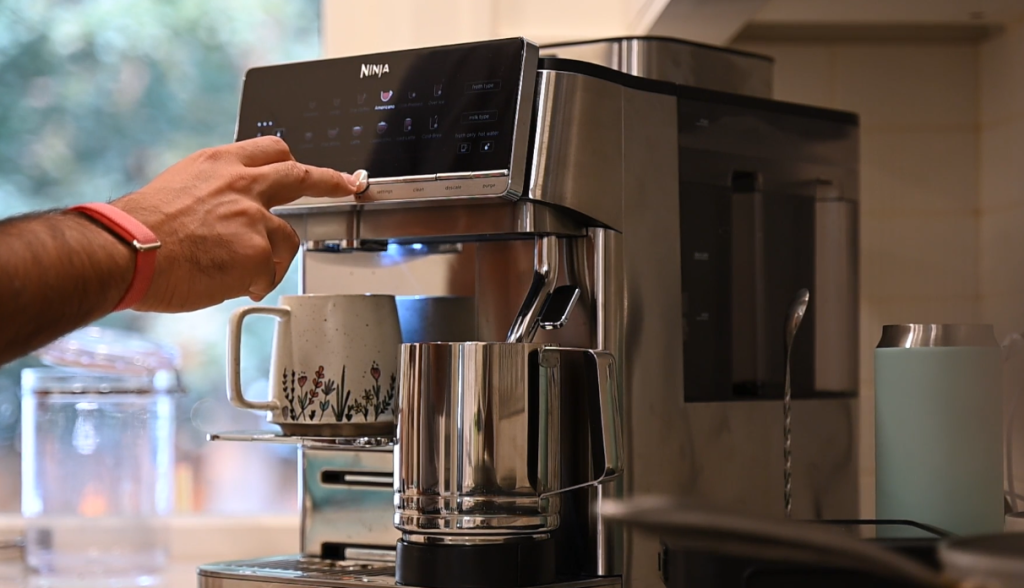
The coffee machine is one of the first things I touch every morning, right after my phone. The AutoBarista Pro slid into that routine fast. Most mornings I still make a simple Americano, and the machine handles it in a few minutes from power on to first sip. There’s no programmable start time, which I expected to miss. I haven’t.
The Grind IQ System
This is where the machine does the most work, and where I have the most mixed feelings. Grind IQ picks from 50 grind settings automatically, weighs each dose to the gram, and tamps the puck before brewing. When it’s calibrated correctly, the espresso is strong and well extracted. I know because I’ve felt the drop off when the calibration was off.
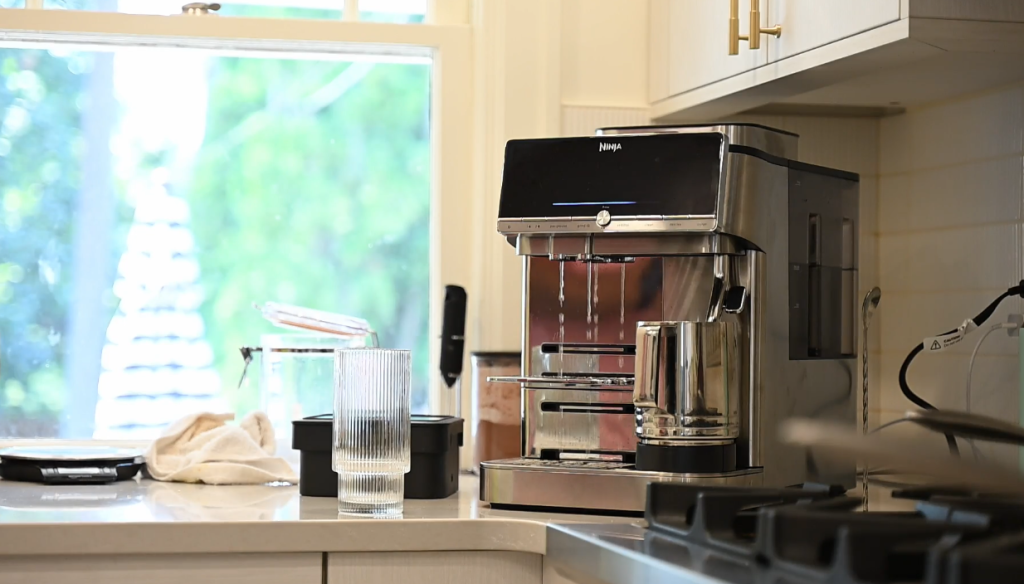
My complaint is that the machine sometimes asks for a fresh calibration even when I haven’t changed beans. That process burns about 3 ounces of beans and takes 5 minutes. I’d rather the machine tell me what grind setting it landed on, or hold onto a calibration longer, than ask me to run it again for no clear reason.
Two Hoppers Changed How I Drink Coffee
I never used to think about caffeine timing. Now I keep regular beans in one hopper and decaf in the other. Mornings are for the real thing. Afternoons, I’ll make an iced Americano or an iced latte with almond milk from the decaf side without worrying about being up until midnight. That’s a habit the machine created, not one I had going in.
Milk and Froth
The Pro offers five froth presets: Steamed, Thin, Thick, Extra Thick, and Cold Foam. I mostly use almond milk, and Ninja is upfront that plant milk won’t foam as thick as dairy. When I switched to 2% for testing, the foam came out noticeably creamier.
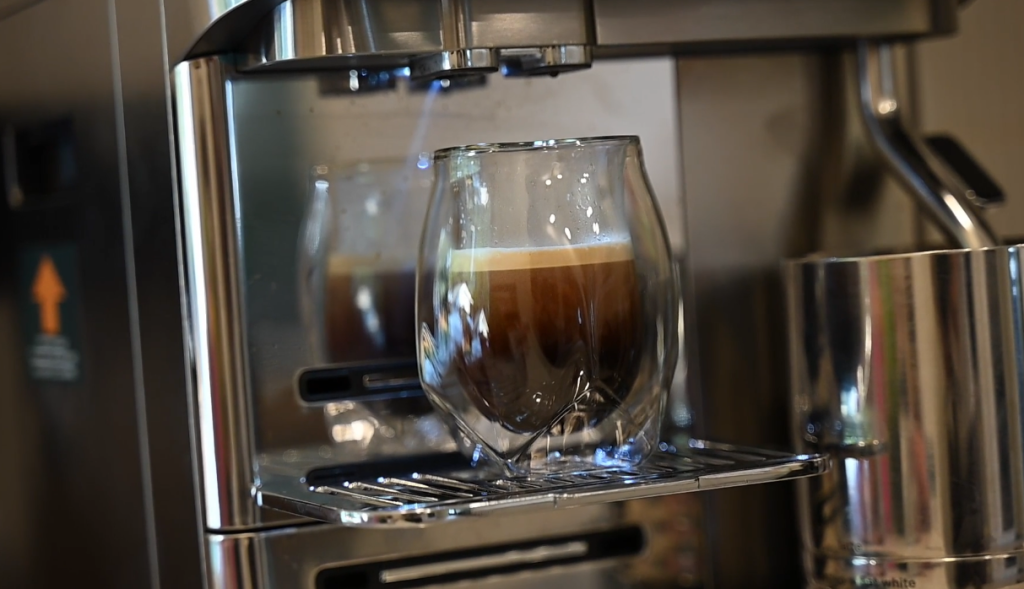
Either way, I pour milk in, pick a setting, and the machine handles temperature and timing. Cleanup is a quick wipe of the wand and a rinse of the container. The whisk pops out and snaps back in seconds.
Maintenance
Day to day upkeep is dump the puck container, empty the drip tray, and refill the water tank. The reservoir holds 80 ounces, which sounds like a lot, but I was topping it off almost daily once I started making more drinks throughout the day.
The machine also rinses itself on power on and power off, which adds to water use. After opening the side panel a few times to check for buildup, I was surprised how clean everything still looked. There’s an internal fan that keeps the inside dry between uses, and it seems to be doing its job.
Beyond Espresso
The hot water dispenser let me get rid of a separate electric kettle. Select the amount, and it pours clean hot water with no coffee aftertaste. The machine also makes straight drip coffee and cold brew up to 40 ounces, so there’s no need for a second machine when you just want a regular cup.
Design and Display
At just under 40 pounds, this machine isn’t going anywhere once you set it up. It has enough stainless steel to look and feel like a real espresso machine, with clean styling that fits a modern kitchen.
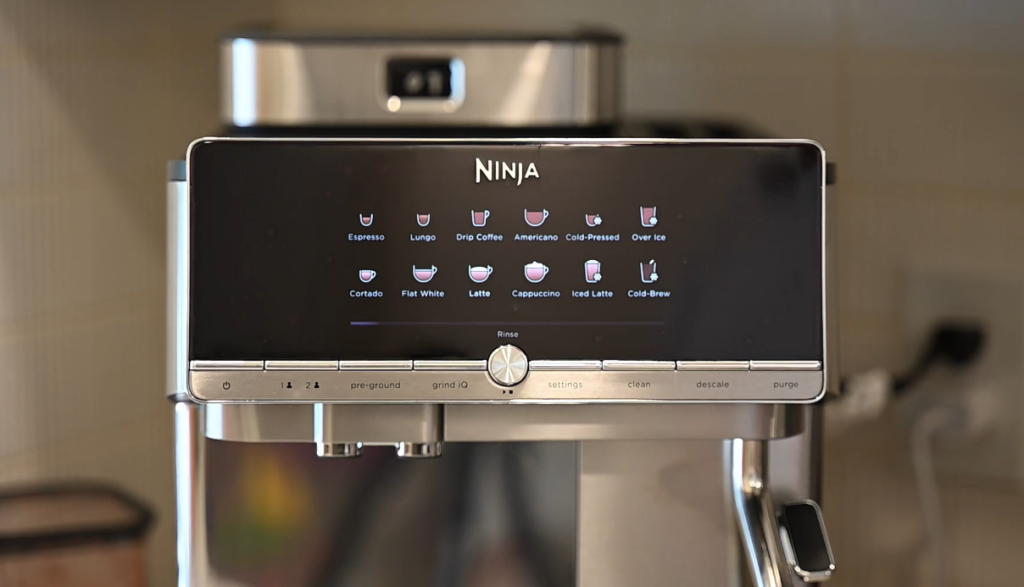
My biggest gripe with the interface is the settings menu, where most of the text is crammed into the upper left corner instead of using the full screen. It works, but it’s harder to read than it should be. There’s also no clock when the display sleeps, which is a small thing but one I kept noticing.
Noise
Coming from a Keurig or drip machine, expect a bigger sound jump. Grinding fresh beans and pulling a shot means more happening inside the machine than a basic coffee maker. After a couple of days I stopped noticing it. It just became the sound of coffee on the way.
How I Tested
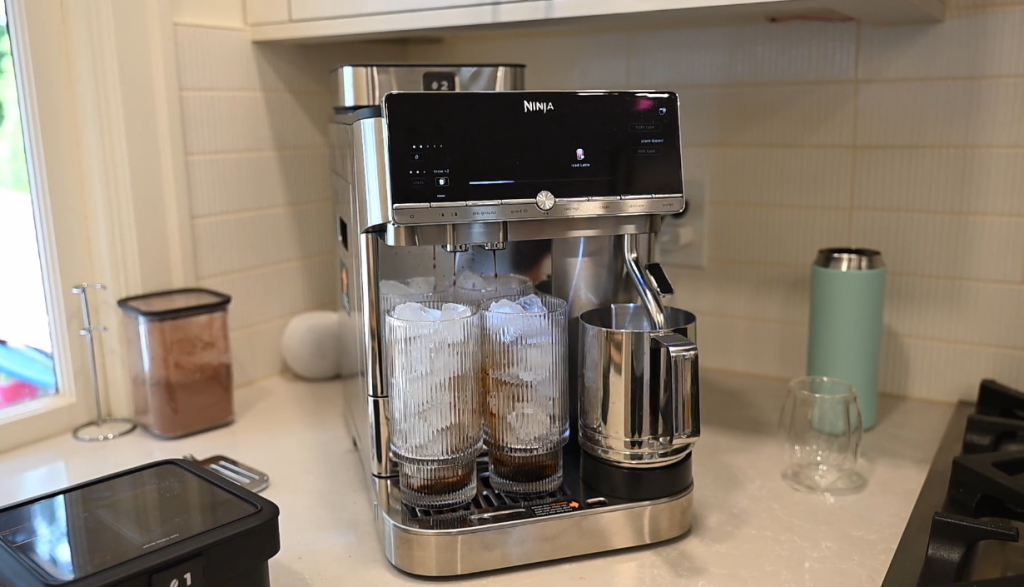
I used the AutoBarista Pro daily for one month as my only coffee machine, making espresso, Americanos, iced lattes, and drip coffee. I ran both caffeinated and decaf beans through separate hoppers, tested all five froth presets on almond milk and 2% dairy, and opened the machine periodically to check internal buildup. I also had another household member use the machine without instruction to test how intuitive the controls were for someone unfamiliar with the setup.