




Use Case Scores
Taste & Ice Quality — 95/100 The C1H drops TDS from 180 ppm to 4 ppm, and users feel that difference immediately. Water comes out clean and crisp with no chlorine taste, no metallic edge, and none of the harshness that characterizes most municipal tap water. Multiple users switched from bottled water after the first week and didn’t look back.
Hard Water / TDS — 80/100 For typical municipal hard water, the 97.8% TDS reduction handles the job with room to spare, and long-term users report stable readings over months of use without any drop in performance. The ceiling is 500 ppm input TDS, so well water with high mineral content is off the table, which is worth checking before you buy.
Health Concerns — 90/100 The 6-stage RO membrane targets chlorine, fluoride, lead, PFAS, and arsenic, and the system carries NSF/ANSI 58 and 372 certification to back those claims up. For anyone on municipal water who’s thought twice about what’s actually coming out of the tap, the C1H puts measurable numbers behind the peace of mind rather than just marketing language.
Ultra-Pure Water — 95/100 At 4 ppm TDS output, the C1H is producing water that sits close to distilled purity, and users report those numbers holding steady across months of testing without degradation. Some users actually choose to remineralize the output for espresso preparation, which tells you something about how clean the baseline is.
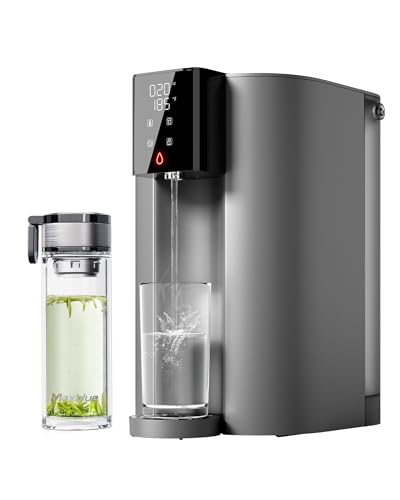
Coffee & Hot Beverages — 98/100 This is where the C1H separates itself from a standard countertop filter. Five precise temperature presets from 113°F to 203°F, combined with water that has virtually no mineral interference, mean every cup starts from an ideal baseline. Tea drinkers specifically noted that delicate green and white teas tasted noticeably cleaner at 185°F, and the three-second heat time means the kettle stays in the cabinet.
Filtration Performance
The 6-stage RO system is the C1H’s strongest feature, and the numbers back that up. TDS drops from 180 ppm to 4 ppm in user testing, a 97.8% reduction that leaves the NSF/ANSI 58 minimum of 75% well behind. Chlorine, fluoride, lead, PFAS, and arsenic are all on the target list, and long-term users report no degradation in taste or TDS readings until the filter is actually due for replacement.
Water quality is where the feedback gets consistent fast. Clean, crisp, no chemical edge. Tea and coffee drinkers noticed the difference specifically, with one user pointing out that delicate green and white teas tasted noticeably better at the 185°F preset, which makes sense given how sensitive those leaves are to water chemistry.
Hot Water Performance
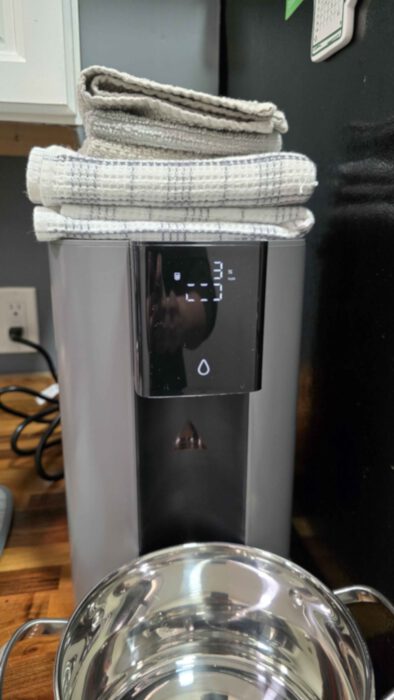
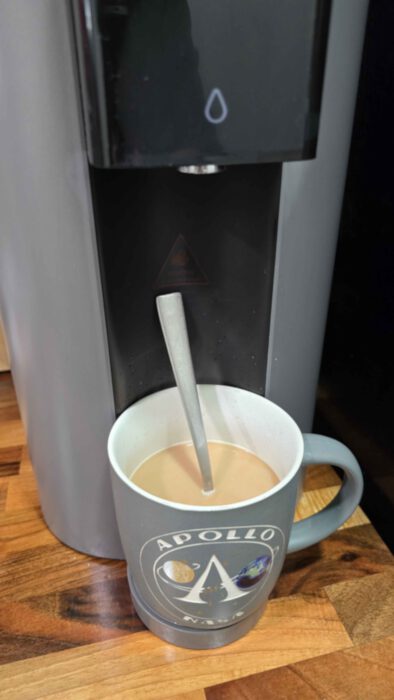
Five temperature presets and roughly three seconds to get there: room temperature for drinking, 113°F for baby formula, 149°F for delicate brewing, 185°F for green and white teas, and 203°F for coffee and black tea. For most people, the kettle becomes redundant pretty quickly.
Power draw peaks at 1,700 watts during heating, which is in line with a standard electric kettle, and the child safety lock on hot dispensing is a real feature that parents brought up unprompted, rather than a checkbox item. The system also remembers your last settings, so your morning routine eventually becomes two taps.
Water Production and Efficiency
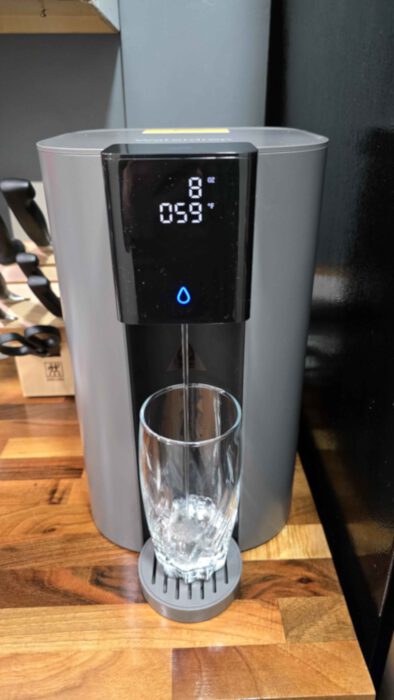
Seventy-five gallons per day on paper. In practice, the dual-tank design means a rear-mounted feed reservoir and an internal pure water tank that a family will refill two to three times daily. That’s the honest version of the spec. The pure water tank has a handle, pulls out easily, and sits in the fridge fine if you want cold water. It’s just not automatic.
The 3:1 pure-to-drain ratio puts water recovery at 75%, which is meaningfully better than older RO systems running at 40 to 50%. Waste water collects in the drip tray and needs occasional emptying, and dispensing runs through five volume presets at 4, 8, 16, and 20 ounces.
Setup and Installation
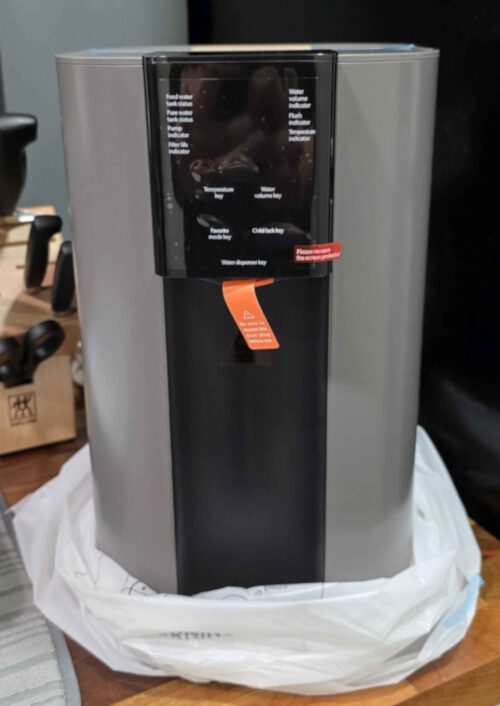
No plumbing, no tools, no expertise required. Insert the filter cartridge, place the drip tray, and run the initial flush. The flush takes about 24 minutes and requires a few tank empties and refills to clear manufacturing residue, but the instructions are clear, and after that, the system is ready to use.
The 11.7″ x 8.3″ footprint works on most countertops, though you need clearance behind the unit for the feed tank and room in front to pull the pure water tank. The power cord runs 3.5 to 4 feet, which covers most outlet placements without needing an extension.
We had an initial problem with minor leakage (a few drops of water to a small puddle, depending on how much water we were pushing out at once) out of what looked like a drainage hole in the bottom of the unit, and the replacement unit we received didn’t have this issue whatsoever.
Maintenance
The filter lasts 12 months or 1,100 gallons, tracked on the touchscreen display, and replacement is tool-free and takes under 10 minutes. Filters run about $70.
One user with longer-term experience recommends running a 50/50 vinegar-water solution weekly to prevent mineral buildup in the heating element. This is worth the five minutes of your time that it takes, especially if you’re on hard water.
While the C1H is typically $279, Waterdrop Filter’s Spring Sale has dropped the price to just $219 until March 31st, 2026. If you’re on the fence about getting an RO system, there’s no better time to take the plunge.