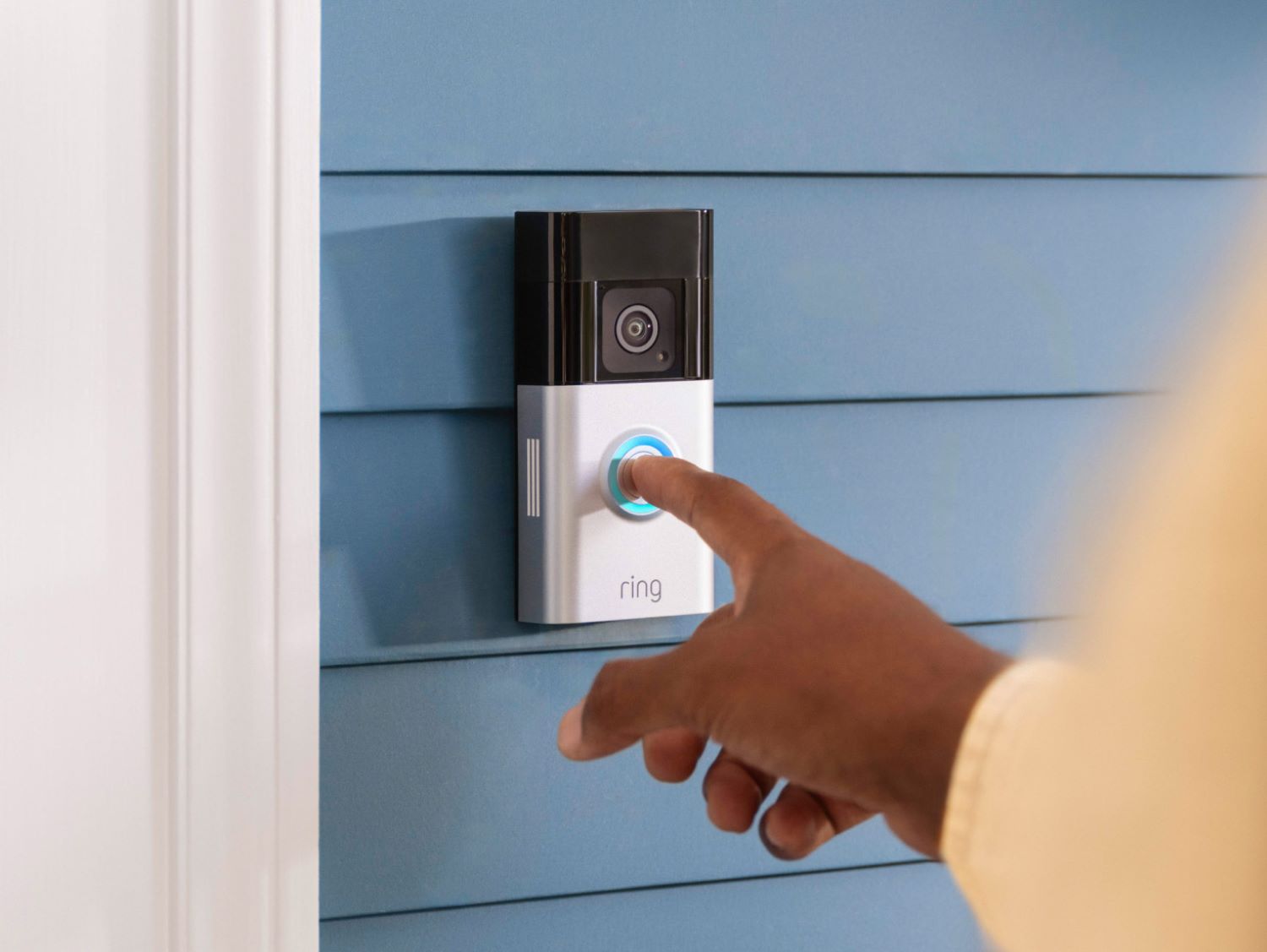
A detective serves Ring a warrant for doorbell footage. Under the company’s new Throw Away the Key Encryption — TAKE, rolling out as the global default in September — what comes back is an encrypted file. Unreadable. Ring’s spokesperson confirmed to The Verge that the company “will only be able to provide non-video information … and encrypted video files in response” to valid legal requests. That’s a genuine architectural shift, not a policy promise someone can quietly override. This mirrors how a surveillance app can be architected to limit what its operators can access or expose under compulsion.
Here’s the technical reality:
- Keys rotate roughly every five minutes — processed on-device for newer hardware, in the cloud for older models
- Temporary key copies are held in AWS Nitro Enclaves, hardware-backed isolated environments that restrict access even from Ring’s own engineers
- Ring deletes its copies after approximately 24 hours; after that window, only your devices hold the decryption keys
- Built on Messaging Layer Security (MLS), an open IETF standard originally designed for secure group messaging, now repurposed for stored video
- Cloud features like Smart Alerts and Video Search operate during that 24-hour window using temporary keys — then access closes
- Users who want zero Ring access can opt into full end-to-end encryption, though that disables every cloud feature entirely
TAKE sits between those two options: meaningful technical constraint that preserves cloud functionality without handing Ring routine access to your footage.
What TAKE Doesn’t Fix
Ring’s own decryption window narrows considerably — but the neighborhood surveillance pipeline runs unchanged.
Ring’s ability to decrypt footage shrinks under TAKE. The Axon partnership, however, remains fully operational. Police agencies using Axon Evidence can post geo-targeted Community Requests directly into your Neighbors feed — complete with location, timeframe, investigation details, and a unique case code. You get a push notification. If you respond, your footage uploads straight into Axon’s evidence system. TAKE addresses what Ring can be compelled to surrender under legal process. It does nothing about what you might voluntarily hand over after that notification arrives at dinner — a risk not unlike apps secretly tracking users without their full awareness.
The history here matters. Ring paid $5.8 million in a 2023 FTC settlement after a former employee viewed thousands of female customers’ recordings, and hackers compromised roughly 55,000 U.S. accounts by exploiting weak security practices. TAKE’s 24-hour key deletion would have technically limited long-term insider access to stored footage — a structural guardrail that policy alone never reliably provided.
The Real Question Is You
The encryption improved; the ecosystem it operates inside has not.
TAKE represents the most substantive architectural change Ring has made to limit corporate and legal-process access to your footage. But the broader surveillance infrastructure surrounding it remains largely intact. Those weighing Ring’s privacy trade-offs would do well to compare available home security systems alongside it. The more consequential question isn’t what Ring can decrypt anymore. It’s what you’ll choose to share when a Community Request from your local precinct lands in your feed.
Update 8/27/2026: Added clarification that Community Requests is an optional feature.