At 3:20 AM on August 18, Greenville police responded to shots fired into an apartment on Moseley Drive — two young children inside, a serious crime, a legitimate investigation. They knocked on neighbor Uniqua Teel’s door. Not because she was a suspect. Because she owned a Ring doorbell. She told officers the camera was dead and not working. That answer cost her the rest of her night.
Most Ring owners assume they control their footage. The device is yours, the subscription is yours, the decision about who sees the clips is yours. That assumption just got complicated.
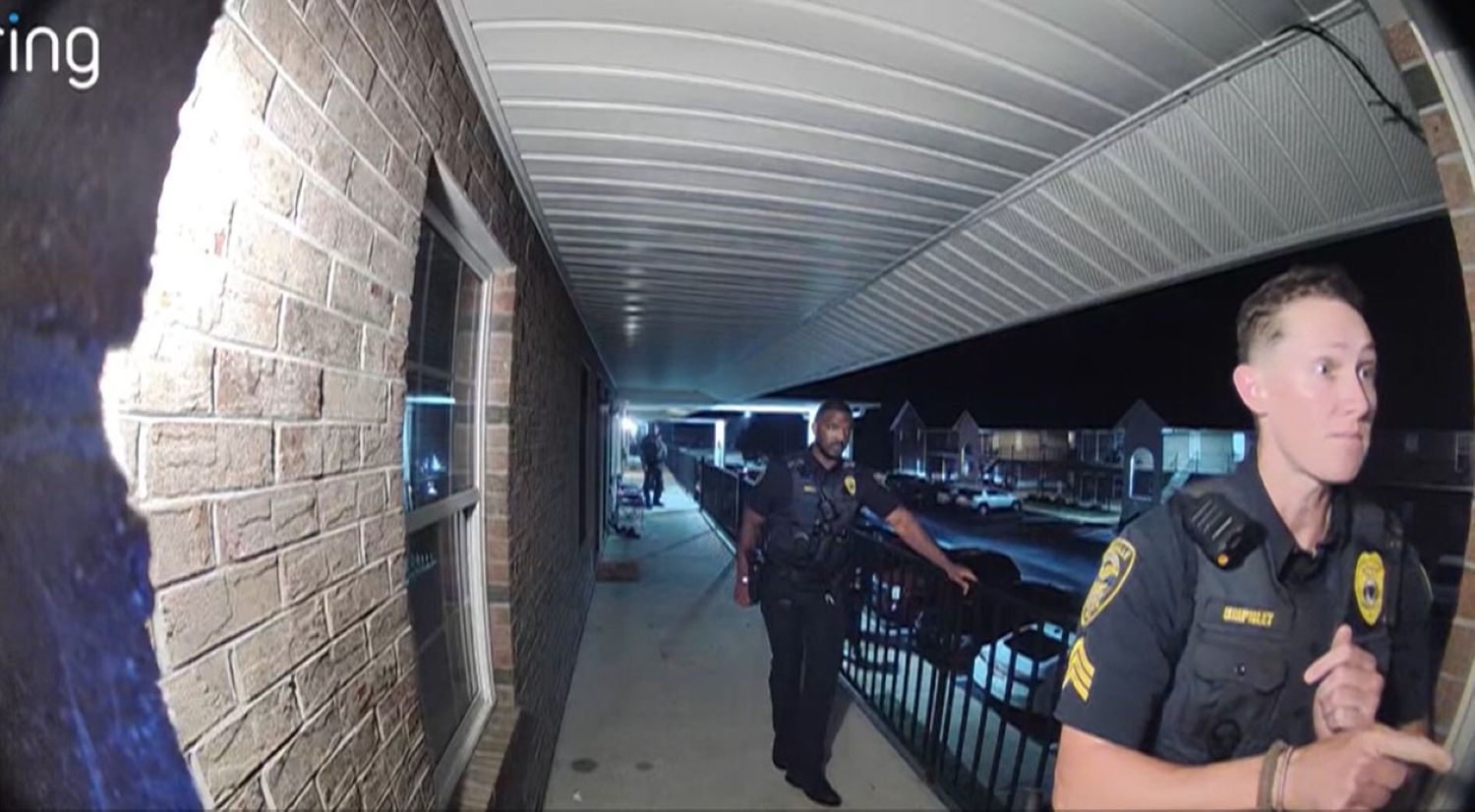
Ring footage of the encounter — obtained and published by local station WITN — captures an officer telling Teel: “You pull it up and show me that it’s not working, and I’ll leave you alone. Otherwise, I’m ripping it off the wall, writing a search warrant, and I’m gonna keep you up all night.” Officers then entered her apartment.
What the Ring Camera Caught
The footage documents a confrontation that raises more legal questions than it answers.
The situation escalated quickly once officers crossed the threshold. Here’s what the available reporting confirms:
- Teel was detained inside her own home despite not being a suspect in the shooting
- She alleges officers used her face to unlock her phone and secretly tracking users‘ data was not the only concern — search it for Ring footage — an allegation GPD has not addressed in published statements
- Police “ultimately were not able to find the video they were looking for,” according to WITN
GPD placed the primary officer — identified by WITN as Sergeant Jennifer Umphlett, though GPD has not formally confirmed she is the officer in the footage — on administrative leave and opened an internal affairs review. Separately, two people were later charged with attempted murder in the underlying shooting. Teel was never a suspect.
A criminal defense attorney who reviewed the footage told local media the encounter “likely raises Fourth Amendment search-and-seizure concerns, while noting more facts are needed.” Whether officers had a warrant before entering remains unconfirmed in any published official record — the “no warrant” framing should be treated as alleged until official records clarify. The biometric unlock question adds another unresolved layer: courts haven’t cleanly settled whether forcing a face scan to access cloud-stored footage crosses a constitutional line, particularly when the device owner isn’t suspected of any crime.
Think of Ring’s neighborhood surveillance network as the Nextdoor app that can physically show up at your door. The pitch was community safety. The reality, some nights, is a 3 AM knock that doesn’t leave when you say the camera’s dead. After the video went viral, disabled veteran Preston Joyner came forward alleging prior misconduct by the same officer — widening scrutiny well beyond one incident.
A formal complaint has since been filed. The internal review continues. The shooting case moved forward without Teel’s footage. Your Ring camera isn’t just a home security device — in the wrong situation, it’s an open invitation.