You know the B-2 Spirit bomber — that $2 billion bat-shaped silhouette with a 52-meter wingspan that exists to make radar operators doubt their eyes. Now stretch it wider, fill it with 800 passengers, and hand the blueprints to a civilian aerospace institute. That’s roughly what China’s aerodynamics researchers are reportedly exploring, and they’ve got wind-tunnel data to back up the idea — drawing serious attention from aerospace observers worldwide.
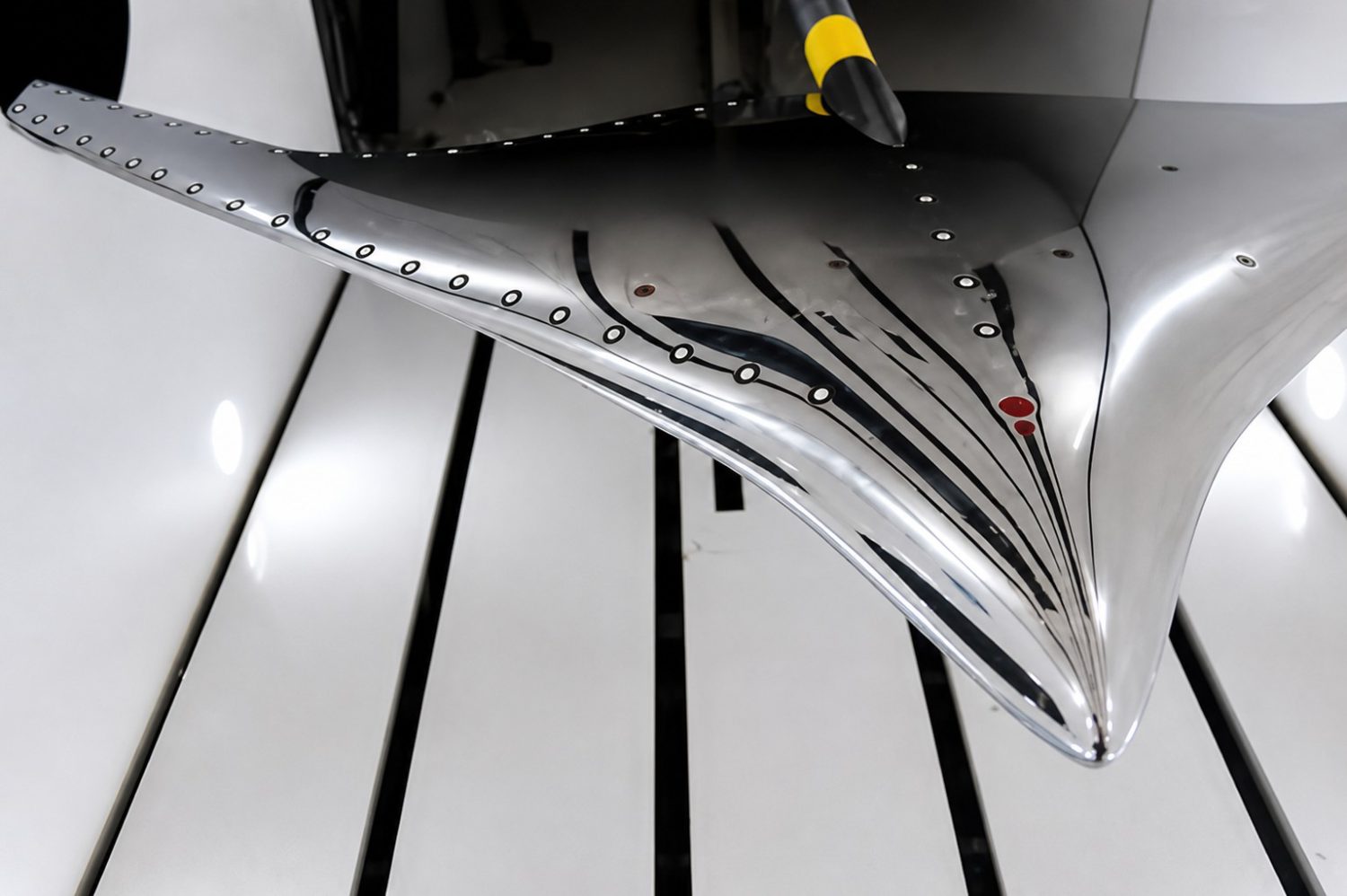
CARDC — the China Aerodynamics Research and Development Center, the same institute behind the C919 and Y-20 programs — reportedly built a 1:52 stainless-steel model and ran it through a 2.4-meter transonic wind tunnel at speeds from Mach 0.4 to Mach 0.8. The concept reportedly started as a 250-seat design before being scaled up considerably.
Key specs from the research:
- Wingspan: 85 meters (roughly 1.6× the B-2 Spirit’s 52-meter span)
- Length: 43 meters
- Passenger capacity target: 800+
- Model scale: 1:52, stainless steel
- Lift-to-drag ratio: peaked near 20 below Mach 0.7, dropping to 17.6 at Mach 0.8
The flying-wing configuration fuses fuselage, wings, and tail into one continuous lifting structure. No separate tube. No bolt-on wings. That integration is what makes the lift-to-drag numbers promising — the whole airframe generates lift, which theoretically supports longer range and lower fuel burn. Same aerodynamic logic as the B-2, entirely different mission.
The Gap Between Wind Tunnel and Gate 34
Aerodynamic promise doesn’t survive contact with airport infrastructure — or regulators.
A wind-tunnel result is aerodynamic data. That’s it. The unresolved challenges — passenger cabins in a windowless blended body, emergency evacuation from a wide non-tubular fuselage, stability control at full scale, and a certification process that makes the FDA look relaxed — aren’t footnotes. They’re the whole story.
The Airbus A380 could carry over 800 passengers in maximum-density configuration. Airlines retired it anyway because economics beat engineering ambition every time.
This concept has no public name, no prototype, and no production timeline. It sits alongside China’s planned C929 widebody and proposed C949 supersonic project as a research thread, not an announcement. CARDC is building aerospace capability systematically — this is one data point among several, not a product reveal.
If the aerodynamics hold at full scale and the certification mountain gets climbed — two enormous ifs — flying-wing thinking could genuinely reshape high-density long-haul travel. For now, it’s a steel model in a wind tunnel. Fascinating. Unfinished.