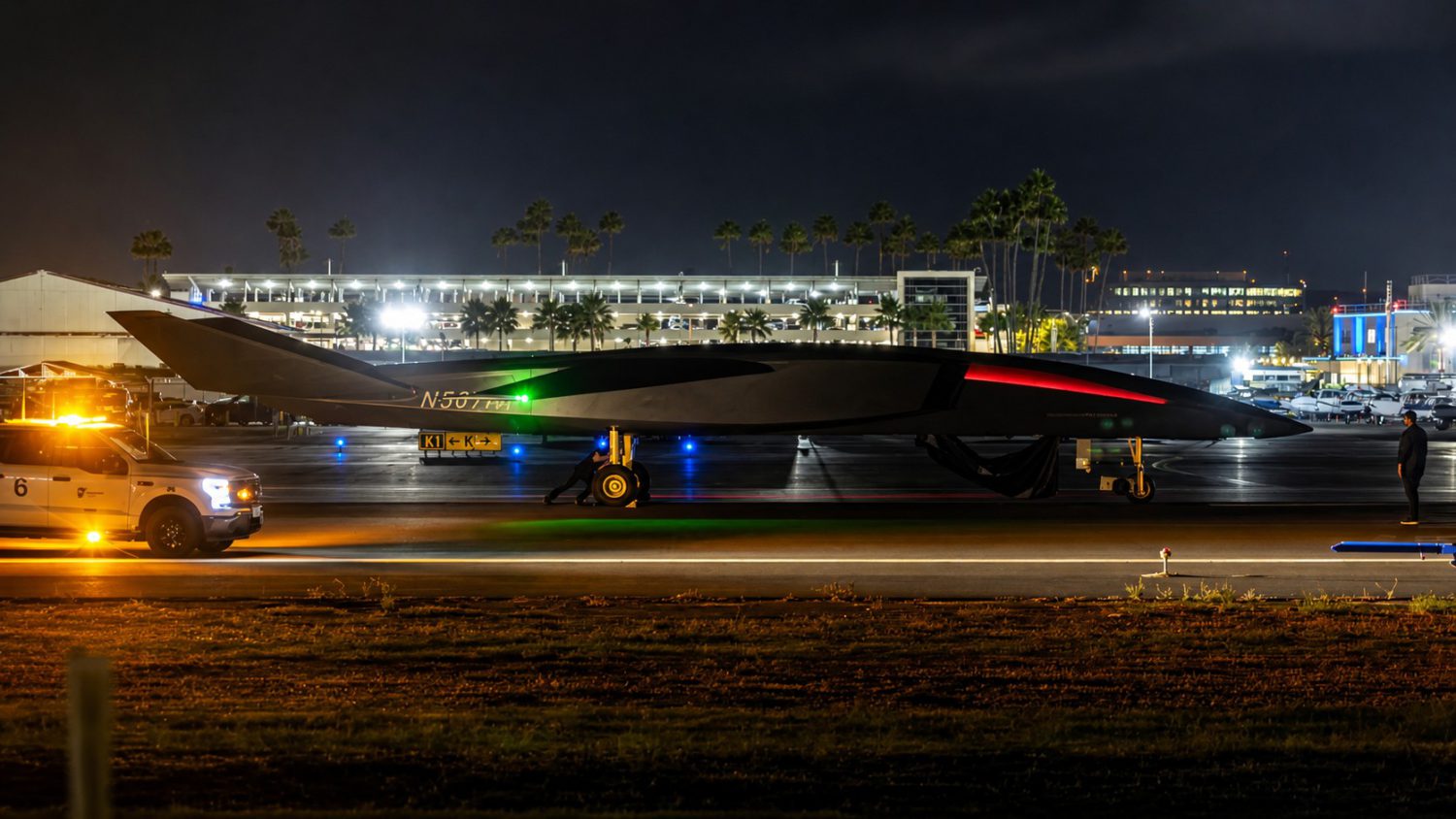
Sixteen years photographing aircraft at Long Beach Airport, and aviation photographer Ricky Schol had never seen anything like it. A massive black airframe rolled out of a hangar — sleek, angular, unmistakably F-117 in energy. He moved closer. No cockpit. No engine noise. No exhaust. Just 80 feet of silent, matte-black aerospace mystery sitting roughly 100 feet away. That aircraft has now been identified as the RAVN X, built by Aevum Aerospace and designed to autonomously carry rockets to orbit.
Built to Launch, Then Gone Quiet
The RAVN X debuted in 2021 as an autonomous orbital launch mothership — then nearly vanished from public view.
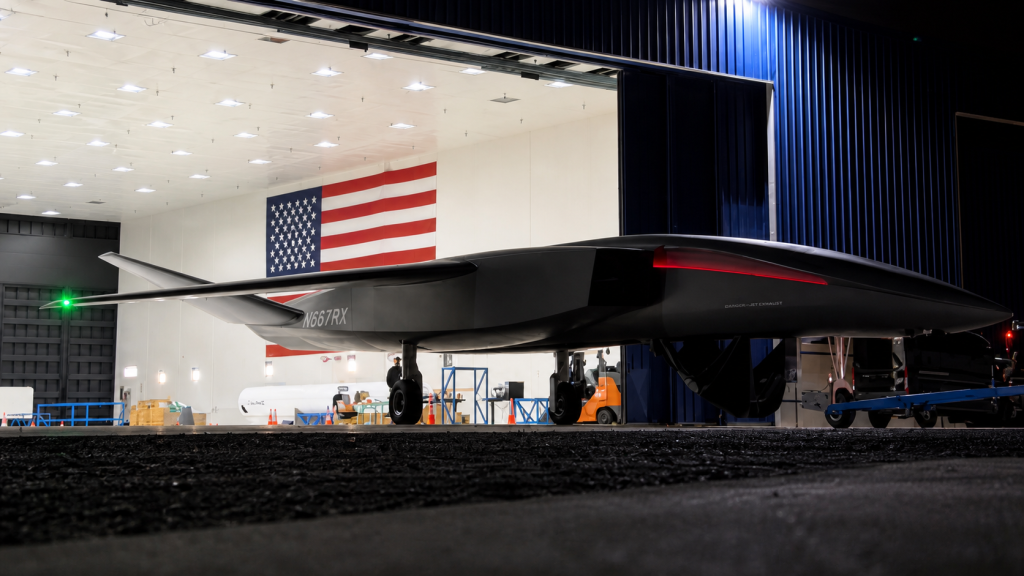
Aevum unveiled the RAVN X in 2021 with serious ambition. CEO Jay Skylus described the aircraft as “the first stage” of a two-stage orbital launch system — an autonomous mothership that air-launches a rocket carrying small payloads to orbit. The specs matched the scale of that pitch:
- Approximately 80 feet long with a 60-foot wingspan
- Weighs around 55,000 pounds
- Designed to deliver roughly 1,000 pounds of payload to orbit
- FAA registration N567RX tied to a Long Beach Airport address registered to Aevum
During the observed movement at Long Beach, witnesses reported no engine noise and no exhaust — raising the possibility that what Schol photographed may still be a mockup rather than a flight-ready prototype. A launch-tracking source reported no confirmed hardware activity after a December 2020 rollout, with the program appearing inactive by August 2024.
Then came the silence. Aevum’s website offers no meaningful recent updates. The 2021 announcement landed with real energy — and then the program essentially disappeared from public view, the aerospace equivalent of posting one cryptic teaser trailer and never releasing the film.
Signs of Life
The Long Beach sighting is now being framed as the RAVN X’s first autonomous taxi tests, suggesting the program may not be finished.
The Long Beach appearance is being described, per The Aviationist, as the RAVN X’s first autonomous taxi tests. That reframes Schol’s sighting from a curiosity into something more deliberate — a program that may still be alive, even if barely breathing publicly.
The open question of whether this airframe is a true flight-ready prototype, a modified mockup, or strictly a ground-test article is still unclear. Aevum has not issued a formal statement.
Space launch is brutally competitive. SpaceX and Rocket Lab have continued advancing while Aevum stayed quiet. Any observable activity from a program this silent is a signal worth tracking — even if the runway ahead is long.