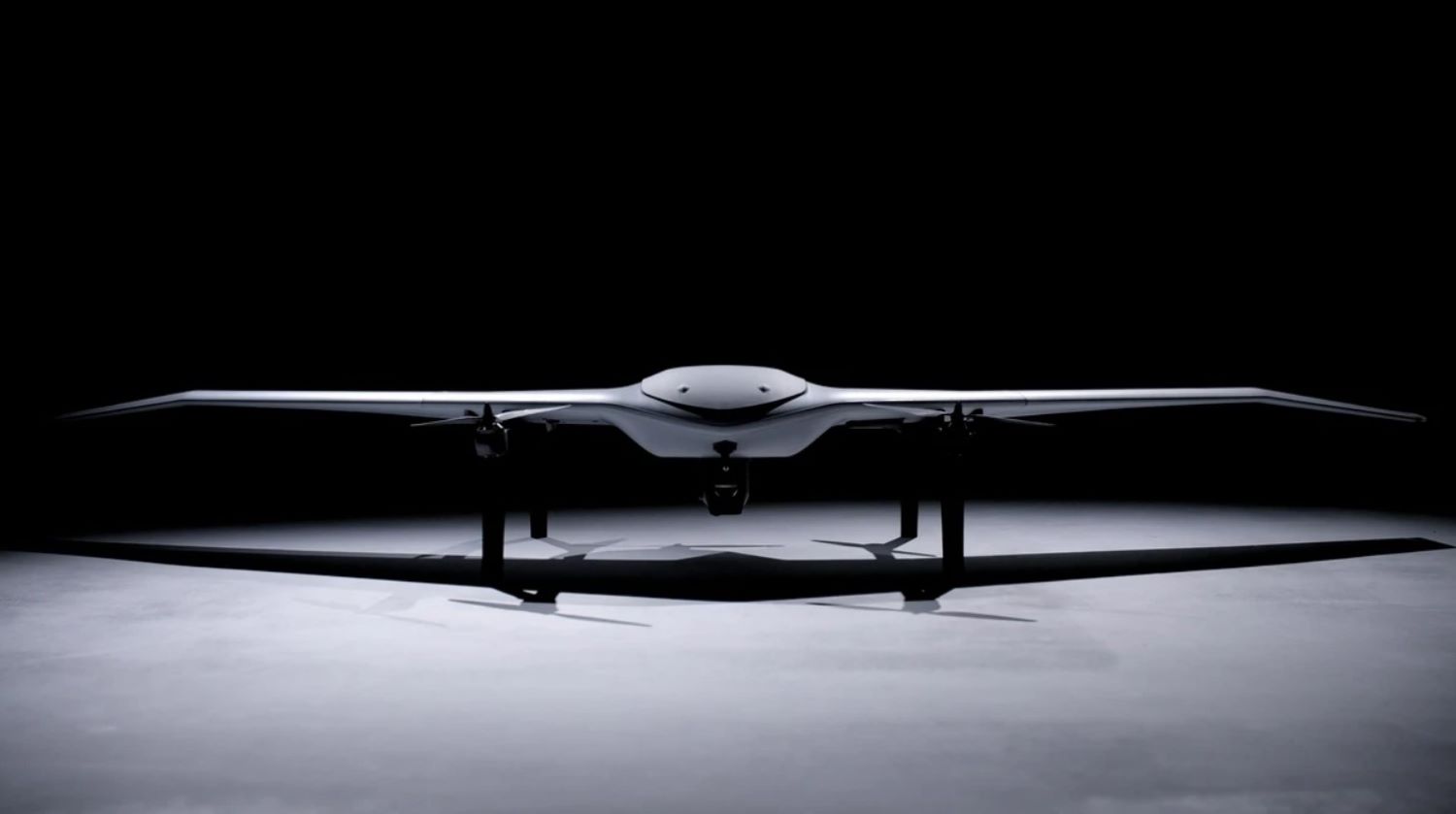
Netherlands-based DeltaQuad announced the Evo-LE on September 22, 2026, claiming up to eight hours of flight endurance and a maximum range of approximately 298 miles (480 km) for its electric fixed-wing VTOL surveillance drone.
Longer endurance means fewer aircraft rotations and more continuous coverage during extended surveillance operations. Evo-LE is available to order now. DeltaQuad has not disclosed a public price or delivery timeline.
What DeltaQuad Actually Changed
The Evo-LE reflects a systematic engineering effort to extend airborne time, not a surface-level update.
The hardware changes run deeper than battery capacity alone. DeltaQuad says the Evo-LE incorporates dual batteries, higher-energy-density battery technology, redesigned electrical architecture, and an upgraded VTOL drivetrain. The company describes these as going well beyond simply adding battery capacity.
The Block 3 airframe uses revised composite materials DeltaQuad describes as more rugged, with improved water ingress protection, dust and rain resistance, and a heated pitot tube. An automatic retractable landing-gear system keeps onboard sensors clear for an unobstructed 360-degree field of view during flight.
Evo-LE takes off and lands vertically, then transitions to fixed-wing cruise for efficient long-distance flight. That design allows deployment from confined or remote locations while retaining the range efficiency of a winged aircraft.
The Numbers, Qualified
DeltaQuad’s headline figures carry important conditions that buyers should weigh carefully.
DeltaQuad’s stated specifications include up to eight hours of flight endurance, up to 480 km (approximately 298 miles) of range, a maximum takeoff weight of 13 kg, a payload capacity of up to 1.5 kg, and a radio range of up to 120 km.
Treat those figures as manufacturer-stated ceilings, not operational guarantees. Wind, altitude, flight profile, payload weight, and battery draw will all affect actual performance. DeltaQuad has not published payload-specific endurance figures, and no independent benchmark data appears in the available sources.
“Endurance changes what is possible in a mission,” said Ross Jackson, DeltaQuad’s chief commercial officer. He added that more flight time over an area of interest provides operators with greater continuity of information and reduces the need to rotate systems during a mission.
Evo-LE targets ISTAR, border surveillance, and communications-relay missions. Longer endurance could reduce rotation frequency during extended operations, though that outcome depends on the payload the aircraft is carrying in practice.
Configurations and What Comes Next
Available options extend the platform’s capability, but buyers should confirm what each procurement includes.
Anti-jamming equipment, secure communications, and autonomous navigation are available as configurable options, according to DeltaQuad’s announcement. They are not standard equipment on every unit.
What ultimately determines sustained operational value is what DeltaQuad has not yet published. That includes payload-specific endurance figures, field testing results, autonomous-navigation performance data, and total acquisition cost. Pricing and delivery timelines remain undisclosed.