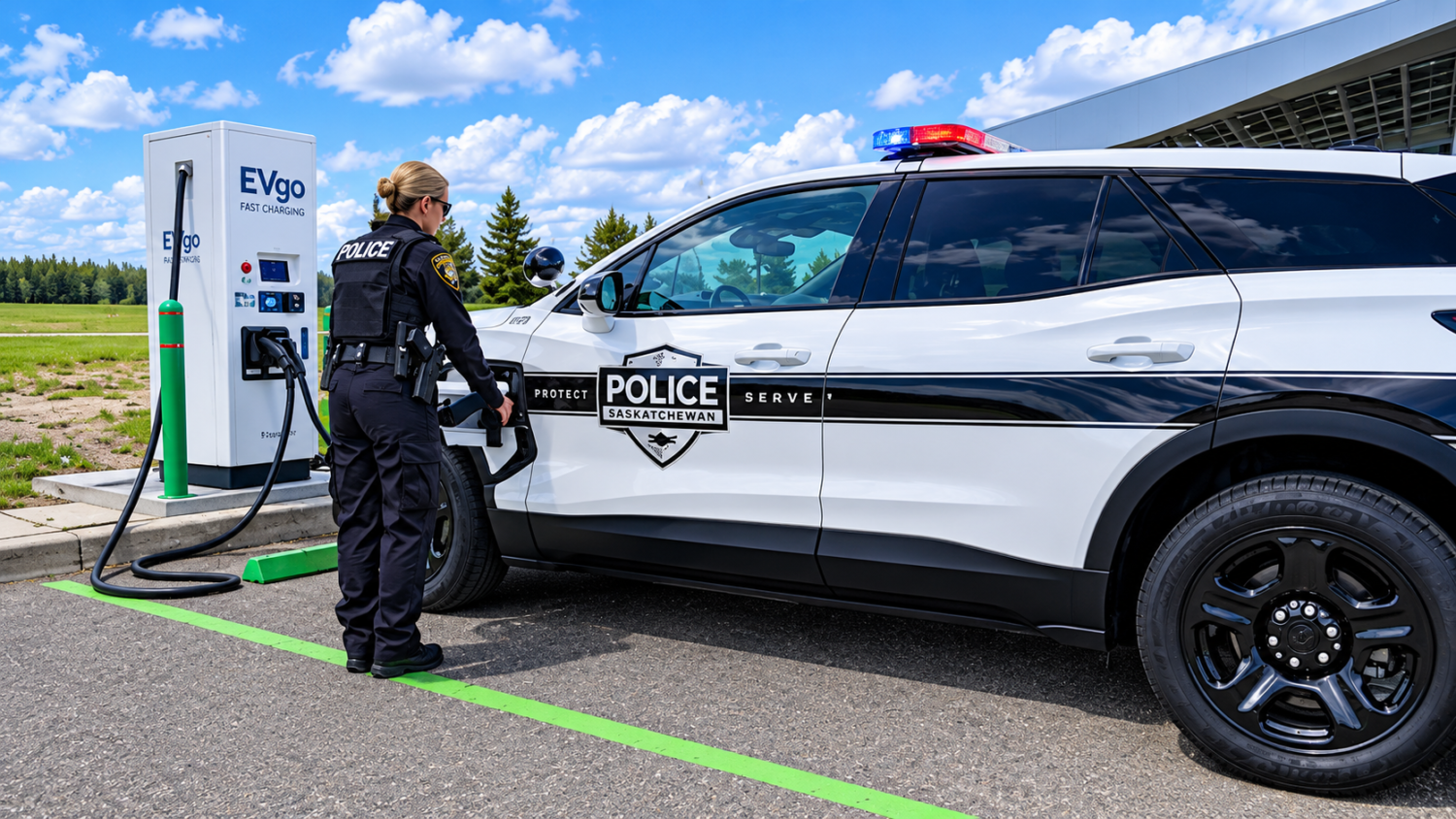
A 0–60-mph time of 5.14 seconds is not a marketing estimate. That figure comes from the 2025 Michigan State Police vehicle evaluation.
The Blazer EV PPV produces 498 horsepower and 571 lb-ft of torque through a dual-motor all-wheel-drive system. It also reached a 130-mph top speed during that same evaluation, according to Michigan State Police results.
The vehicle weighs approximately 5,870 pounds and carries a 105-kWh battery pack, per the MSP test report. Those performance figures in that weight class are notable by any measure.
This Is Not a Civilian Blazer EV in a Police Costume
The PPV shares a platform with the Blazer EV SS but serves a different purpose with different calibration.
The PPV is derived from the Blazer EV SS, though the two are not equivalent. The SS is cited at 615 horsepower and 650 lb-ft of torque, while the police version is rated at 498 horsepower and 571 lb-ft.
The GM Fleet specification sheet describes the PPV as designed for consistent fleet operation, durability, and accessory power. That framing aligns with the hardware choices, though Chevrolet’s official documentation does not explicitly state that lower output was chosen in place of peak performance.
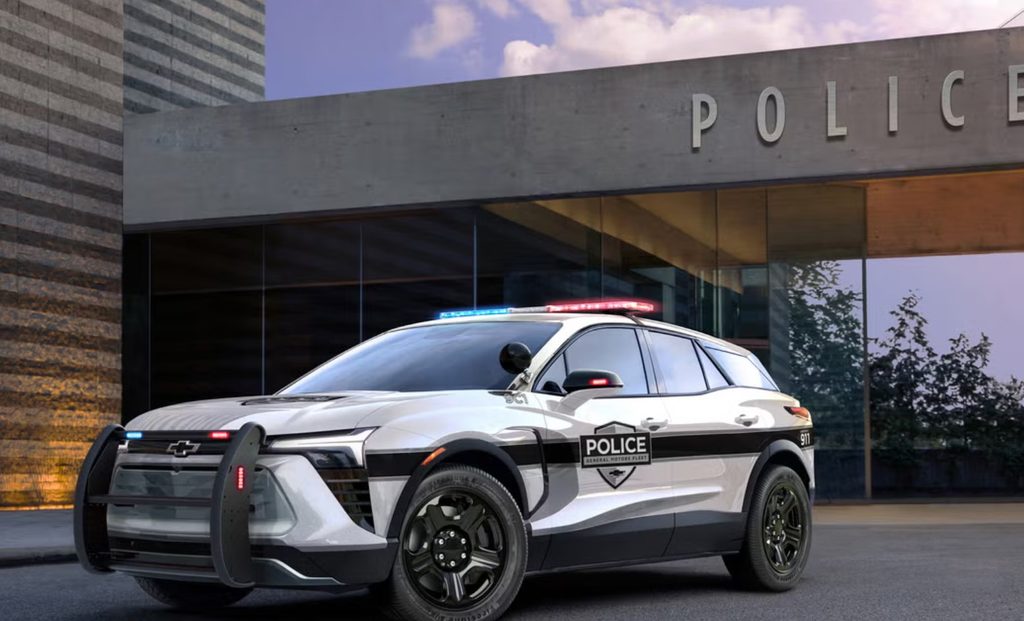
The Hardware List Goes Beyond the Motor
Pursuit-rated components distinguish this vehicle from a standard crossover in ways that go past the powertrain.
Per GM Fleet specifications, the PPV includes Brembo front brakes with 15.3-inch rotors, a heavy-duty police-rated suspension, and steel underbody skid plates. Police-performance software calibrations are also standard.
The electrical architecture includes a dedicated 400-volt-to-12-volt power module. A Universal Vehicle Module supports aftermarket emergency equipment, including radios, lights, and onboard computers, according to GM Fleet documentation.
GM Fleet also lists an estimated 286-mile range for the PPV. That figure comes from Chevrolet’s specifications rather than independent testing.
Used Asking Prices Start Below $30,000
A recent CarGurus snapshot showed limited supply and prices that vary considerably by condition.
CarGurus listings showed used Blazer EV Police eAWD examples with asking prices starting around $29,405. The same snapshot showed prices extending into the high-$30,000 range.
The nationwide CarGurus listing count was small at the time of that snapshot. A few listings are not evidence of broad availability, and asking prices are not confirmed transaction prices. Stable used-market values for this model are not established by the available evidence.
Fleet Wear Is Not Visible From a Listing Photo
Low odometer readings on a former pursuit vehicle can obscure how the vehicle was actually used.
Modest mileage on a former police vehicle may not reflect the full duty cycle. Former pursuit vehicles may have accumulated hard acceleration, repeated heavy braking, high-speed operation, extended idle time, and curb strikes, though the specifics vary by agency and assignment.
Prospective buyers should obtain battery-health data and charging performance records, then verify the accident and title history. A separate underbody inspection should cover suspension stress and any skid-plate damage.
Decommissioning quality can vary by agency. Buyers should confirm what equipment was removed and check for drilled body panels, altered wiring, and incomplete interior trim from police upfitting.
The Opportunity Is Real but Conditional
The performance hardware creates an apparent value proposition; the condition of any specific vehicle determines whether it holds up.
Pursuit-rated brakes, a police-grade suspension, and a dual-motor electric powertrain at $29,000 to $30,000 represents an unusual asking-price-to-hardware ratio. That gap between listed price and specification is real, based on the available evidence.
The limiting factors are thin inventory and condition uncertainty. Insurance costs, potential battery-replacement pricing, and specialized repair needs are worth investigating before treating any listing as a confirmed bargain. The performance hardware may be undervalued by current asking prices; whether a specific vehicle justifies that price depends entirely on its documented history and inspection results.