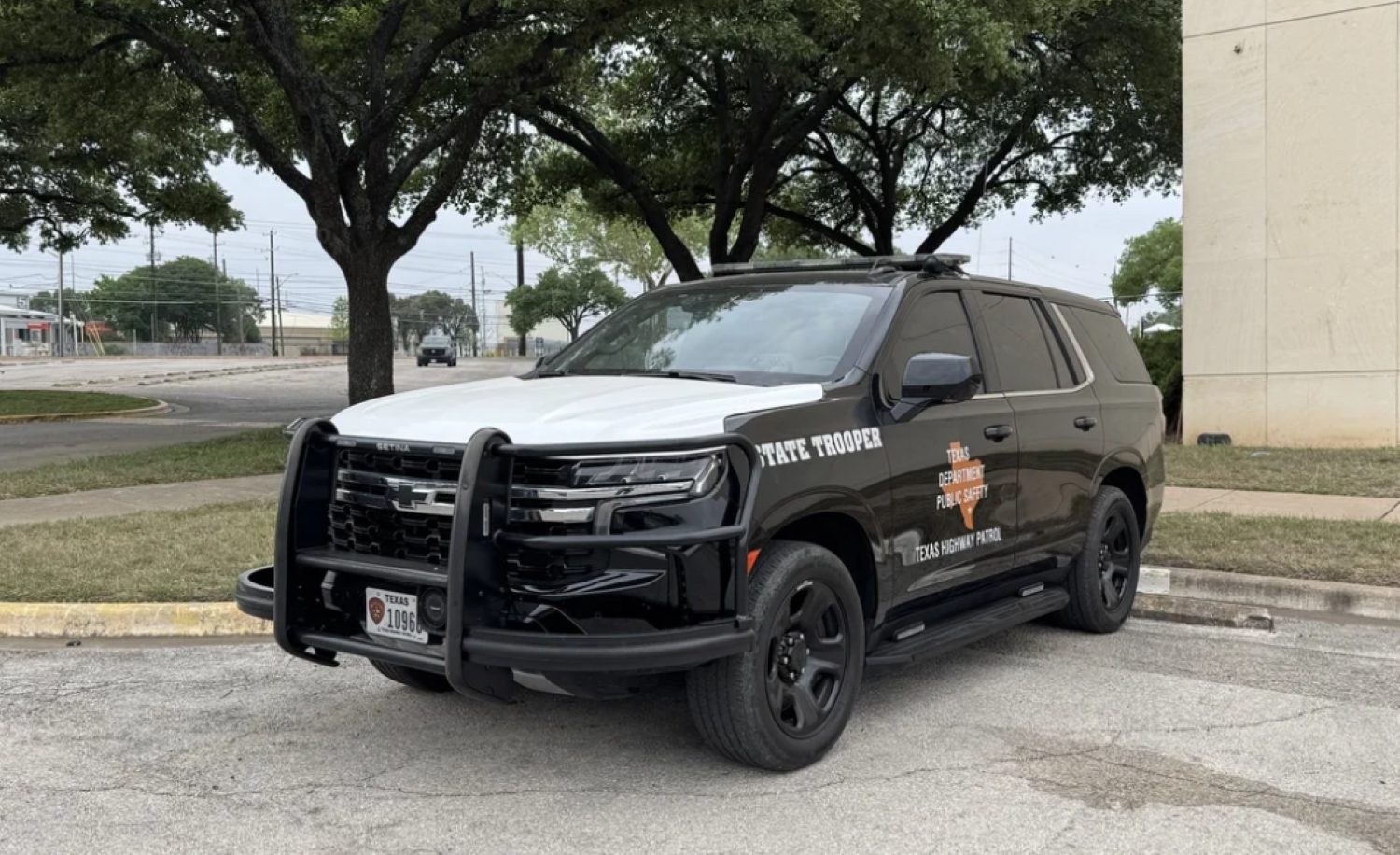
A Tahoe rolls down a Texas highway — cargo box on the roof, a couple of small antennas, indistinguishable from any other law enforcement SUV. It may be running Cognyte’s FalcoNet, a cellular interception platform capable of silently tracking and intercepting signals from every phone in range, across 2G through 5G networks. In March 2026, the Texas Department of Public Safety purchased four of these setups for $4,487,500, according to procurement documents first reported by The Drive. The Tahoes themselves cost $600,000. The other $3.9 million bought what’s inside them.
Where the Money Actually Went
The SUVs are the cheap part — most of the budget funds Israeli-made surveillance hardware and software licenses.
| Item | Cost |
|---|---|
| Four FalcoNet Core Systems | $2,850,000 |
| Delta 5G perpetual licenses | $280,000 |
| Portable backpack interception units | $355,500 |
| “Flexable” antenna kit | $27,000 |
| Four 2026 Chevrolet Tahoe Police Pursuit Vehicles | $600,000 |
Each unit runs six base station instances simultaneously across four cellular generations. The “Flexable” antenna kit is misspelled exactly like that in the purchase order. The four Tahoes come out to roughly $150,000 each — and if you’ve ever wondered what a car really costs when you factor in all the hardware packed inside, these vehicles make the question concrete.
The DPS memo justifying the purchase warned of “unacceptable safety risks” and threats to “operational readiness” if procurement was delayed. It named no specific threat or scenario — just a string of urgent-sounding phrases doing the heavy lifting where actual justification should be.
The SUV That Thinks It’s a Cell Tower
FalcoNet is what happens when cell-site simulators go to the gym, learn to speak 5G, and fit inside a backpack.
Made by Israeli firm Cognyte, FalcoNet uses Software Defined Radio to mimic cellular base stations and intercept connections between phones and nearby towers. Think of the Stingray controversies from the early 2010s — except FalcoNet covers every cellular generation simultaneously. Backpack units let agents intercept on foot outside the vehicle, extending coverage well beyond the SUV itself.
GM built the Police Pursuit Tahoe with a 250-amp alternator and secondary battery, engineered to power exactly this kind of high-draw electronics. From the outside, antennas hide behind false raised roofs or puck-style mounts. A driver in the next lane would have no idea their phone just got scanned. This isn’t Black Mirror — it’s a Chevy Tahoe on a public road.
A Pattern, Not a One-Off
FalcoNet fits into a broader DPS surveillance expansion that the Texas Legislature explicitly funded and planned in advance.
This purchase slots into Texas DPS’s growing surveillance stack under Operation Lone Star — a toolkit that already includes:
- Clearview AI facial recognition
- PenLink’s Tangles for communications analysis
- Statewide license plate readers
According to the Texas Observer, the Legislature specifically funded “four cellular tracking vehicles.” This wasn’t improvised. Florida’s FDLE made a comparable Cognyte purchase worth $793,000 for aviation-mounted systems, suggesting a wider pattern of agencies secretly tracking users with minimal public scrutiny.
Federal case law adds a sharp legal edge to all of this. Chatrie v. United States holds that even short-term, detailed location tracking can constitute a Fourth Amendment search requiring legal safeguards. Texas DPS bought four mobile platforms capable of doing exactly that — and labeled the whole thing an emergency. The courts may eventually see it differently.