The claims have spread online with the urgency of a group chat gone nuclear. But before getting into the alleged demolition derby, here’s what these cameras actually do — and why people have strong feelings about them either way.
What Flock Cameras Actually Do
These aren’t speed traps or red-light cameras — they’re passive data collectors feeding law enforcement databases around the clock.
Flock Safety cameras capture still images of passing vehicles and their license plates, then route that data to police for investigative use. No pull-overs. No tickets. A vehicle simply gets logged, cataloged, and stored. The system operates continuously in public spaces, building a searchable record of vehicle movements that law enforcement can query when investigating crimes or locating wanted vehicles.
This technology has already triggered backlash elsewhere. In a North Carolina town, damaged Flock cameras sparked heated community debate over whether the surveillance benefit justified the privacy cost, according to reporting from ABC affiliate WLOS.
Key verified details:
- Flock cameras capture still vehicle images and license plate data
- Law enforcement agencies and municipalities deploy them for public-safety investigations
- Community resistance previously surfaced in North Carolina after cameras were damaged
- Details of the Ohio incident — including the specific town, number of cameras destroyed, and whether any arrests or charges followed — remain unconfirmed from available sources
- Flock Safety maintains the technology helps solve crimes and improve public safety
When Resistance Goes Physical
Social media claims describe trucks ramming camera poles and individuals using bats — but verified details remain scarce.
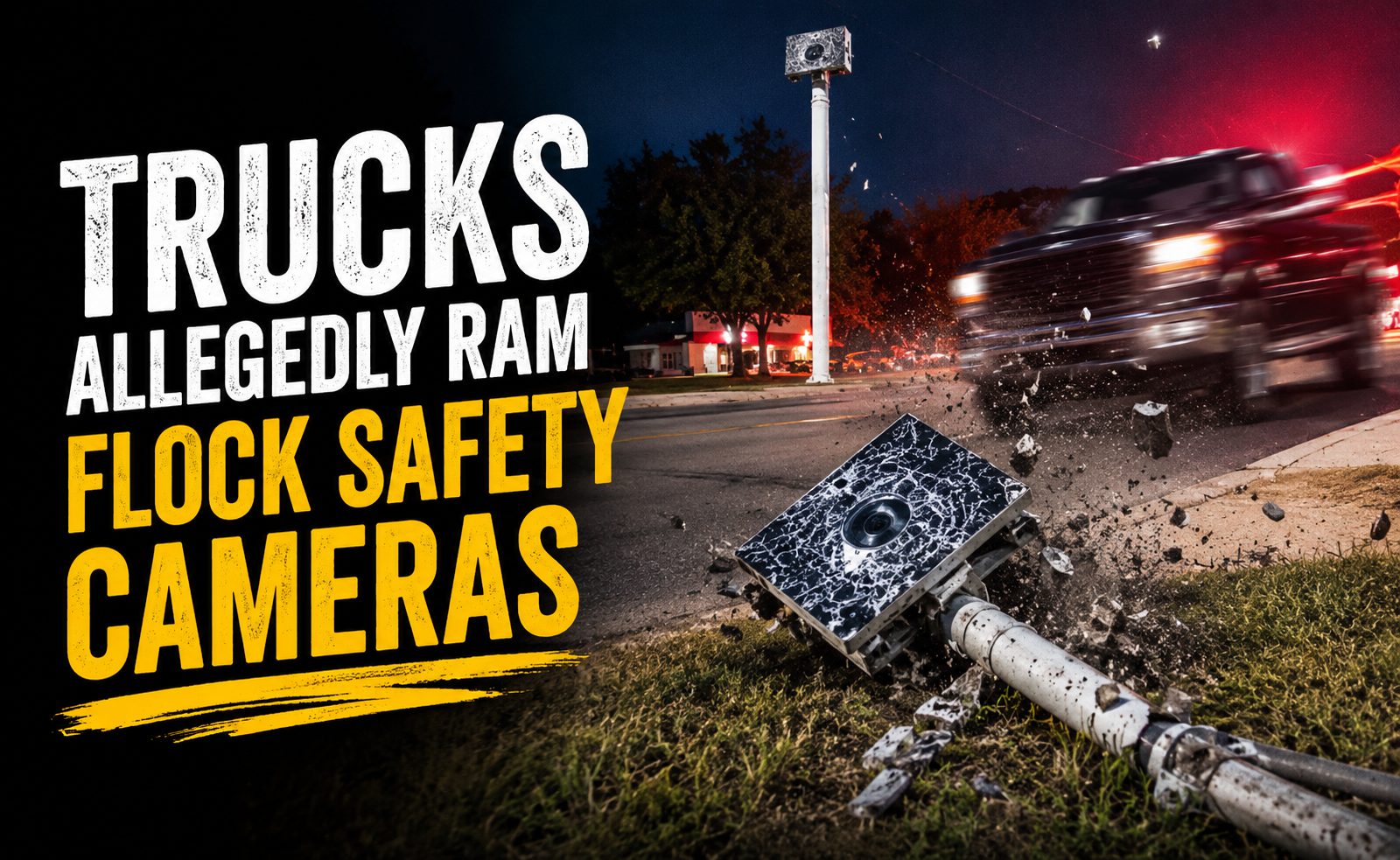
Unverified social media reports allege that truck drivers intentionally rammed poles supporting Flock cameras, and that individuals on foot reportedly used bats to smash the devices. None of these claims have been independently confirmed through police reports or official statements. No verified response from Flock Safety has surfaced in confirmed reporting either.
Whether this represents an isolated incident or something broader is genuinely unclear. Surveillance cameras have been multiplying across American towns like Ring doorbell notifications on a Friday night — and the tension between security and privacy was always going to produce friction. The question was never if communities would push back. It was when.
The harder question doesn’t live in Ohio. Residents in towns across the country never voted on these cameras, yet the devices may already be logging daily commutes and feeding databases that remain invisible to the public. That conversation isn’t over. It’s barely started.