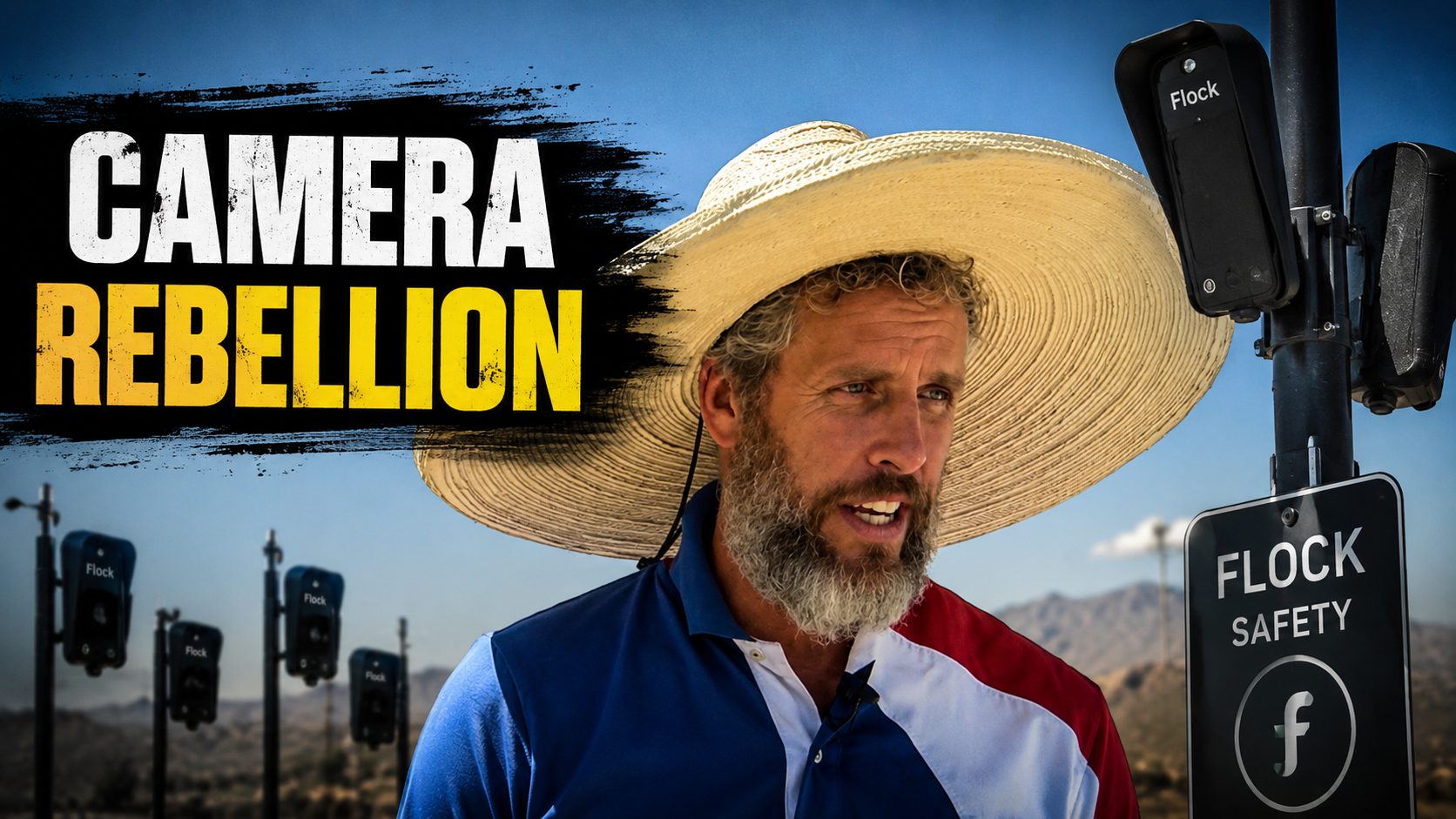
Standing before a judge on vandalism charges, a New Mexico man delivered the kind of courtroom moment that belongs in a city council meeting gone viral. Asked whether he intended to stop dismantling Flock Safety license plate reader cameras, his answer was blunt: “Absolutely.” He wasn’t agreeing to quit. He was confirming he’d keep going. The cameras, he declared, are “a clear threat to public safety.” Police say he replaced the devices with a sign reading “You’re welcome, Republic of New Mexico”—framing destruction as civic duty. Critics of such technology have drawn comparisons to a surveillance app built to target political dissidents, raising broader questions about how tracking tools get deployed.
What These Cameras Actually Capture
Every car that passes a Flock camera gets photographed, cataloged, and stored in the cloud.
Flock’s ALPR devices snap a photo of every vehicle that rolls by. The system reads your plate, then builds a “vehicle fingerprint”—make, color, type, even distinguishing features like bumper stickers or roof racks, according to reporting by the Tri-City Record. Data sits encrypted in the cloud for roughly 30 days before deletion, unless law enforcement preserves it for a case. No facial recognition. Some jurisdictions capture only rear plates. Police frame this as crime-solving infrastructure, not surveillance of your morning commute.
Civil liberties advocates see it differently. Without strict retention caps and warrant requirements, a network of these cameras can reconstruct your travel history across weeks—not unlike systems that have been caught secretly tracking users at regular intervals. The power isn’t in any single photo—it’s in the pattern those photos reveal over time. Privacy advocates, including analysts cited in critical reviews of ALPR systems, recommend:
- Limiting storage to 15 to 30 days maximum as a baseline protection
- Requiring a judge-signed warrant before outside agencies can access local data
A Pattern Emerging Across State Lines
From Virginia to New York, people are physically dismantling ALPR infrastructure—and facing felony charges for it.
This man isn’t operating in isolation. In Virginia, Jeffrey Scott Sovern, a 41-year-old engineer, pleaded not guilty to 13 felony charges for allegedly dismantling Flock cameras over several months. A Suffolk County man faces charges for destroying 13 more. What looked like isolated frustration is starting to resemble a decentralized resistance movement against ALPR hardware.
New Mexico’s legislative response is SB40, the Driver Privacy and Safety Act. It bars agencies from sharing ALPR data for:
- Immigration enforcement
- Healthcare prosecutions
- Targeting constitutionally protected speech and assembly
Out-of-state agencies must sign a written pledge before accessing local data. Annual reporting to the Department of Public Safety is mandatory. What SB40 notably omits: any required data retention limit. Flock’s 30-day default remains company policy, not law—a distinction privacy advocates say matters enormously.
The cameras will be replaced. The man will face consequences. But the question he’s forcing into public view—whether pervasive license plate tracking fits inside a free society—won’t be settled in a New Mexico courtroom. Legislatures and courts are barely getting started.