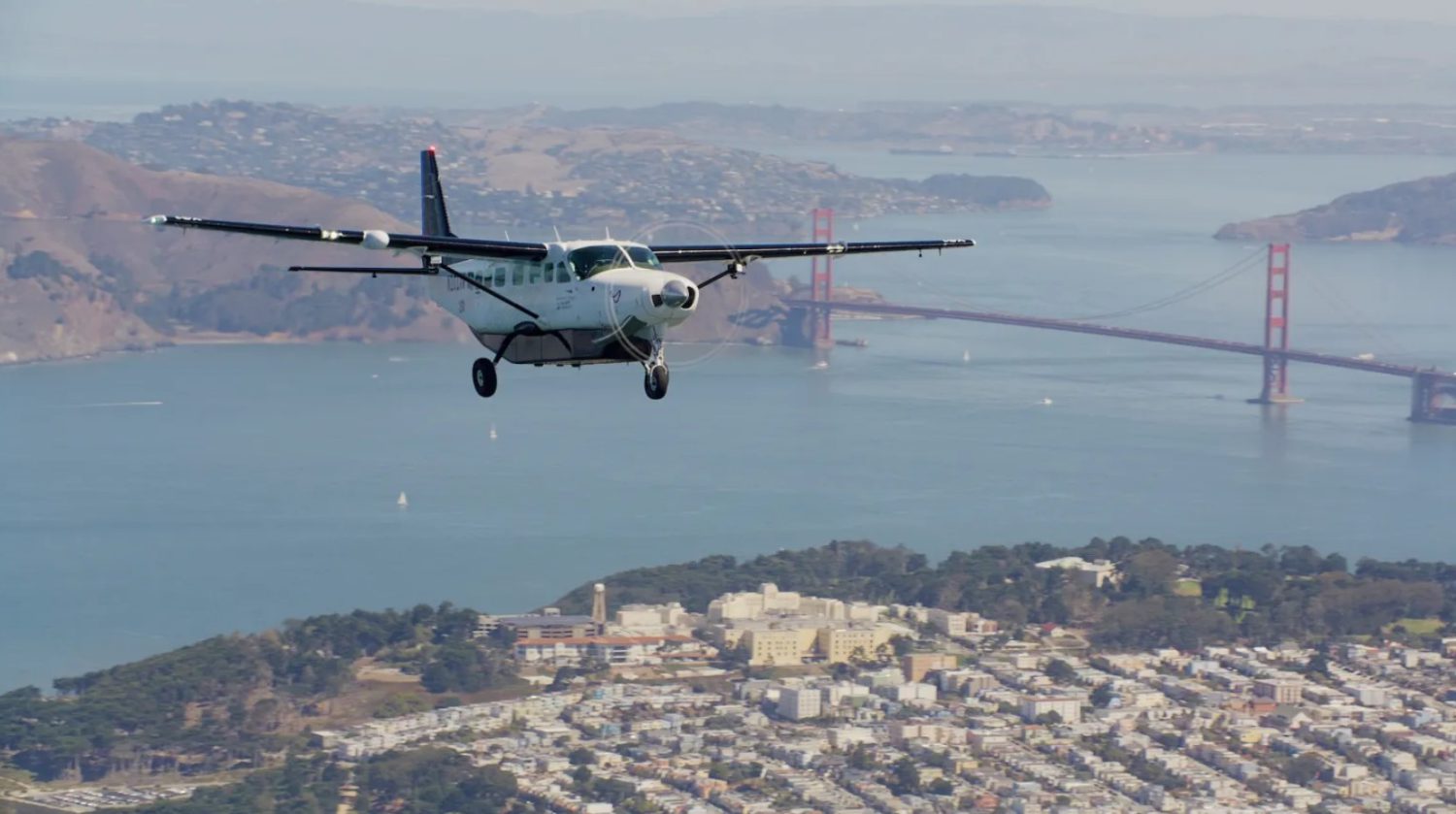
In September 2026, a converted Cessna Caravan flew from Concord, California, to the Outer Banks of North Carolina, covering 3,199 miles without the onboard safety pilot making a single control input. Joby Aviation, which operates the aircraft under the designation J208, described it as the first fully autonomous flight across the United States. A safety pilot was present throughout. Remote teams supervised the mission from Joby facilities in California and Shaw Air Force Base in South Carolina, operating from as far as 2,323 miles away. For context on how driverless Tesla robotaxi technology has been advancing in parallel, the same questions of remote supervision and autonomy apply.
What the Autonomous System Actually Did
The system handled every phase of flight, not just the easy parts at cruise altitude.
The autonomous system managed ground taxiing and takeoffs, route navigation and in-flight course changes, rerouting around thunderstorms and severe weather, landings at multiple airports including Fort Worth Alliance in Texas and Shaw Air Force Base in South Carolina, and operations around live traffic near Phoenix Deer Valley Airport. That last item carries real weight. Navigating around active general-aviation traffic is operationally harder than following a preprogrammed cruise-altitude route, and that distinction is what separates a capable autonomous system from a sophisticated autopilot.
According to Joby Aviation, the aircraft managed those interactions without onboard pilot intervention. Commercial airliners already automate functions such as maintaining altitude, heading, and stability, and some systems assist with landing. Joby’s demonstration is distinct because autonomy covered the full mission, including surface movement and airport procedures, rather than serving only as an in-flight assistance feature.
Why Joby Chose This Route and This Aircraft
The Cessna Caravan is no accident; it already does exactly what Joby wants autonomy to do next.
The Caravan is widely used in cargo, utility, and remote-community aviation, which makes it a logical fit for Joby’s stated ambitions. CEO JoeBen Bevirt said the goal is to “connect remote communities, deliver critical supplies, respond faster to disasters, support military operations, and keep pilots out of harm’s way.” Those use cases align closely with what Caravans already do in places where commercial aviation rarely reaches.
Joby ended the eastbound leg with a low pass near the First Flight Monument in North Carolina’s Outer Banks, close to the site of the Wright brothers’ 1903 powered flight. The symbolic endpoint links autonomous aviation to the earliest chapter of powered flight.
A Milestone With Limits
What this demonstration established is real; what it did not establish matters just as much.
This was a supervised company demonstration, not a regulatory green light for pilotless commercial operations. Commercial deployment would require separate FAA certification. That process covers aircraft approval, detect-and-avoid systems, communications infrastructure, cybersecurity, liability frameworks, and emergency procedures.
The safety pilot’s presence and the remote supervision teams were structural to how the test was conducted, not incidental details. Autonomous aviation has also existed in military and experimental contexts for years: Piasecki Aircraft and Carnegie Mellon University demonstrated a self-piloted helicopter in 2010, according to Gizmodo. Joby’s achievement is significant in scale and operational complexity, but it builds on a foundation developed over decades , much like supersonic flight research has incrementally advanced over generations.
Joby planned a westbound return journey with stops in Washington D.C., Kentucky, Kansas, Oklahoma, Utah, and Oregon, according to Aerospace Global News. Repeatability across varied airspace and airport environments will tell observers more than a single crossing can. As Bevirt put it: “Autonomy has an important role to play in the future of flight.”