iFixit’s teardown characterized the Apple HomeView as a significant step backward for repairability. Components sustained damage at multiple major stages of disassembly, according to iFixit.
Adhesive at Every Turn
The trouble starts at the display. HomeView’s seven-inch Liquid Retina panel is bonded to the aluminum enclosure with exceptionally strong adhesive. The aluminum chassis disperses heat too quickly for prolonged heating to soften it consistently, according to the teardown.
Because the display must be removed before the rest of the device can be accessed, a failure at that first step puts downstream components at risk.
The damage documented during the teardown was not minor. A connector ripped, a speaker snapped in two during removal, and speaker cables were damaged during disconnection.
iFixit reported that technicians applied more force to the logic board than they considered safe.
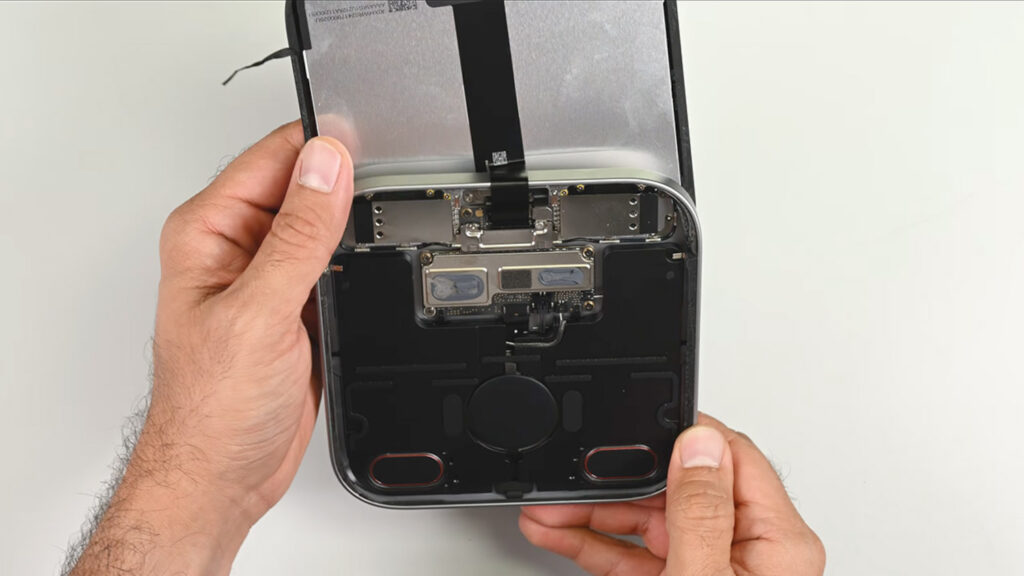
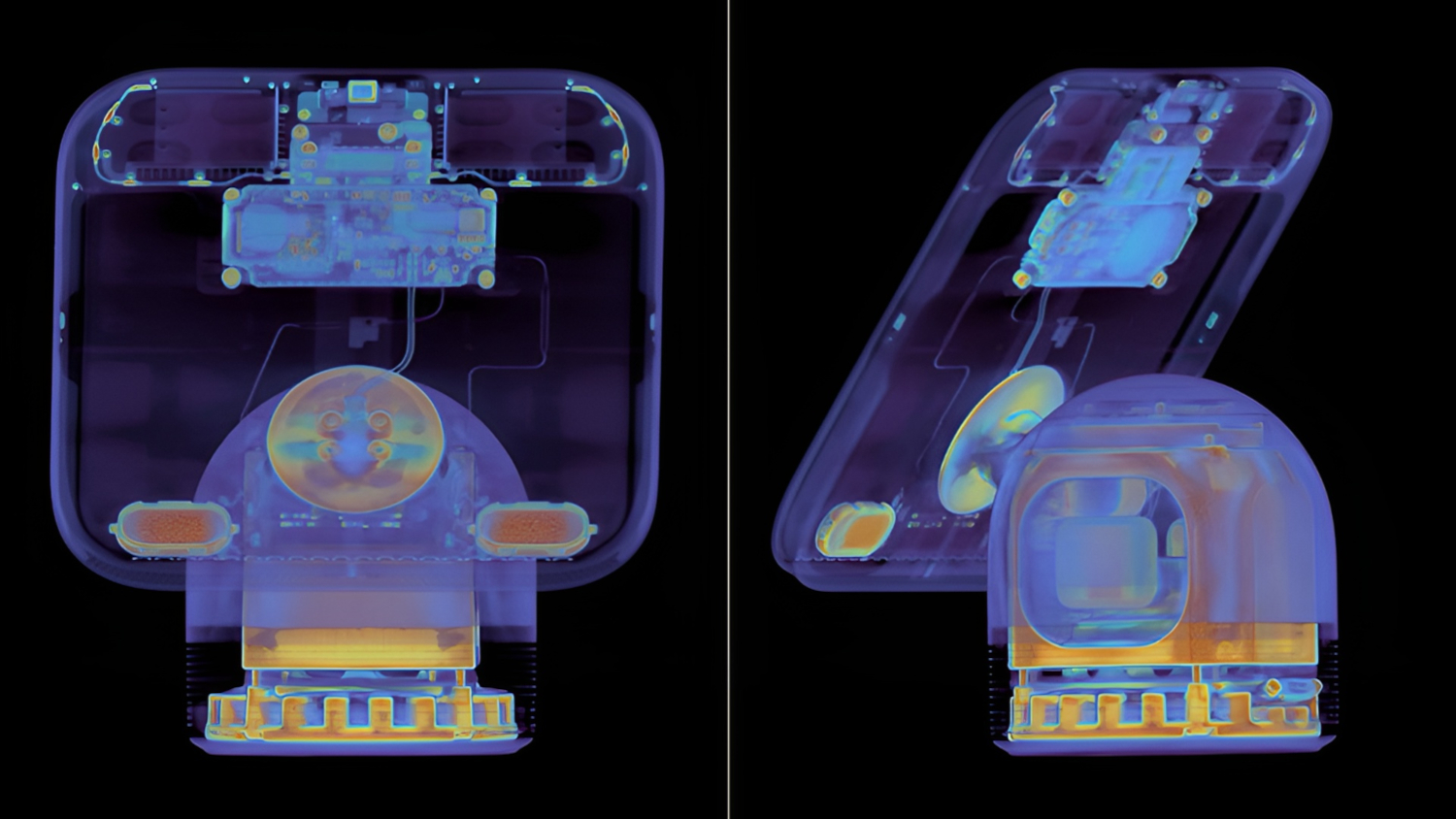
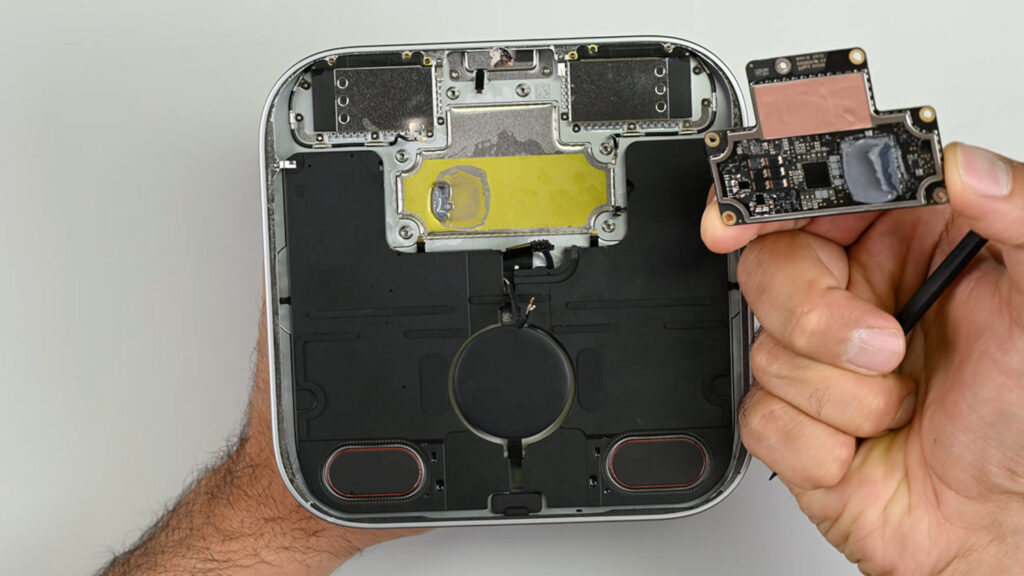
Large speaker assemblies occupy most of the space behind the display, pushing the logic board deeper into the enclosure. A heat shield beneath the board connects it to the aluminum chassis, effectively using the casing as a thermal sink.
The teardown found adhesive securing the display, speaker assemblies, antennas, speaker cables, and that heat shield. A mix of Phillips and Torx screws in multiple sizes adds tool complexity, though the teardown suggests adhesive is the larger obstacle.
What the Logic Board Reveals
HomeView runs on an Apple A18 chip paired with 8GB of SK hynix LPDDR5X memory and 64GB of Kioxia NAND storage. The memory and storage are soldered to the board, which rules out upgrades.
Two components offer genuine repair access. The USB-C port is modular and replaceable, and the two passive speakers in the base can be removed independently. Those exceptions apply to the base section; the display side is considerably more difficult.
Design Priorities and Their Costs
The aluminum enclosure functions as a heat sink, and the adhesive supports structural rigidity and acoustic performance. These are plausible engineering reasons for the construction, but the teardown suggests adhesive appears across most critical service paths. Damage during one early step can block access to components further in.
The tabletop and wall-mounted versions use different internal designs and are not interchangeable. The wall-mounted model uses a larger logic board; the tabletop version allocates more internal space to its speaker assembly and pivoting mount.
Who Should Pay Attention
Buyers planning long ownership, or those who prefer local repair shops over Apple’s service channel, have the most to consider. Screen repairs, speaker replacements, and logic-board service will likely require specialized heating tools, replacement adhesive, and significant disassembly experience, based on the teardown findings.
The teardown suggests those improvements did not carry into HomeView’s display-and-speaker architecture. A well-featured $299 hub deserves a service story to match.