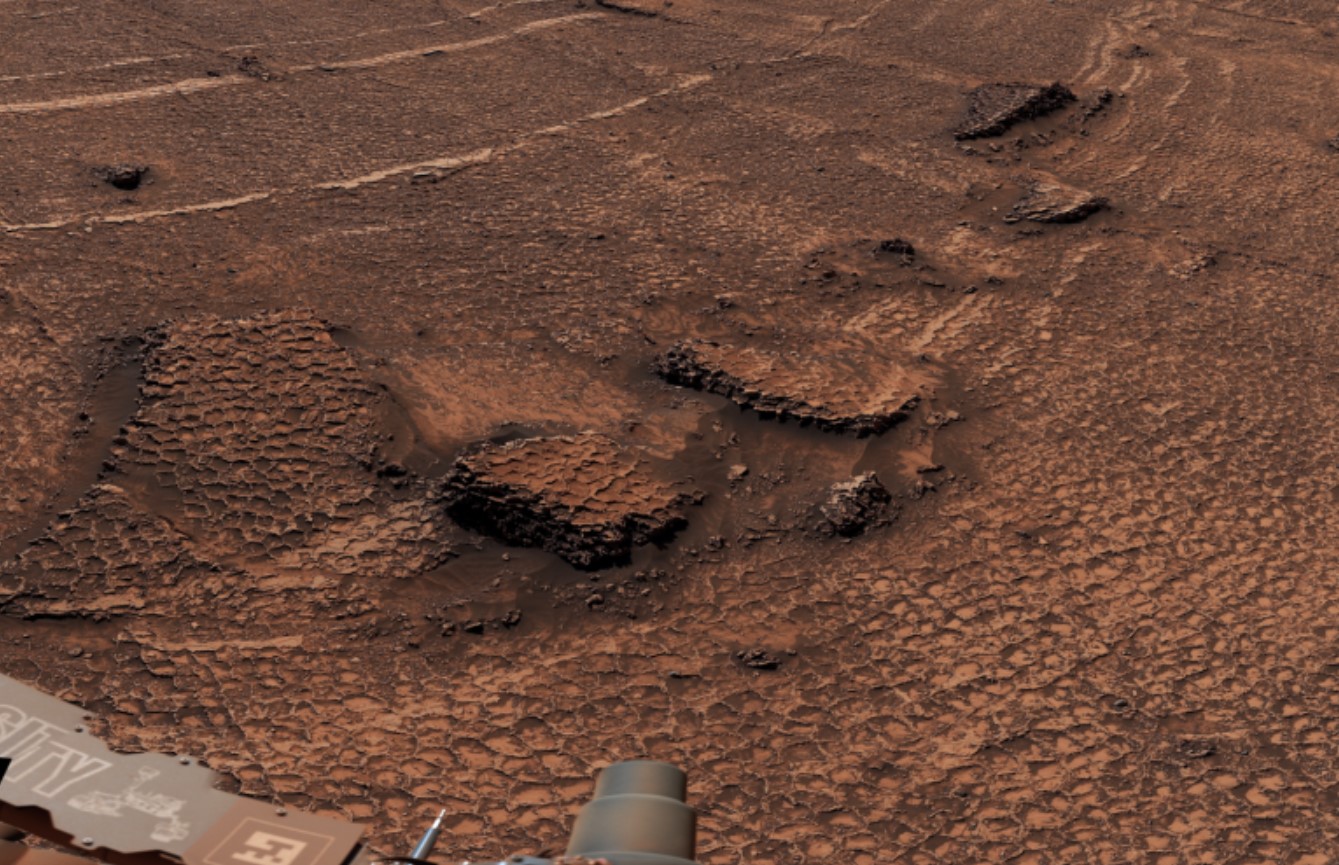
Think Google Street View, but on Mars and stitched from 340 individual photos. That’s roughly what NASA’s Curiosity rover produced on June 19 and 20, 2026, from a valley nicknamed Valle Grande inside Gale Crater. The result stopped the science team cold. Stretching as far as Curiosity’s Mast Camera could see: a plain of polygonal fractures, each roughly 1.5 to 3 inches wide, tiling the ground like a bathroom floor mosaic designed by geology itself.
“It took our breath away,” said NASA scientist Ashwin Vasavada, according to the agency’s reporting. The team measured both the shapes and their chemistry, hunting for formation clues.
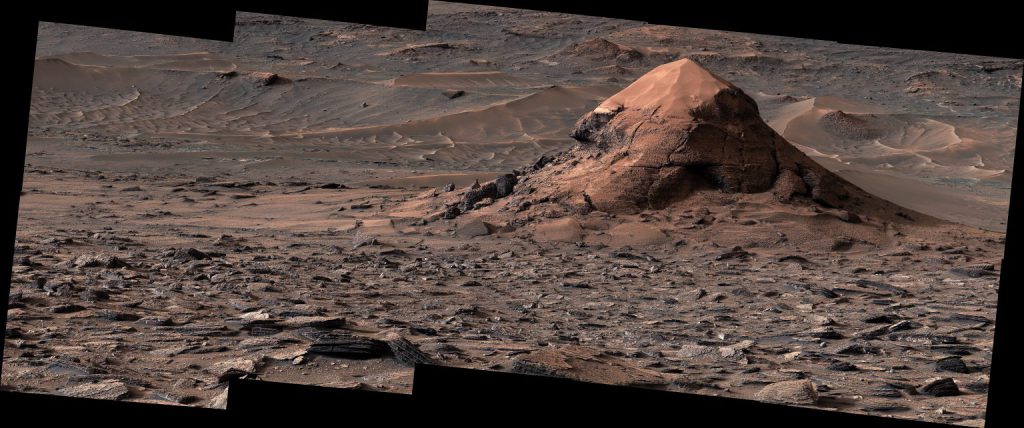
The pattern wraps around a sand-topped butte called Miraflores, standing about 20 feet tall. The 340-image panorama, taken June 19–20, 2026, shows polygons ranging from 1.5 to 3 inches (4–8 cm) wide encircling the roughly 20-foot butte — the densest concentration of such features Curiosity has documented in a single location. Formation mechanism remains unconfirmed.
What Made These Shapes – And Why It Matters
Two competing hypotheses could reshape what scientists understand about Mars’s wet past.
The leading explanations split into two camps:
- Mud cracks — remnants of repeated wet-dry cycles, like a lakebed baking under a vanished sun.
- Burial and compaction — pressure squeezed water from ancient sediment, fracturing the rock as pressure shifted.
Neither explanation has been confirmed yet.
That uncertainty is the whole point.
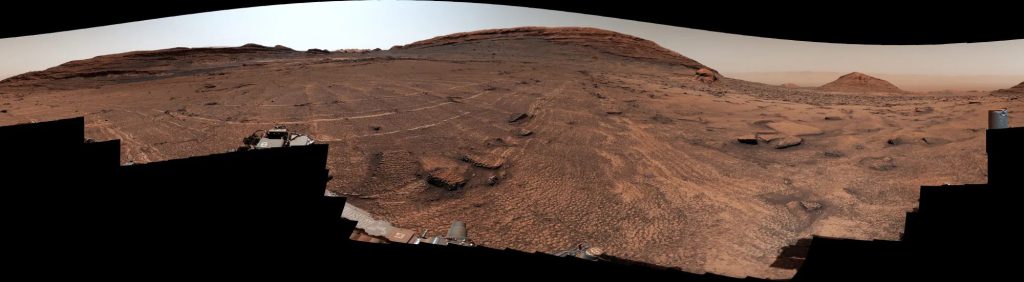
Polygonal terrain can lock in environmental conditions from the moment it formed. If scientists crack the chemistry, these fractures could reveal whether Valle Grande was once a lakebed, a stream-fed plain, or buried wet sediment — and that reconstruction is the scientific prize. Earlier in 2026, Curiosity also detected more than 20 organic molecules in nearby lost civilization-scale questions about ancient environments: clay-rich sandstones that are not proof of life, but evidence that Mars once had potentially life-supporting chemistry.
Mars has long been described as a dead rock, but Curiosity keeps finding receipts suggesting otherwise. The rover’s analysis of these fractures continues, and the formation story remains an open case. The answer, locked inside those tiny hexagons, may be worth the wait.