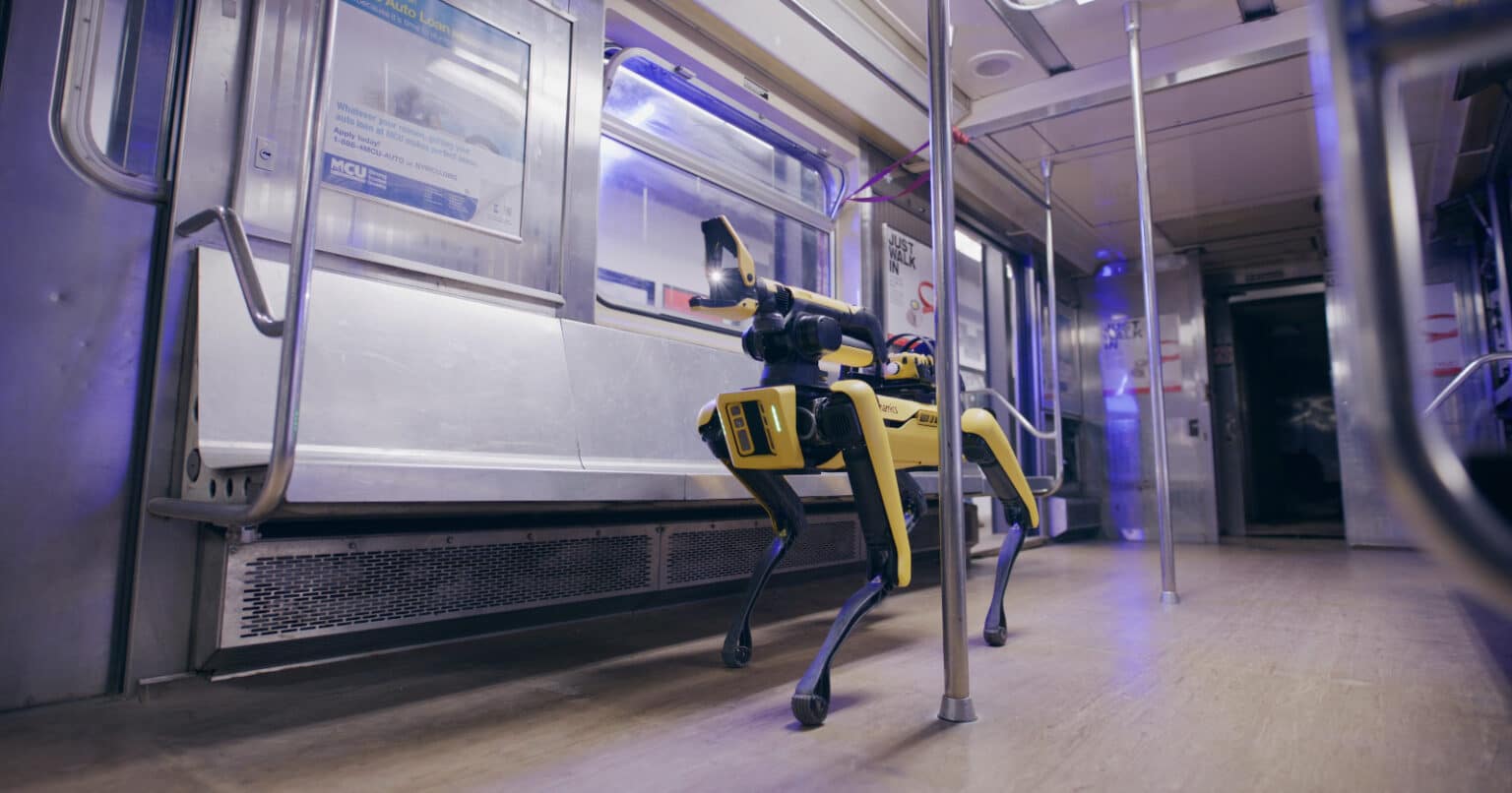
Whether it is a tunnel, a fire-damaged building, or a space too confined for a human body, ICE feels they need something to venture into these places. According to the DHS announcement, that’s precisely where Spot is supposed to go instead of an officer. The agency said ICE “has a requirement” for remotely operated robots capable of “inspection, situational awareness, and hazard assessment” in dangerous, confined, unstable, or hard-to-access environments. The budget sits between $1 million and $2 million for Spot units and accessories. At roughly $75,000 per robot, that figure likely puts multiple units in the field — not just a single prototype gathering dust in a storage room — a trend also visible in the market for the humanoid robot sector, where high unit costs have not slowed procurement momentum.
Boston Dynamics confirmed that public-safety customers already deploy Spot for:
- hazardous gas detection
- unexploded ordnance inspection
- suspicious package investigation
- search and rescue
- subterranean exploration
- post-fire structural assessments
The company also stated the robot is designed to “keep people out of harm’s way.” It made equally clear that weaponization is strictly prohibited under its terms and ethical principles — pointing to an open letter against weaponization it co-signed with other robotics firms as evidence the policy carries teeth.
The Robot Dog’s Complicated Resume
Spot’s public-safety track record is legitimate — but the platform’s policing history includes at least one high-profile retreat.
The same robot you’ve watched do synchronized dances has now landed in a federal law-enforcement budget. That tonal whiplash is worth sitting with. Spot’s public image is genuinely split. LAPD used one to remotely handle imitation firearms. NYPD signed a contract, then cancelled it after public backlash became untenable. Same platform. Two very different outcomes.
The ICE purchase doesn’t exist in isolation. Running parallel to it is a separate $16.7 million DHS contract with Compliant Technologies for 6,000 pairs of electric shock gloves — officially described as a “Conductive Distraction and De-escalation Device.” Taken together, these contracts signal a sustained, systematic push toward new field technology across enforcement operations, not a one-off equipment upgrade. Civil-liberties organizations and robotics-policy researchers have consistently raised questions about accountability frameworks when agencies deploy autonomous or remote-operated platforms — concerns echoed in reporting on a surveillance app built to target political dissidents — and no such framework is publicly outlined in the DHS announcement.
If this Spot procurement clears without the public pressure that ended NYPD’s contract, it establishes something meaningful: robot-assisted federal enforcement, normalized and potentially scaled across agencies already watching how this plays out.