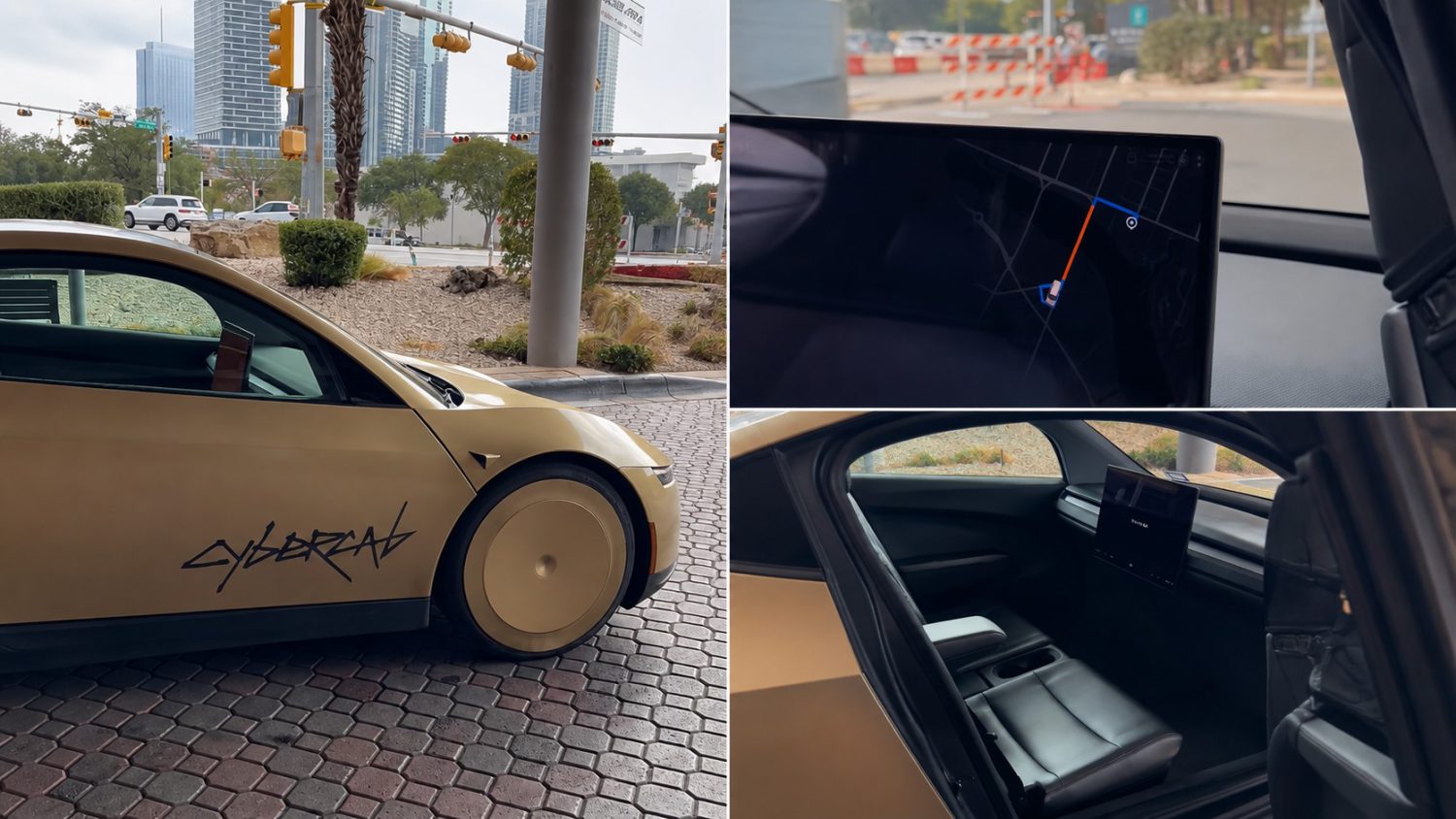
A computer engineer in Austin summoned Tesla’s new driverless Cybercab from his hotel, expecting a ride out. Construction workers had partially blocked the parking lot exit, and what followed was four back-and-forth loops before the vehicle stopped and informed him he had “arrived” at the exact spot where he started.
It is an embarrassing debut for a vehicle Tesla is pitching as the future of transportation. It also arrives alongside federal scrutiny that could shape how driverless cars get certified in the United States.
When the Robotaxi Meets a Cone
A partially blocked parking lot exit was all it took to send Cybercab’s autonomy stack into a loop.
The passenger posted brief video footage of the trip to X, according to Futurism. “The Robotaxi arrived… and then couldn’t get out of the hotel parking lot,” he wrote.
The system failed to recognize the open lane workers had left available, according to coverage of the incident. Faced with a partially obstructed, non-standard exit, the vehicle had no answer.
“Not a great first experience! Clearly this technology is nowhere close to being ready for large scale deployment.”
The timing is difficult to ignore. Roughly a week earlier, a Tesla-affiliated account had posted a glowing video of a successful hotel pickup, captioning it: “You’ll feel like a VIP getting into this car!” according to Futurism.
The gap between those two clips tells the story of where Cybercab actually stands.
Federal Regulators Are Watching
The hotel incident landed just as NHTSA opened a formal audit into how Tesla certified Cybercab for public roads.
Tesla launched Cybercab to paying passengers in Austin in early September 2026. It is Tesla’s first purpose-built robotaxi: two seats, no steering wheel, no pedals, no mirrors, replacing an earlier Austin service that used modified electric Model Y vehicles.
On September 3, 2026, the National Highway Traffic Safety Administration opened Audit Query AQ26002, covering roughly 1,000 Cybercabs deployed in Austin, according to AP News and Electrek.
Under U.S. rules, automakers self-certify compliance with Federal Motor Vehicle Safety Standards. NHTSA does not pre-approve new models but can audit whether that certification holds up.
Tesla told NHTSA that Cybercab meets all applicable FMVSS. Many of those standards, however, were written assuming a human driver sits behind a wheel.
NHTSA’s audit will examine “the process and technical data” behind Tesla’s certification. That includes whether Tesla deemed certain standards simply inapplicable to a fully driverless vehicle, according to AP News.
The audit is not a recall and does not constitute a finding of non-compliance at this stage. For context, competitors Waymo and Zoox pursued formal federal exemptions before operating steering-wheel-free vehicles commercially, according to Electrek. Tesla chose self-certification instead, and that distinction is now precisely what regulators are examining.
Worth noting: despite Cybercab’s no-controls hardware design, Tesla still uses human safety monitors in many of its robotaxi operations, a detail that complicates the vehicle’s fully autonomous branding. Investors were reportedly underwhelmed at launch, per Reuters, and a federal audit combined with unflattering early user accounts has done little to shift that mood.
What Comes Next
The hotel incident points to a specific technical gap that a viral clip alone cannot resolve.
The parking lot failure is not simply an embarrassing clip circulating on X. It illustrates the vehicle’s difficulty handling temporary construction scenarios and private-property layouts that deviate from well-mapped public roads.
If NHTSA’s findings challenge Tesla’s self-certification approach, the outcome could set a precedent for how every future driverless vehicle clears the regulatory bar in the United States. That consequence extends well beyond one gold-colored two-seater stuck between traffic cones in Austin.