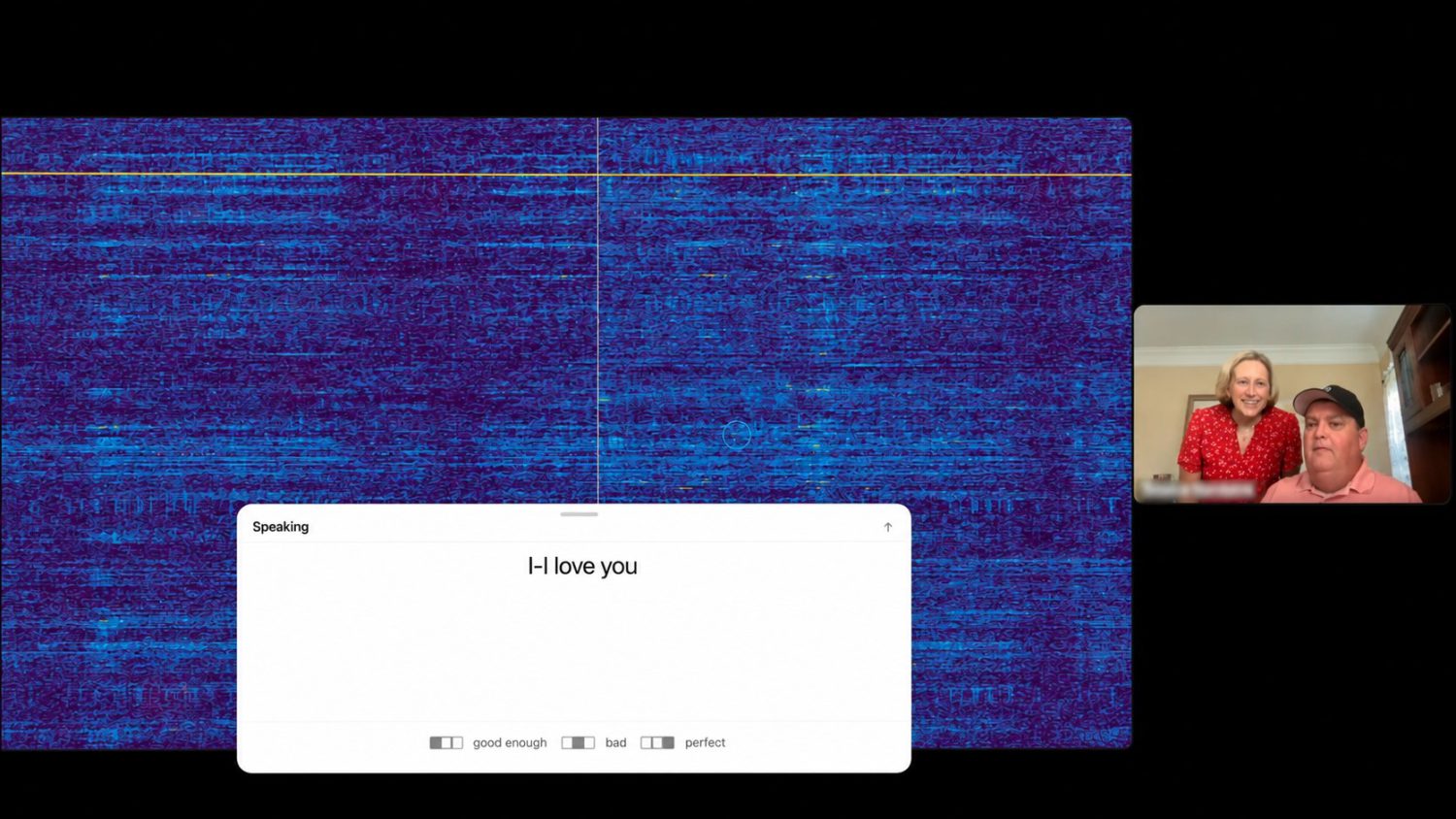
A 23-second video captioned “A beautiful surprise” circulated in mid-September 2026 and stopped people mid-scroll. A speech-impaired man, enrolled in Neuralink’s VOICE clinical trial, produced the phrase “I love you” through a synthetic voice rebuilt by AI from recordings made before he lost the ability to speak. No mouth movement. No sound from his throat. Just neural signals, a wireless implant, and words , not unlike the kind of biological breakthroughs explored in research on frozen brain tissue.
The technical milestone underneath that emotional moment deserves a clear-eyed look.
How Neuralink’s N1 VOICE System Works
The N1 implant reads intended speech directly from the brain, then reconstructs it as audible words using the participant’s own pre-illness voice.
Neuralink’s N1 implant places bundles of hair-thin electrode threads into cortical regions associated with speech planning. Those threads detect firing patterns linked to the intention to produce specific sounds, then transmit the data wirelessly to external hardware running machine-learning algorithms trained on the participant’s own neural activity. The decoder maps those patterns to phonemes, assembles them into words, and outputs either on-screen text or synthesized speech.
The voice itself is not generic. Neuralink uses pre-illness audio recordings to train a personalized text-to-speech model, reconstructing something close to how the participant originally sounded. Training progresses in stages: spoken speech first, then mouthed speech, then fully imagined speech, each step requiring less physical effort.
What the demos do not yet tell you is how reliable the system is at scale. Independent analysis notes a delay of several seconds between a participant’s intention and the audible output, and Neuralink has not published peer-reviewed accuracy or latency benchmarks for VOICE. These videos are illustrative milestones, not published clinical trial results.
The Trial, the Competition, and the Stakes
Neuralink’s wireless design sets it apart from academic lab systems, but the broader regulatory and ethical landscape remains unresolved.
Kenneth Shock received his N1 implant in January 2026, roughly a year after his ALS diagnosis began stripping away his speech. By March, he was the second VOICE trial participant to demonstrate thought-to-speech output on video. “There we go. I’m talking to you with my mind,” he said during the Neuralink VOICE demonstration, with no audible vocalization.
VOICE is registered on ClinicalTrials.gov (NCT07224256) and covers ALS, primary lateral sclerosis, stroke, and spinal cord injury. The FDA has granted Breakthrough Device Designation, which signals regulatory interest and an expedited review pathway, not approval. Neuralink’s corporate disclaimer, attached to all participant videos, states: “Neuralink devices are investigational and have not been approved by the FDA or other regulatory authorities. This video features voluntary clinical trial participants sharing their personal experiences, which may not reflect all participants or future outcomes.”
Placing Neuralink in context matters. UCSF’s Edward Chang group achieved 62 words per minute with a 50-word vocabulary as far back as 2021, later demonstrating 9.1% word error rates across a 125,000-word vocabulary. A Stanford-affiliated team reported in Cell that silently imagined sentences could be decoded in real time, with word error rates between roughly 24% and 54% depending on vocabulary size. More recently, UCSF published findings in Nature Neuroscience showing simultaneous speech and upper-body gesture decoding from a single implant in a single session.
Neuralink’s claim is not that it decodes faster or more accurately than academic labs. Its distinction is compression: packaging comparable capabilities into a fully wireless, fully implanted device designed to function outside a hospital setting, without tethered cables or external rigs.
Every invasive brain implant carries real surgical risks, including infection, bleeding, seizures, and hardware failure. Long-term electrode stability, as brain tissue shifts over time, remains an open engineering challenge.
Neural data introduces a separate layer of risk. The Australian Human Rights Commission reviewed 30 consumer neurotechnology companies and found 24 had policies permitting potential sale of users’ neural data. That review did not cover Neuralink’s clinical implants specifically, but it maps the regulatory terrain any approved BCI will eventually enter.
Ethicists argue neural data warrants new legal protections, broadly called neurorights, covering mental privacy, consent, and algorithmic transparency. Elon Musk has publicly described a long-term vision he calls “conceptual telepathy,” involving the transmission of true thoughts between people, while acknowledging it would require consent. That framing has drawn sustained attention from privacy researchers who note the distance between that vision and the legal frameworks currently in place.
For now, these trials serve a small group of volunteers with severe speech loss. The path from investigational implant to broad clinical use runs through peer-reviewed data, regulatory review, and surgical infrastructure. Unresolved questions about who owns brain-derived data run alongside all of it. Published trial results and any FDA clearance decision will tell you far more than a 23-second video, however affecting that video may be.