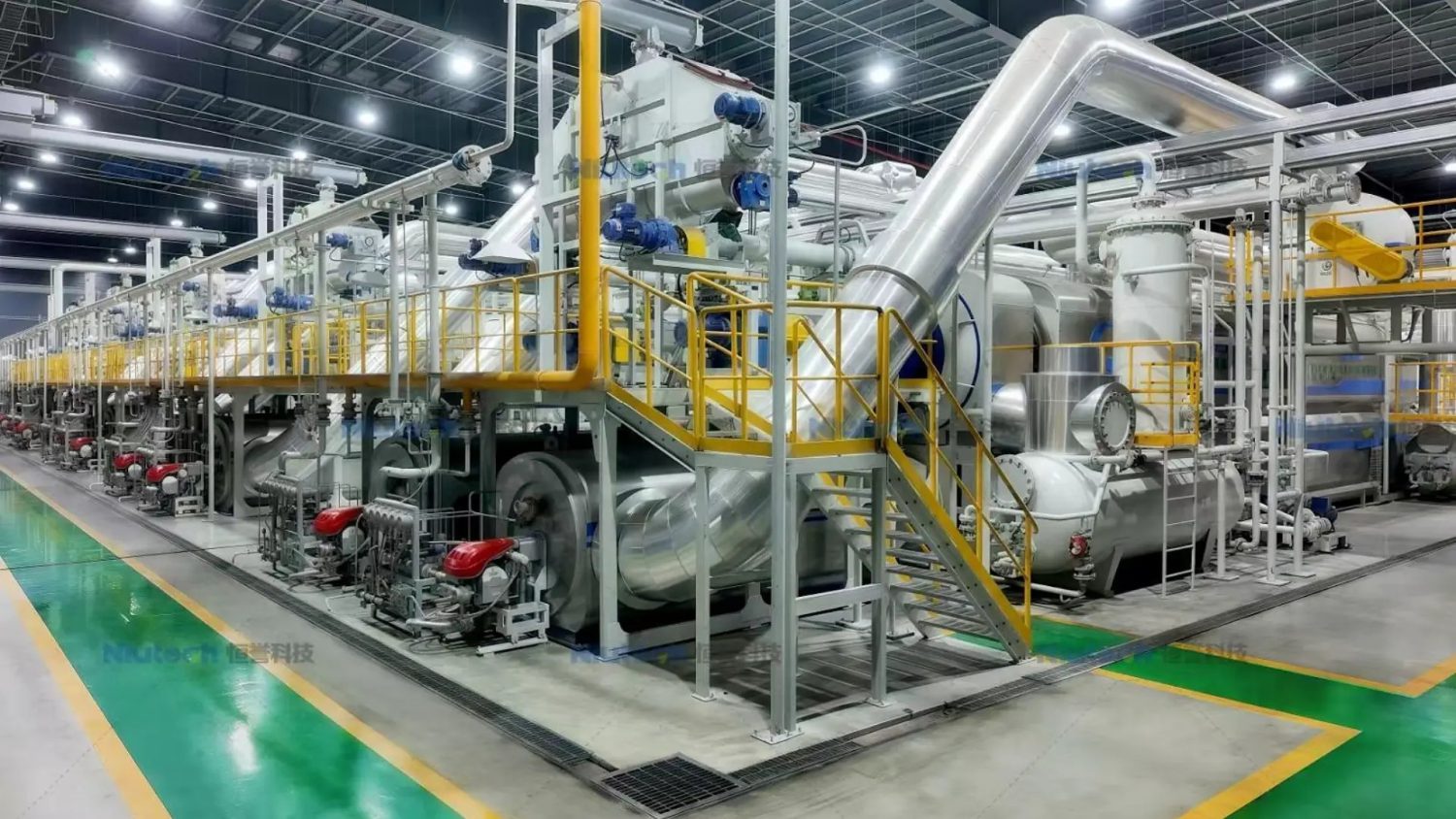
The plastic bag that held your grocery haul last week might eventually power a transatlantic flight. That’s not a marketing tagline — it’s the operational logic behind a deal signed in late August 2026 between Chinese pyrolysis firm Niutech Technology Group and an unnamed global energy major.
The agreement: supply an industrial continuous waste plastic pyrolysis production line for integration into an existing large refinery, converting mixed plastic waste into pyrolysis oil, then hydrotreat that oil into sustainable aviation fuel (SAF). The timing isn’t accidental. The EU’s ReFuelEU Aviation mandate requires 2% SAF blending at EU airports starting in 2025, climbing to 6% by 2030 and 70% by 2050. Used cooking oil — currently the dominant SAF feedstock — is already running thin.
From Landfill to Runway: What the Technology Actually Does
Refinery integration is structurally different from a standalone recycling plant — and significantly harder to pull off.
This isn’t a recycling side project bolted onto a warehouse somewhere. Niutech’s system is designed to operate continuously inside a major refinery — the kind of environment where downtime costs real money and throughput consistency isn’t optional. Here’s what the technical setup actually involves, according to Niutech’s announcement and company technical documentation:
- Single-unit processing capacity: 10,000–50,000 tonnes of waste plastic per year
- Feedstocks include polypropylene, polyethylene, polystyrene, ABS, and nylon — mixed streams, with no washing, sorting, or drying required, per Niutech’s stated specifications
- Oil yield runs roughly 43–48%; combustible gas produced in the process loops back as fuel for the system itself, making it largely self-fueling
- Pyrolysis oil feeds directly into the refinery’s existing hydrotreatment infrastructure, producing SAF blended into conventional jet fuel
- Niutech systems are already operating commercially in the UK, South Korea, Denmark, Thailand, Vietnam, and China
If the Refinery Test Holds, Every Waste Manager in the World Is Watching
A successful integration here could become the template that reshapes how low-value plastic waste enters the aviation fuel supply chain.
The regulatory pressure is real and compounding. The UK and Singapore have introduced their own SAF blending requirements alongside Europe’s mandates. Waste plastic pyrolysis is being positioned as the route that scales where used cooking oil cannot. Niutech describes it as “a promising second option” for SAF feedstock, per the company’s announcement.
But critical questions stay open. Life-cycle greenhouse gas performance for plastic-derived SAF has not been publicly detailed for this project. Certification under CORSIA or national sustainability standards remains unresolved. Contaminant handling for heavy metals, halogens, and mixed plastic additives — beyond basic PVC-related HCl treatment documented in Niutech’s technical literature — is not fully addressed in available sources.
Niutech has nearly 40 years in pyrolysis. The technology exists and has commercial deployments to show for it. Whether continuous refinery-scale operation holds up economically — and whether regulators count plastic-derived SAF toward mandatory blending targets — determines whether this deal becomes an industrial footnote or the opening move in a genuine supply chain shift. Airline fuel buyers will want that answer before 2030 arrives.