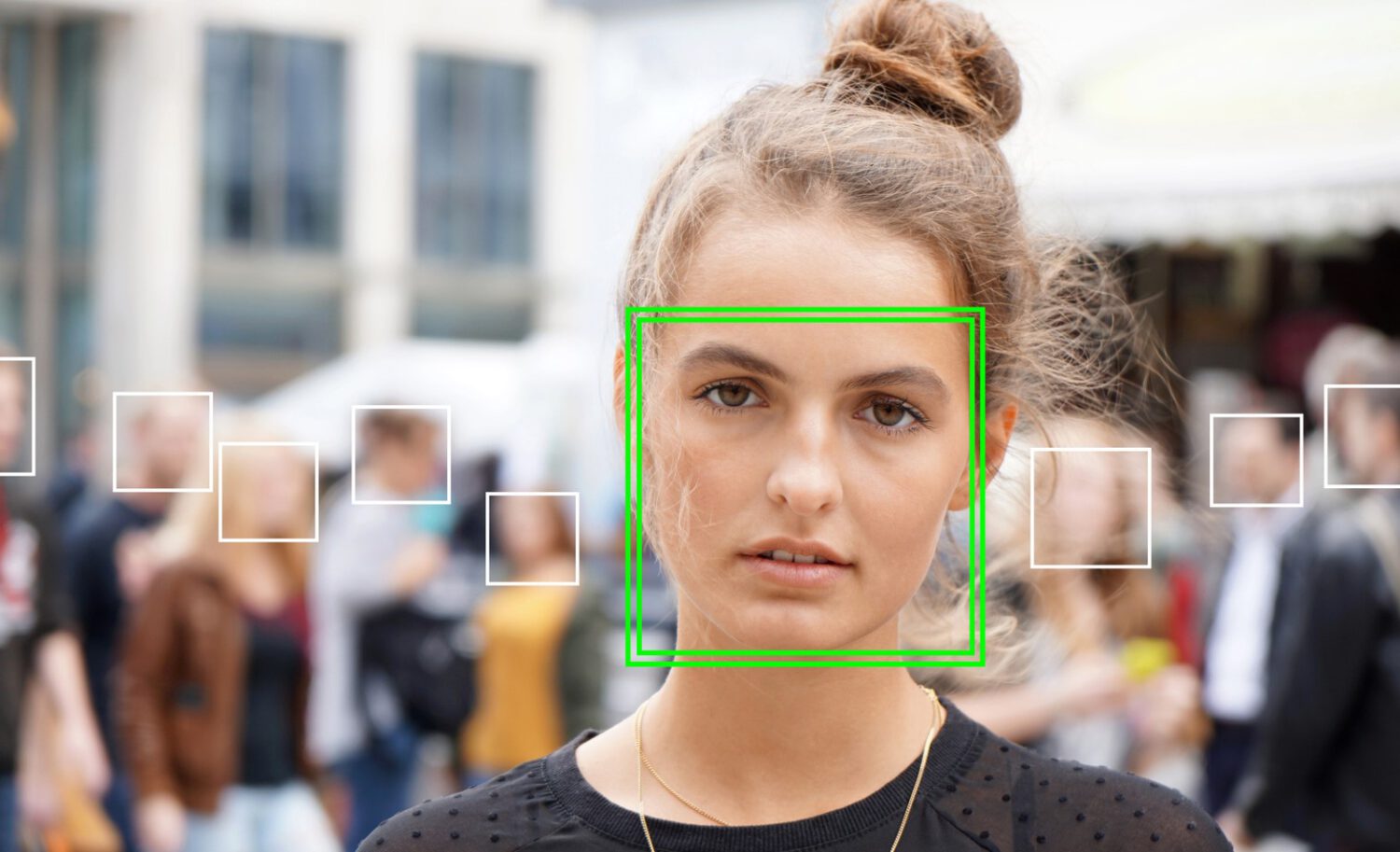
A single photograph, taken with an ordinary camera, may carry measurable information about a cancer patient’s mortality risk. That is the central claim of a study published in The Lancet Digital Health on Oct. 19, 2026, by researchers at Mass General Brigham, and both the finding and its limits deserve careful attention.
What the AI Does
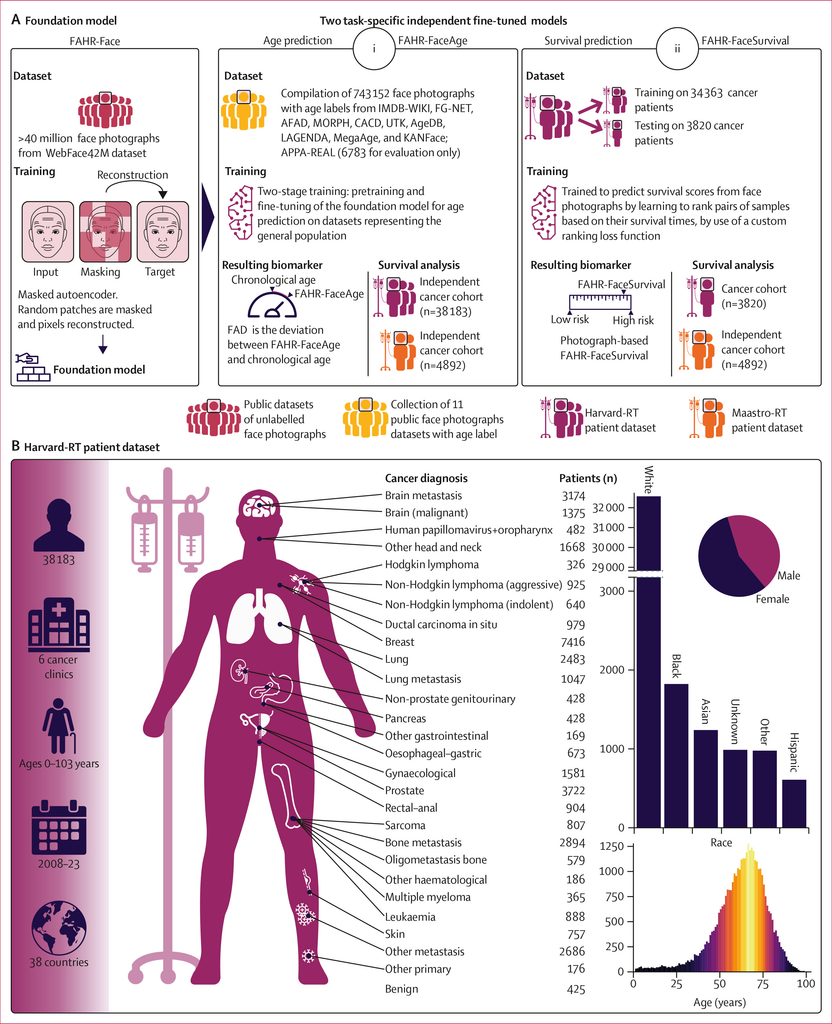
The research team built FAHR-Face, a foundation model trained on more than 40 million unlabeled facial photographs. From it, they derived two tools: FAHR-FaceAge, which estimates biological age from a photo, and FAHR-FaceSurvival, which estimates cancer mortality risk directly from facial appearance.
Among more than 38,000 cancer patients treated with radiotherapy, patients whose estimated biological age ran five or more years older than their actual age faced a 21% higher risk of death over roughly four years of follow-up. The mortality split between risk groups is stark: 64 of 122 patients in the highest FAHR-FaceSurvival risk group died within 90 days, compared with 20 of 975 in the lowest.
Attention maps suggest the survival model focused on the area below the eyes and around the nasal bridge. For biological-age estimation, the model appeared to emphasize the nasolabial folds, forehead and temples.
Researchers do not yet know which specific physiological features drive those signals. Frailty, muscle loss and soft-tissue changes are speculative possibilities, not confirmed mechanisms.
Combining both tools improved survival-model performance in an external validation cohort, suggesting they capture partly different signals.
What the Study Does Not Prove
Showing that a photograph correlates with mortality does not establish that this model outperforms what an experienced clinician already observes. It also does not show that adding the tool to existing assessments improves patient care.
Prospective clinical validation is still needed before routine use. The AI translates informal clinical intuition about visible illness into a statistical score. A score is not a prognosis, and a prognosis is not a certainty.
Bias, Privacy and Generalizability
The study cohorts were largely drawn from high-income countries, and that matters. Facial AI can encode race and ethnicity whether or not those variables are explicitly included in training. Historical disparities in treatment access and outcomes could be reproduced, or amplified, by a model trained on photographs from populations that do not represent the full range of cancer patients worldwide.
The available reporting does not establish validation across all skin tones, cancer types, disease stages, image conditions and healthcare systems outside high-income settings. If this tool ever reached clinical practice, it would raise hard questions. Informed consent, photograph storage, secondary data use and the risk of health inference without patient knowledge all require clear answers before deployment.
A camera-based tool could theoretically widen access to risk stratification where specialist care is scarce. That potential does not eliminate the obligation to validate it rigorously across diverse populations first.
What Comes Next
Before FAHR-FaceSurvival or FAHR-FaceAge could be considered for routine care, researchers would need to test them prospectively and benchmark them against established prognostic models. Validation across the demographic and clinical variables the current cohorts do not fully represent is equally essential.
The October 2026 findings are a credible signal worth investigating. They are not a tool ready for routine clinical use.