A school bus pulls up to a building humming with servers. Students file in and receive coloring pages and crossword puzzles themed around server racks and cooling systems.
This is not a spontaneous field trip. It is a coordinated industry effort, and it is happening as a Pew Research Center survey of 10,548 U.S. adults, conducted in July and August 2026, found that 54 percent now view data centers as mostly bad for the environment. That figure was 39 percent in January of the same year.
The Outreach Operation
The campaign spans children’s books, classroom activities, and visits to actual facilities, organized in large part by a nonprofit called 7×24 Exchange International.
The central organizer is 7×24 Exchange International, a nonprofit that promotes data centers as essential infrastructure. Its school-facing materials include a children’s story titled “What Is a Data Center?”, along with coloring pages, science projects, and crossword puzzles, distributed as part of its annual International Data Center Day.
The group organized or participated in at least six K-12 events in a single year, according to WIRED’s reporting. One included a Minnesota high-school visit to a Cummins diesel power-generation facility, focused on the generators that support data-center operations.
The effort extends beyond one nonprofit. WIRED’s review of public posts and school blogs found that at least eleven companies, including Microsoft, Amazon, Vantage, Sabey, and Yahoo, have hosted student visits since 2025.
Career Pipeline or Corporate Reputation?
The programs offer real career pipeline exposure, but what students hear, and what they do not, is worth examining.
Some of what is on offer is substantive. Jessica Blancas, communications coordinator for the Quincy School District in Washington state, told WIRED that Sabey has become a long-standing partner. According to Blancas, the company provides guest speakers, mock interviews, internships, and specialized visits for girls and students interested in engineering or construction.
Amazon hosted a high-school field trip at its Arlington, Virginia, Skills Center, a free community facility oriented around cloud computing careers. If your school district is weighing one of these partnerships, it is worth asking what the curriculum actually covers.
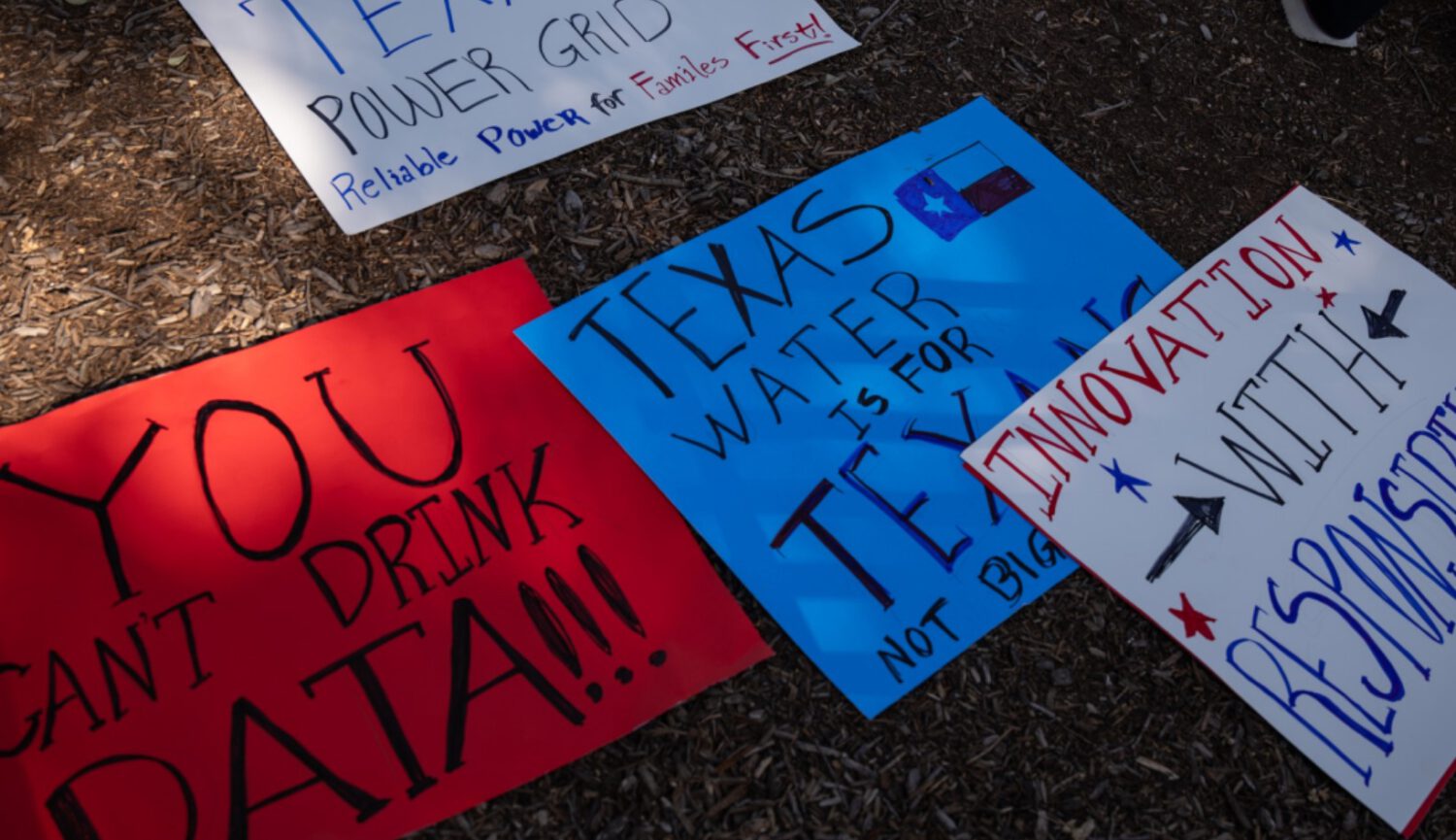
The materials reviewed by WIRED do not appear to address water consumption, electricity demand, utility-rate increases, local opposition, or diesel-generator emissions. That is a significant gap when those are the exact issues driving public concern.
Alex Molnar, a research professor at the University of Colorado Boulder and director of the National Education Policy Center, told WIRED that industries including fast food, tobacco, oil, and gas have historically used classroom access to shape how children understand them. He argues that children have limited ability to evaluate sponsored messaging on their own. Schools, he contends, should protect students from that kind of imbalance.
Why Now
Pew’s data shows that opposition to data centers has grown across partisan lines, age groups, and community types, suggesting the industry has good reason to start early.
The timing tracks directly with shifting public sentiment. In the same Pew survey, 50 percent of respondents said data centers are mostly bad for home energy costs, up from 38 percent in January. Another 49 percent said mostly bad for nearby residents‘ quality of life, up from 30 percent.
Those figures moved across age groups, partisan lines, and community types. Opposition is not concentrated in one region or political constituency.
What you are seeing in schools may reflect that broader pressure. International Data Center Day’s own materials describe the initiative as a way to educate people, inspire future talent, and enhance the public image of the industry. As this outreach scales, parents and administrators will likely face growing calls to require sponsorship disclosures and to ensure students hear from independent voices, including utility regulators, environmental groups, and local residents who live closest to these facilities.