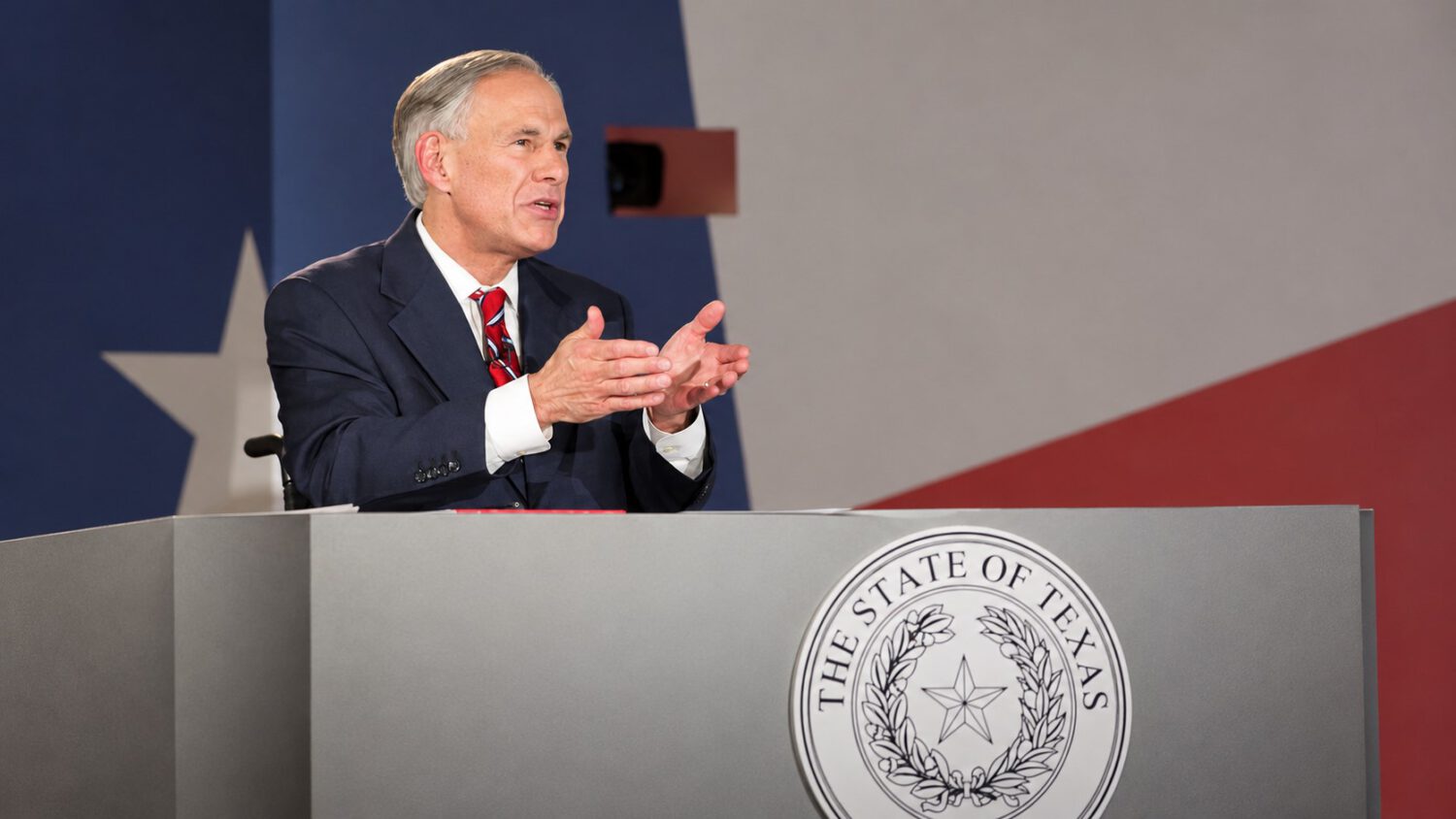
Greg Abbott paused data-center grid approvals and called for ending the industry’s major tax break. He cast himself as the protector of Texas communities from an industry straining the grid and raising concerns about water consumption across the state.
Then the Texas Tribune ran the numbers: approximately $9 million in data-center-related contributions to Abbott since July 2025, roughly 13% of everything he raised during that period.
The 2027 Texas legislative session is expected to address how data centers connect to the grid, how much water they consume, and who absorbs their infrastructure costs. The donors funding the campaigns of those writing those rules deserve a close look.
The Money
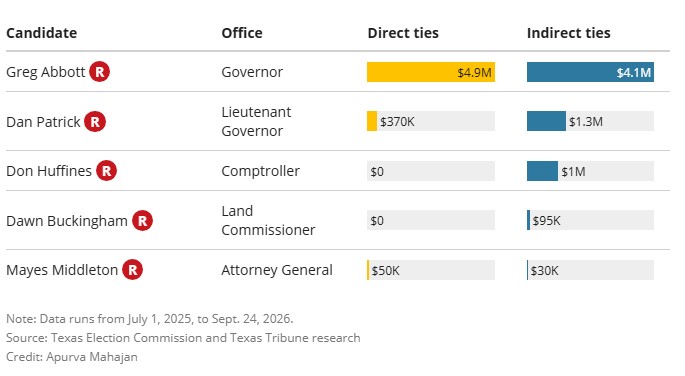
The Tribune split Abbott‘s total into two categories: $4.9 million from donors with direct ties to data-center development, ownership, or operations, and $4.1 million from adjacent players including AI companies, investors, and equipment suppliers.
Airbnb co-founder and Tesla board member Joe Gebbia contributed $1.5 million, the largest single data-center-related donation in the analysis. Rhett Bennett and his energy company Black Mountain, which is building hyperscale data centers in Texas, contributed a combined $1 million. Elon Musk gave $500,000, and Harlan Crow gave $250,000; Crow’s business interests include a planned data-center campus in Dallas.
The timing is worth noting, even if causation remains unproven. Industry-connected donors sent Abbott $1.5 million in June 2026, when he issued his first major regulatory recommendations. After he announced the approval pause in August, they contributed $2.8 million, the largest single monthly industry total of the entire election cycle.
Jim Henson, director of the Texas Politics Project at the University of Texas at Austin, offered a candid read on the dynamic. According to the Tribune’s reporting, Henson said major industry participants likely expect a negotiated policy settlement and want to ensure that Abbott and his legislative allies keep them in the room when the terms are written.
Abbott’s Defense
Abbott’s campaign described his position in plain terms: data centers must pay their own infrastructure costs, protect the grid, bring their own water, and respect local communities. His team characterized the Tribune’s analysis as an attempt to manufacture controversy from information that was not new.
Those are reasonable standards to articulate. The harder question is whether the credibility of any regulatory posture holds when the industry being regulated is simultaneously funding the regulator’s campaign at scale, even if no direct connection between a specific contribution and a specific decision can be established.
The Broader Pattern
Lt. Gov. Dan Patrick received more than $1.6 million from data-center-related donors and presides over the Senate that is expected to vote on these rules. House Speaker Dustin Burrows collected at least $377,500, a quarter-million of it from Musk, and has publicly named data centers a legislative priority.
Comptroller Don Huffines received roughly $1 million from indirectly connected donors. The largest share, $800,000, came from Brint Ryan, whose tax firm markets services to data-center developers seeking credits and abatements. The Meta-backed PAC Forge the Future spent an additional $1.2 million during the primary supporting candidates for comptroller and the Legislature.
Donors with direct and indirect data-center ties contributed to campaigns at multiple levels of Texas government, all while the rules governing the industry’s expansion are still being written.
Hinojosa’s campaign claimed Abbott received $20 million from data-center-connected donors. The Tribune found that figure used a broader definition than its own methodology, which excluded energy-only companies and businesses that merely lease data-center space. Under the Tribune’s criteria, Hinojosa received $25,000 from one data-center-adjacent donor, less than 1% of her contributions during the same period.
What Needs to Change
The session is expected to address whether data centers pay the full cost of the grid capacity they demand, how much water they can consume, and whether the sales-tax exemption that helped attract them survives public scrutiny. Those decisions should reflect the interests of electricity customers, water authorities, and local governments. They should not reflect the investment priorities of donors with a financial stake in the outcome.
The evidence does not prove corruption. It does establish that the system, as currently constructed, makes it genuinely difficult to tell where industry access ends and public policy begins.