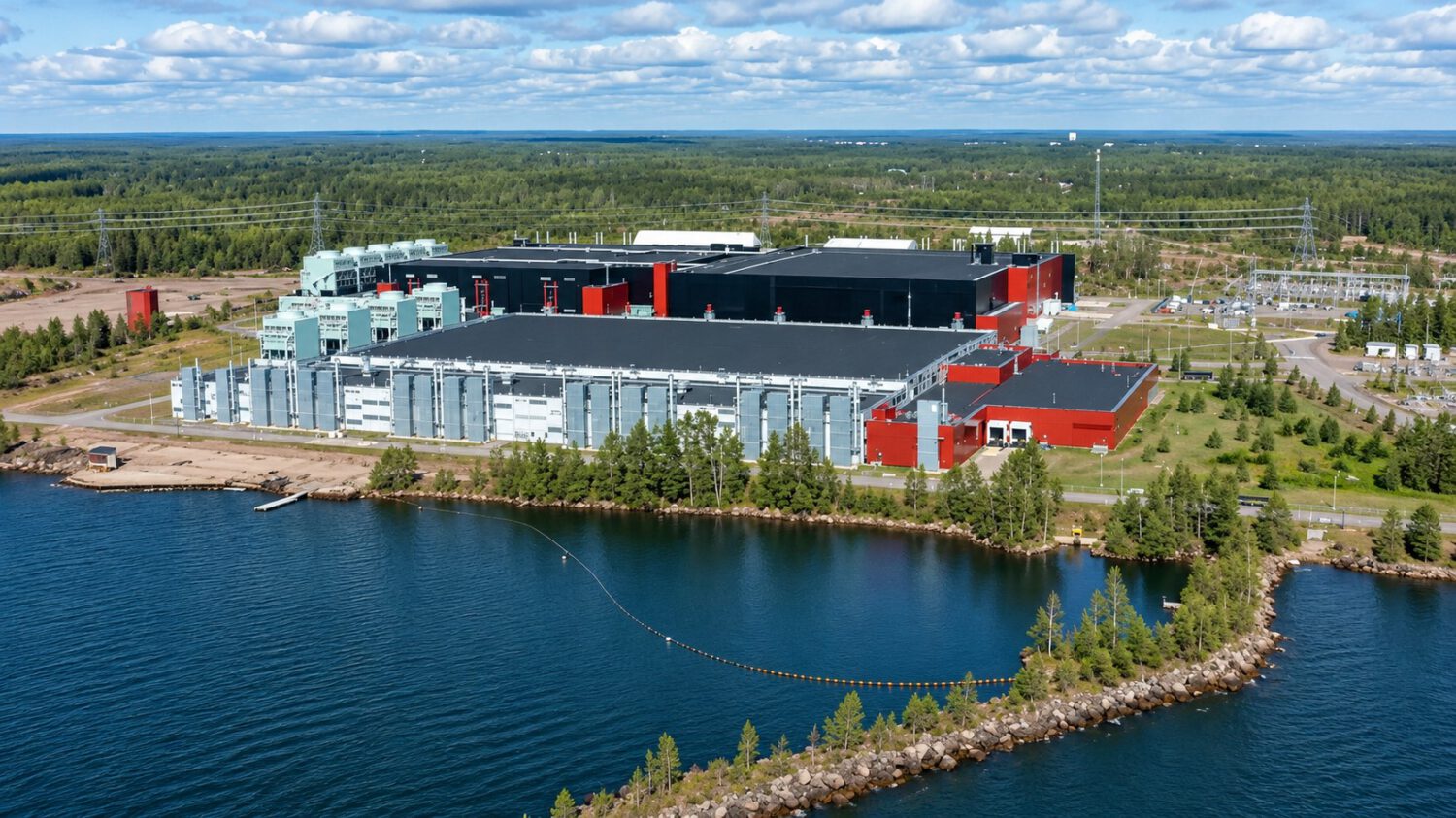
Twenty-five percent of the world’s 9,347 mapped data centers sit in regions where water demand outpaces supply for at least one month per year. The finding comes from a study published in Environmental Science & Technology on September 24, 2026, and it connects the infrastructure behind cloud storage, AI tools, and video streaming directly to the same local water use that cities and farms depend on.
Not Landing in Empty Landscapes
The study reveals that data centers are competing for water in regions already claimed by municipalities, agriculture, manufacturing, and power generation.
The ACS press release tied to the study quotes lead researcher Lorenzo Rosa noting that water scarcity is measured locally and inconsistently, and that the researchers created this global map precisely because one did not exist. For 41% of data centers, municipal water demand is the largest overlapping use nearby. Irrigation accounts for 28%, manufacturing for 18%, and power generation for 8%.
That breakdown matters. Data centers are being built within existing communities and industrial landscapes, not in resource-vacant territory with unclaimed water to spare.
Climate Could Push That Number Higher
Under a warmer climate scenario, the share of data centers exposed to water stress is projected to grow from one in four to one in three.
Under a scenario where average global temperatures reach 3 degrees Celsius above 1900 levels, researchers project the share of water-stressed data centers could climb from 25% to 33%. The United States holds roughly 39% of global data centers, and the study expects much of the increased exposure would occur there.
That projection carries a planning horizon of approximately 10 to 40 years. It is a modeled exposure range, not a guaranteed operational outcome.
What the Study Shows, and What It Does Not
The research identifies regional water-gap exposure; it does not measure each facility’s actual water use or its impact on neighboring communities.
The research maps regional water gaps and overlapping demand across 9,347 facilities. It does not measure each site’s cooling technology, withdrawal volume, water recycling rate, or direct impact on neighboring users.
Exposure to a water-stressed region is not proof that a facility has caused shortages or disrupted local services. The authors acknowledge that consequences for individual facilities remain uncertain and require further research.
The Invisible Infrastructure Problem
Unlike electricity consumption, data-center water use lacks a uniform global reporting standard, leaving the full scope of the problem difficult to assess.
Water scarcity is local and measured inconsistently across jurisdictions, making facility-to-facility comparison harder than tracking electricity consumption. Rosa is quoted in the ACS release observing that data-center energy footprints are quantified in detail, while water use often goes untracked or unreported.
That reporting gap matters as AI and cloud demand continue to drive expansion of high-performance computing infrastructure into new regions.
A New Constraint on the Siting Checklist
The study makes a structural case for treating water availability as a core infrastructure requirement alongside electricity, land, and connectivity.
For developers and policymakers, the study’s core argument is direct: water availability belongs alongside electricity access, land, transmission capacity, and network connectivity as a fundamental constraint in siting decisions for AI data centers. Watershed-level supply, seasonal variability, competing local demand, and projected climate conditions all need to factor into planning.
Cloud queries and AI requests each have a physical address, a power draw, and, increasingly, a measurable water requirement. The study argues that regional water limits deserve a place in every data-center planning conversation before ground is broken.