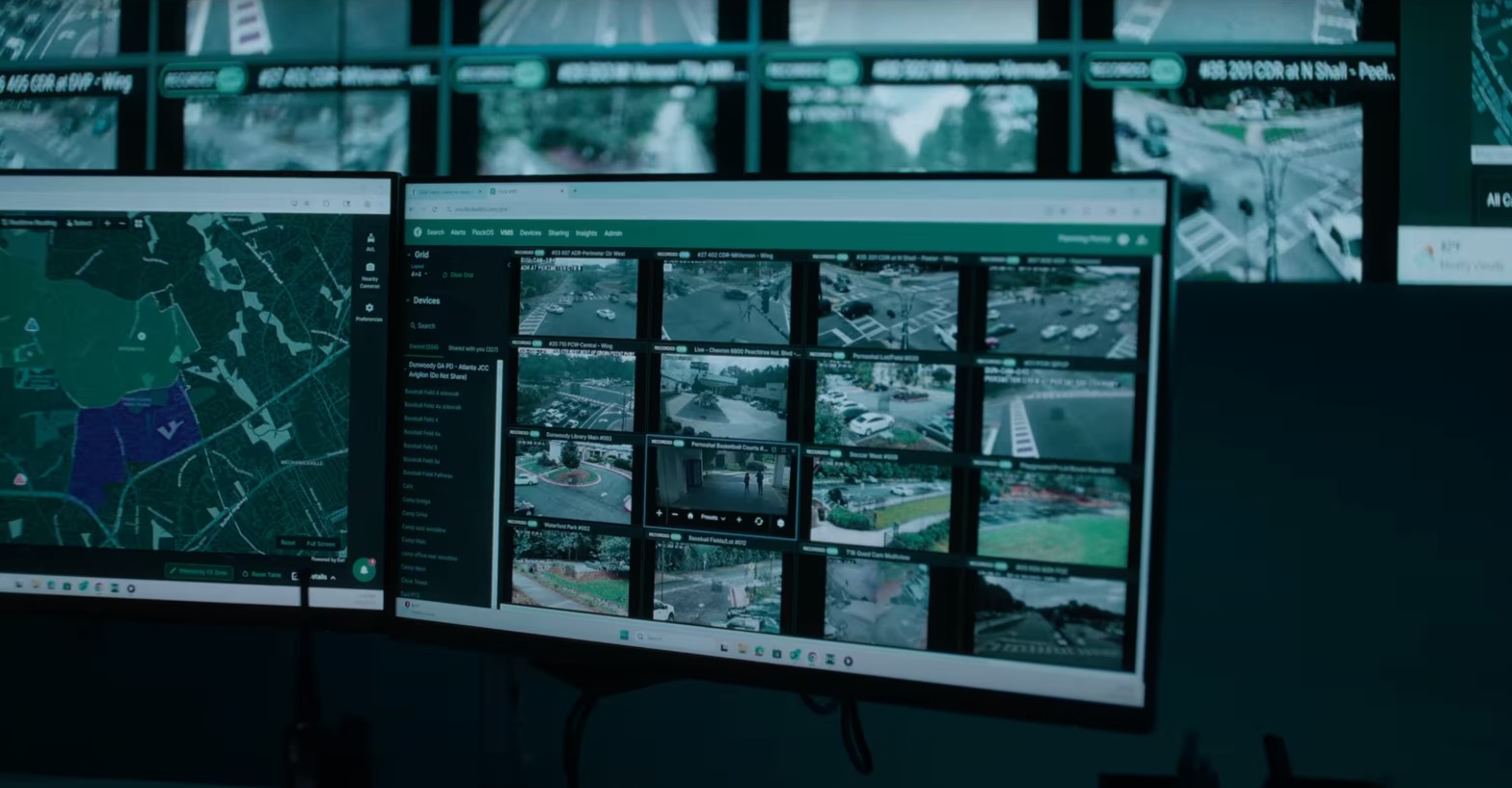
Twenty billion. That’s how many times per month Flock Safety‘s cameras photograph passing vehicles across 49 states, according to NBC News. The Atlanta-based company operates more than 100,000 automatic license plate readers (ALPRs) — devices that capture your plate number, vehicle make, model, color, time, and location every time you drive past one. None of this requires you to be suspected of anything. Flock calls it public safety. The ACLU calls it trading privacy for profit. The company reportedly holds an $8 billion valuation, backed by nearly $1 billion in venture capital.
Every pass triggers a data point fed into a centralized cloud database searchable by any connected police department — including departments in other states. ACLU-Wisconsin frames it plainly: this is facial recognition for your daily commute, except instead of your face, it maps everywhere your vehicle has been for the past 30 days.
The Business of Watching You
Flock doesn’t sell cameras — it leases access to a nationwide surveillance subscription that reportedly earned $300 million in 2024.
Flock leases cameras and cloud software to more than 5,000 law enforcement agencies, homeowner associations, and campuses. That subscription model reportedly generated roughly $300 million in 2024 sales, according to Truthout. ACLU policy counsel Chad Marlow contests Flock’s claim that it “doesn’t sell data,” comparing it to an automaker claiming not to sell steering wheels. “A company working with governments to record the comings and goings of every single person in the country.” The data is the product. More cameras, more coverage, more revenue.
The concern extends well beyond stolen-car recovery. Aggregated movement data can expose far more sensitive information, and the documented record is striking:
- Visits to abortion clinics, places of worship, or political meetings
- More than 7,000 Flock queries in Dayton, Ohio tied to immigration enforcement
- Border Patrol searches documented on networks that never formally authorized federal access
- EFF-documented cases of Flock data used to track protesters and target ethnic communities
- Admin interfaces found openly accessible online without password protection, per researcher Benn Jordan
Communities are pushing back. More than 30 cities and college towns — Flagstaff, Cambridge, Eugene, and Santa Cruz among them — have deactivated cameras or ended contracts since early 2025, driven largely by immigration-surveillance app concerns, according to NPR. At Cal Poly San Luis Obispo, student activists running the “Deflock SLO” campaign pressured the university president into declining contract renewal. The neighborhood watch has gone full Palantir, and residents across the country noticed.
No federal law bans these networks. Courts are only beginning to ask whether mass, long-term vehicle tracking violates Fourth Amendment privacy protections. Opposition spans libertarians, conservatives, and progressives alike — a rare bipartisan coalition united by wariness of a private company monetizing the map of daily life. The decision of whether to keep subscribing lands where local decisions always do: at the council chamber, where residents are increasingly showing up to say something about it.