A federal appeals court is deciding whether police can query a network of roadside cameras across multiple agencies to reconstruct a driver’s travel history without first obtaining a warrant. The answer could affect every driver in Texas, not just criminal suspects.
Charles Brownlee was convicted in federal court and sentenced to 60 years for his role in five armed robberies across Dallas-Fort Worth suburbs in 2024. His lawyers are asking the U.S. Court of Appeals for the Fifth Circuit to overturn that conviction, arguing investigators built their case using Flock camera records obtained without a warrant.
How Flock Cameras Helped Build the Case Against Brownlee
Prosecutors used a network of automated cameras to connect Brownlee’s vehicle to five separate robberies across North Texas.
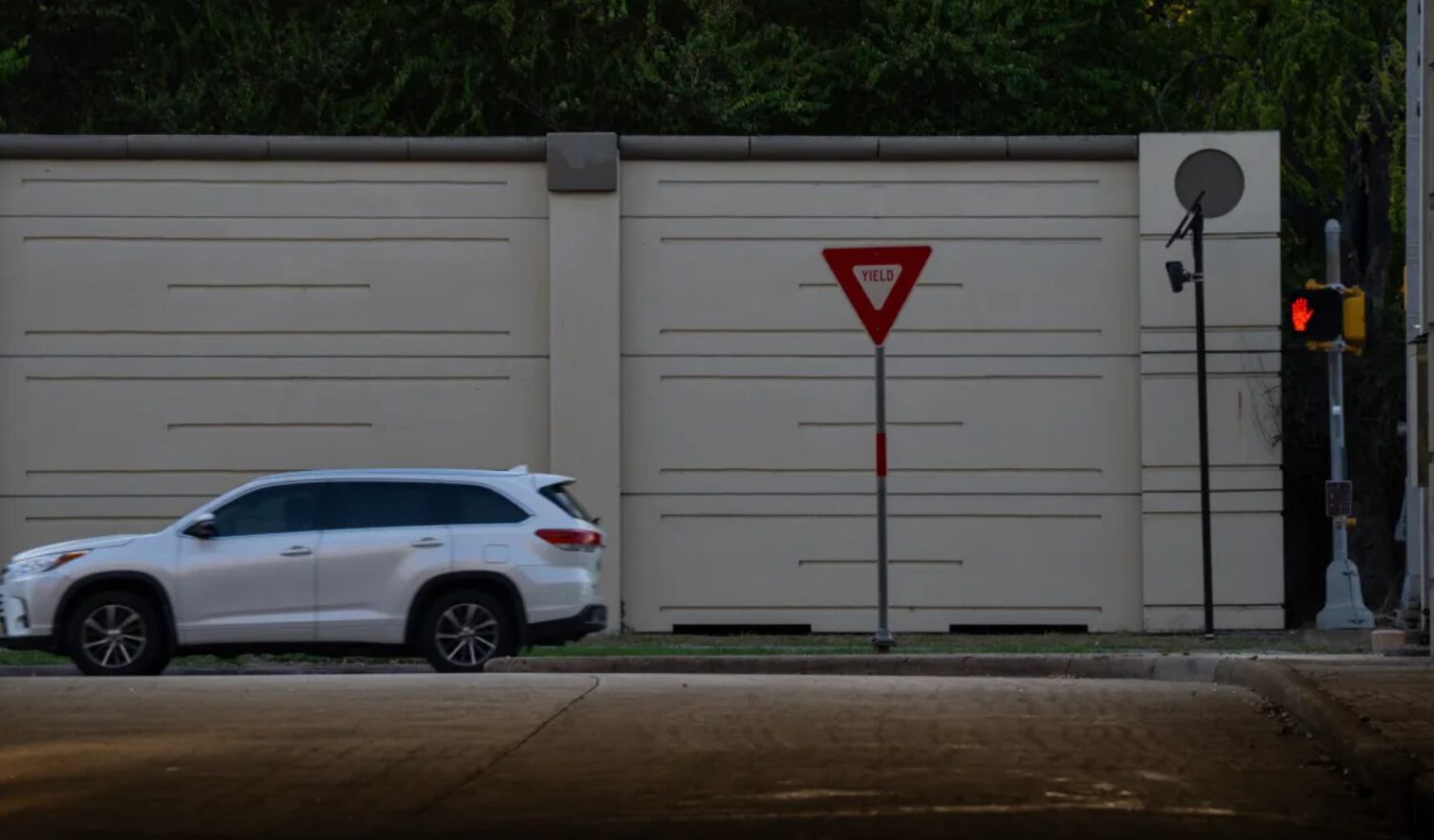
Flock Safety cameras record passing vehicles and make that data searchable by law enforcement. According to the Texas Tribune, roughly 13,000 of these cameras operate across Texas, though the network size can change over time.
The system’s reach extends beyond a single agency. Officers can query records collected by other participating departments, allowing investigators to pull a vehicle’s sightings across jurisdictions and piece together a travel history.
Investigators used Flock records, along with traditional surveillance footage and cellphone data, to connect Brownlee’s vehicle to the five robberies and to retrace his movements across North Texas, according to the Texas Tribune.
Brownlee’s attorney Matthew Wright argued before the three-judge panel that “no mortal human has ever possessed” the ability to effortlessly reconstruct a person’s movements the way the system can, according to reporting by the Texas Tribune.
A Legal Line That No Court Has Drawn Yet
The core dispute is whether aggregating many roadside images across agencies crosses a constitutional boundary that a single camera does not.
Earlier in 2026, the Fifth Circuit ruled that querying a single automated license plate reader did not violate the Fourth Amendment. The court acknowledged, however, that historical roadside data allows police to travel backward through time and retrace a person’s whereabouts, according to the Texas Tribune.
Brownlee’s appeal asks whether volume, duration, and cross-agency aggregation change that constitutional calculus. One camera, the earlier ruling found, was not enough. Whether the combination of thousands of cameras across multiple jurisdictions is a different matter remains the question before the court.
During oral arguments on October 5, 2026, Chief Judge Jennifer Walker Elrod questioned how many cameras it would take before episodic observations become effectively constant surveillance. The Justice Department’s position was that courts should not set a numerical threshold, arguing that is a job for lawmakers rather than judges.
There is also a procedural complication. Brownlee was a passenger in the tracked vehicle, which belonged to his sister. The Justice Department contends he may lack legal standing to challenge the search at all, which could allow the court to sidestep the broader warrant question entirely.
A separate federal court reached a different conclusion in Oklahoma. U.S. District Judge Sara Hill suppressed evidence in October 2026 after finding that a warrantless search, which documented more than 50 sightings of a vehicle over roughly one month, went too far. The search involved Flock and another license plate reader system.
Judge Hill described the conduct as “indiscriminate mass surveillance“, according to reporting by The Record. That ruling carries no nationwide authority, but it signals that some courts are willing to draw a constitutional line around pooled location data.
The Fifth Circuit has not yet issued its ruling in the Brownlee case.
Texas lawmakers say they plan to introduce legislation in the 2027 session to restrict automated license plate readers. U.S. Rep. Keith Self has separately proposed requiring federal agencies to obtain warrants before accessing Flock data. How the Fifth Circuit rules could influence what police are legally permitted to learn about where you drove last month, without your knowledge and without a judge’s approval.