Watch Apple’s iPhone 18 Pro camera demos as an iPhone 17 Pro owner and you face a specific, expensive question: which of those new controls reflect physics, and which reflect product positioning? The answer splits into three distinct categories depending on which feature you examine. For broader context, see our guide to the best cameras available across every budget.
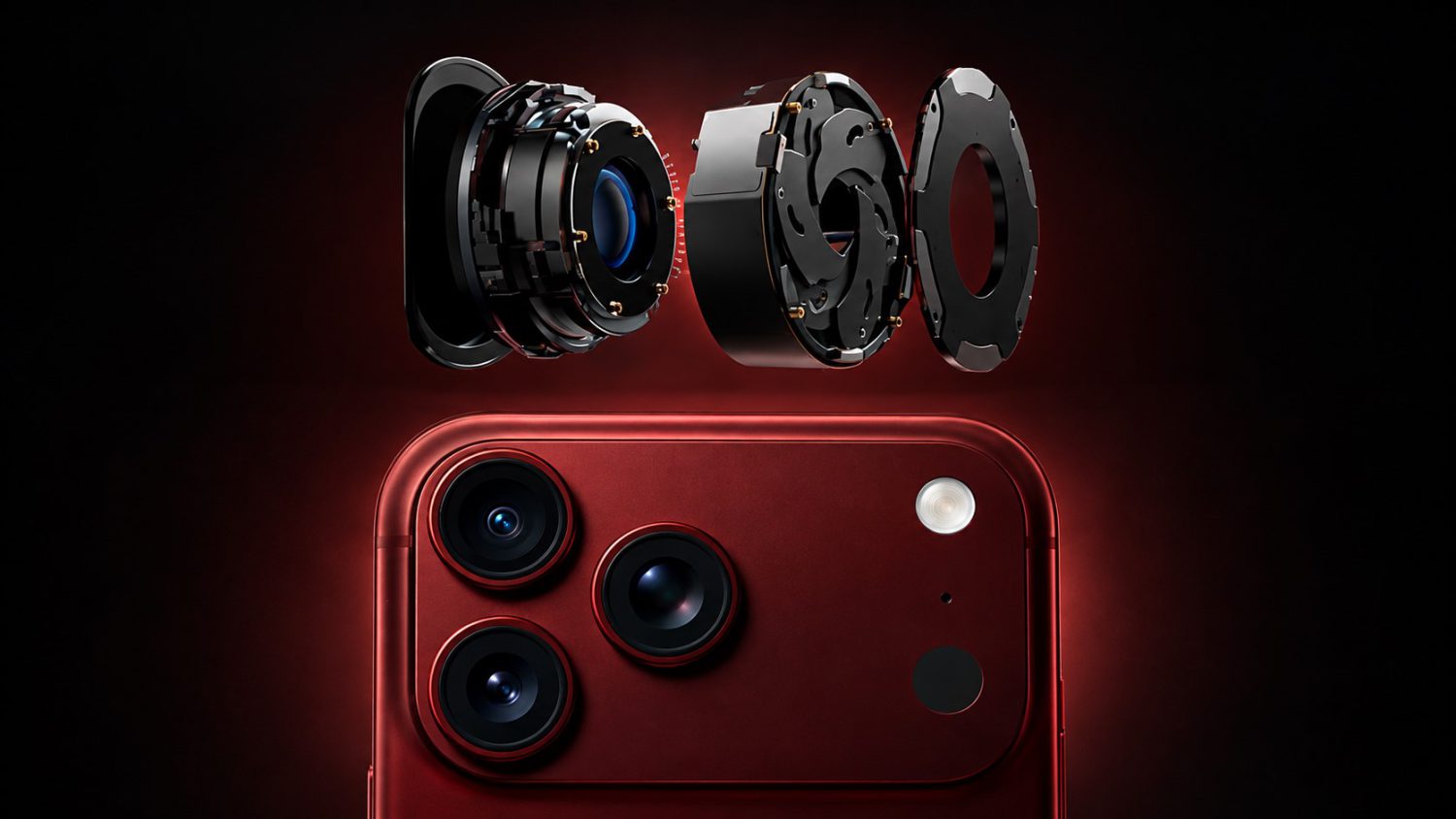
Variable aperture belongs firmly in the hardware column. The iPhone 18 Pro Main camera uses a physical iris mechanism with six laser-cut blades and four selectable aperture settings: ƒ/1.48, ƒ/1.8, ƒ/2.8, and ƒ/4.0, according to Apple’s official iPhone 18 Pro specifications.
The iPhone 17 Pro Main camera has a fixed ƒ/1.78 aperture. No software update installs moving blades into a sealed camera module.
The Controls That Look Like Software Decisions
Manual Shutter, White Balance, and Histogram
Apple restricts three camera controls to the iPhone 18 Pro, but has not documented a hardware reason for any of them.
Manual shutter speed, manual white balance, and a live histogram are all listed as iPhone 18 Pro exclusives in Apple’s Camera app support documentation. None of Apple’s public materials identify a new hardware component that makes these controls impossible on the iPhone 17 Pro.
Shutter speed is an exposure parameter the camera system already controls automatically. White balance is primarily a computational function, and a histogram is a brightness distribution visualization.
None of the three carries a documented hardware dependency in Apple’s published materials. The absence of an explanation is not proof Apple could easily enable them on older hardware, but it is a question Apple has not answered.
The Features Nobody Can Fully Explain
Texture and Grain Adjustments
Apple reserves two Photographic Styles controls for the iPhone 18 Pro without offering a technical explanation.
Texture and Grain adjustments, both part of Photographic Styles, are confirmed iPhone 18 Pro exclusives according to Apple’s support documentation. Apple does not explain whether that restriction reflects the new computational imaging pipeline, sensor differences, or another factor entirely.
These could depend on processing capabilities the iPhone 17 Pro lacks, or they could reflect product segmentation. The available evidence does not resolve it.
What This Means for Your Upgrade Decision
The Honest Upgrade Calculus
One camera advance carries a clear hardware argument; the rest require more scrutiny before you spend the money.
Variable aperture is a measurable, physical advance in iPhone photography. According to PetaPixel’s iPhone 18 Pro camera review, the mechanism represents a meaningful change to how the camera handles light across different shooting conditions.
The manual controls represent a real gap in the Camera app experience, particularly if you shoot ProRAW and want direct exposure control built into Apple’s native tools. Whether those controls genuinely require iPhone 18 Pro hardware is a question Apple’s public materials do not answer.
If variable aperture matters to your photography, the upgrade has a defensible case. If it doesn’t, the technical justification is considerably thinner than Apple’s marketing suggests.